Home Blog Page 211

Mumbai’s Ganesh Chaturthi Unveils a Mesmerizing Balanced Ganesha Idol

0

Dinanath Welinge’s Ingenious Creation Redefines Festive ArtistryMumbai, the pulsating heart of India’s cultural tapestry, transforms into a vibrant spectacle during Ganesh Chaturthi, with grand pandals showcasing majestic Ganesha idols that draw millions of devotees and admirers. This year, a breathtaking idol, possibly gracing the revered ‘Andhericha Raja’ or the iconic ‘Lalbaugcha Raja,’ has emerged as the centerpiece of the festivities. Crafted with an innovative balance concept, this extraordinary creation has captivated the city, blending spirituality with groundbreaking artistry.

A Marvel of Balance and Beauty

Master sculptor Dinanath Welinge has redefined idol-making with this Ganesha statue, which stands as a testament to his unparalleled skill and vision. Unlike traditional idols, this masterpiece incorporates a sophisticated balance mechanism, utilizing a meticulously designed base and precise weight distribution. This allows the idol to stand tall without any external support, defying gravity in a way that has left onlookers in awe. The seamless fusion of engineering and aesthetics makes this idol a unique highlight of Mumbai’s Ganeshotsav.

Rooted in a Storied Legacy

The tradition of crafting the legendary Lalbaugcha Raja idol traces back to 1935, when the Kambli family first undertook the sacred task of sculpting these divine figures. Building on this rich heritage, Dinanath Welinge has elevated the art form with his innovative approach. His creation not only honors the spiritual essence of Ganesh Chaturthi but also pushes the boundaries of artistic expression, making it a cultural landmark in Mumbai’s festive landscape.

A Symbol of Devotion and Innovation

The idol’s most striking feature is its ability to maintain perfect equilibrium, a feat achieved through Welinge’s ingenious design. This technical brilliance, combined with intricate detailing and vibrant embellishments, transforms the statue into more than a religious icon—it is a work of art that embodies devotion, creativity, and precision. Visitors to the pandal are mesmerized by its serene presence and the subtle elegance of its craftsmanship, which reflects both reverence for Lord Ganesha and the sculptor’s extraordinary talent.

Cultural Phenomenon

As Mumbai immerses itself in the fervor of Ganesh Chaturthi, this balanced Ganesha idol has become a focal point of admiration and discussion. Social media platforms and local conversations buzz with praise for its innovative design, with devotees and art enthusiasts alike flocking to witness this marvel. The idol not only enhances the spiritual ambiance of the festival but also underscores Mumbai’s ability to blend tradition with modernity, creating moments of wonder that resonate far beyond the pandal.This year’s Ganesh Chaturthi celebrations in Mumbai are elevated by Dinanath Welinge’s visionary creation, a Ganesha idol that stands as a symbol of faith, artistry, and innovation. As the city chants “Ganpati Bappa Morya,” this extraordinary statue ensures that the festival remains an unforgettable celebration of devotion and human ingenuity.

Kashmir Valley Celebrates Literature with First Chinar Book Festival

0

By Kamran Raashid Bhat

The Chinar Book Festival was organised at SKICC, Srinagar, from 2 to 10 August, through the collaborative efforts of the National Book Trust, India (Ministry of Education, Govt of India) and the District Administration Srinagar. The valley’s first national book festival witnessed participation from the National Council for Promotion of Urdu Language (NCPUL). This nine-day book fair, set against the picturesque Dal Lake, featured over 200 stalls offering books in various languages, including English, Urdu, Kashmiri, Hindi, Dogri, and other Indian languages. Readers have the opportunity to avail of special discounts and explore books from more than a thousand publishers nationwide.

SKICC leapt into motion with the sounds of clapping children, dancing feet, rustling pages, and stories carried through air, rhythm, and silence. In some corners, folk tunes announced a rejoicing sound of celebration, while in others, children sat with wide eyes full of wonder, imagination and inspiration.


In the morning, puppets spoke louder than words. At the Children’s Corner, storytelling unfolded not just through spoken tales, but through moving fabric, shadow, and surprise. Giggles, gasps, and glitter painted the space with joy, as young audiences discovered what it means to listen with both heart and eyes.

In a powerful conversation that captured the heart of the festival’s vision, Mr. Rayees Mohiuddin, Mr. Muneer Speaks, and Mr. Manoj Sheeri, in dialogue with RJ Mursal, reflected on how stories evolve across forms, from books to stage, from performance to mass media. Their discussion highlighted the true purpose of the Chinar Book Festival: to nurture literature in every medium and bring it closer to every heart. They engaged the audience through verses from Kashmiri literature, and encouraged the audience to read and learn their mother tongue.


Outside, the rhythm of the land took over. Folk dancers spun across the stage, with their feet beating stories into the earth, as the crowd joined in with claps, cheers, and admiration. Schoolchildren, professionals, and visitors moved between sessions, each finding their own moment of connection; some deep in conversation, others swept up by music.


As dusk descended, Dhananjay Kaul cast a classical spell with his rich and evocative voice. In yet another cultural event, Krisha Bhat’s voiced reverberated around the whole venue, while audience favourite Shazia Bashir captivated hearts with her mesmerising performance, blending melody and emotion in a way that left the crowd spellbound. The night reached its crescendo with a performance by Rashid Hafiz, whose devotional music stirred something deeper, closing Day 6 with reverence and warmth.


The festival also welcomed prominent delegates, further affirming its growing significance in the cultural calendar of Jammu & Kashmir. The festival was graced by Dr. Syed Darakhshan Andrabi, Chairperson, Jammu and Kashmir Waqf Board; VC Kashmir University, Prof. Nilofer Khan, among many esteemed dignitaries.


As the stories continued unfolding, each day at Chinar Book Festival brought a new reason to return, and a new moment to remember. The festival brought together academics, artists, and performers till 10th August, 2025.

A Hundred Islands, A Thousand Secrets—Welcome to Banswara, A Symphony of Mist, Myths, and Martyrdom..

0

This is the story of a city… where the earth poured fragments of its heart into the river. Where every island holds a secret, and every ripple whispers a forgotten tale. Welcome… to Banswara. Rajasthan’s hidden paradise, where history floats on water and beauty blooms in silence. Known as the “City of Hundred Islands”, Banswara is nestled in the southern tip of Rajasthan, where the Mahi River dances through the land, creating a breathtaking mosaic of islands. It’s not just a city—it’s a cinematic dream waiting to be discovered.

Why “100 Icelands”?

  • The Mahi River splits into countless channels, forming over 100 islands—a rare geographical marvel in India.
  • Locals call it Cherrapunji of Rajasthan” due to its lush greenery and high rainfall.
  • The name “Banswara” comes from ‘Bans’ (bamboo), once abundant here, and from Bansiya Bhil, a tribal ruler.

Top Attractions in Banswara – Where Every Corner Tells a Story

Banswara is a treasure chest of scenic beauty, ancient architecture, and spiritual depth. Here are some of the most captivating spots that make it a must-visit:

  • Mahi Dam: A majestic structure surrounded by lush gardens and dotted with islands. Ideal for boating, photography, and soaking in the serenity of nature.
  • Anand Sagar Lake (Bai Talab): Built by Queen Lanchi Bai, this lake is encircled by royal cenotaphs and sacred trees. It’s a peaceful retreat with echoes of regal history.
  • Talwara Temples: A spiritual and architectural marvel, home to ancient shrines dedicated to the Sun God, Amaliya Ganesh, and Jain deities. The carvings here whisper stories from centuries past.
  • Andeshwar Parshwanathji Temple: A revered Jain pilgrimage site featuring rare inscriptions from the 10th century. It’s a place where faith meets history.
  • Anekant Bahubali Temple: This temple boasts a stunning 27-foot marble statue of Lord Bahubali, standing tall in silent meditation—a symbol of peace and renunciation.
  • Chachakota Waterfalls: Hidden deep within the forest, this waterfall is a paradise for nature lovers, trekkers, and anyone seeking a romantic escape into the wild.
A Hundred Islands, A Thousand Secrets—Welcome to Banswara, A Symphony of Mist, Myths, and Martyrdom..

Why Banswara is a Dream for Tourists

  • Nature & Adventure: Trekking, boating, birdwatching, and waterfall trails.
  • Spiritual Tourism: Jain and Hindu temples with deep historical roots.
  • Cultural Immersion: Tribal festivals like Ami Egyaras and Ghotia Amba Fair.
  • Eco-Friendly Stays: Homestays, heritage resorts, and lakeside retreats

From Zardosi Attire to Sevanthi Flowers, Gupt Vrindavan Bedazzles To Welcome Kanhaji on Janmashtami

0

Vrindavan, the sacred land where every particle resonates with Lord Krishna’s love, devotion, and grace, will come alive in Jaipur’s Gupt Vrindavan Dham this Janmashtami. Rejoicing the moment to welcome Krishna’s arrival, the dham has been transformed into a ‘Krishnamay’ abode, where devotees will feel as though they are truly welcoming Lord Krishna in person.

On the auspicious day of Krishna Janmashtami, Yashoda Nandan will be adorned in Navratna during the Mangala Aarti. His attire, intricately embroidered with zardosi work, has been specially crafted in Vrindavan. Lord Shri Krishna and Balram will be beautifully decorated with sevanthi flowers brought all the way from Karnataka. The entire temple premises has been adorned with flowers sourced from across India, while vibrant, colorful lights are illuminating the complex to welcome the divine.

At the stroke of midnight, during the Maharaati, Nandlala will be ceremonially anointed. As the moment of Krishna’s appearance arrives, devotees — eyes filled with tears of devotion — will eagerly gaze upon Him, offering prayers and seeking blessings. The atmosphere will resound with the chanting of the Hare Krishna Mahamantra and thunderous cries of Jai Shri Krishna, as love and devotion fill every corner of Gupt Vrindavan Dham.

More than two lakh devotees are expected to visit the dham for darshan throughout the day. In coordination with the administration, robust security arrangements have been put in place to ensure a safe and joyous celebration.

Madhya Pradesh: The Beating Heart of India’s Freedom Struggle, A Tribute To Relentless Sacrifice And Passion

0

India’s fight for independence wasn’t won in a single battlefield or by a single voice—it was a chorus of courage, echoing from every corner of the land. And in that chorus, Madhya Pradesh sang loud and proud. Known as the “Heart of India,” this central state pulsed with rebellion, sacrifice, and unity. Its soil bore the footsteps of revolutionaries, its forests hid freedom fighters, and its cities became arenas of defiance.

1857: The First Spark in Neemuch

The story begins in Neemuch, where on June 3, 1857, the cantonment erupted in revolt under Mohammad Ali Beg. Native Bengal troops mutinied, civilians joined in, and the British were forced to respond with brutal force—27 revolutionaries were hanged from a single tree, now immortalized in Shahid Park. This act of defiance ignited uprisings in Gwalior, Mhow, and Jabalpur, marking Madhya Pradesh’s first major blow against colonial rule.

Royal Resistance: Rani Avantibai & Rani Lakshmibai

In Ramgarh (Dindori), Rani Avantibai Lodhi rallied thousands of tribal warriors after her husband’s death, refusing to let British interference dictate her kingdom’s fate. She fought valiantly in the 1857 revolt and chose martyrdom over surrender. Meanwhile, Rani Lakshmibai of Jhansi, though born in Varanasi, met her heroic end in Gwalior, MP. Her final battle on MP’s soil turned her into a symbol of fearless resistance.

Tribal Thunder: Tantia Bhil

From Pandhana village in Khandwa, rose Tantia Bhil, the “Indian Robin Hood.” He looted British treasuries and redistributed wealth to the poor. His guerrilla tactics and tribal unity made him a legend. Executed in Jabalpur, his resting place near Patalpani is now a site of reverence.

The Pen of Revolution: Dr. B.R. Ambedkar

Born in Mhow (now Dr. Ambedkar Nagar), Ambedkar didn’t fight with weapons—he fought with ideas. His role in drafting the Indian Constitution and challenging caste oppression was revolutionary. His birthplace is now a national memorial, drawing thousands each year.

Tatya Tope’s Final Stand

Though born in Maharashtra, Tatya Tope’s last battle was fought in Shivpuri, MP. A master of guerrilla warfare, he supported Rani Lakshmibai and led campaigns across Central India. His execution in Shivpuri turned the city into a shrine of resistance.

Mass Movements and Civil Disobedience

During the Gandhian phase, Madhya Pradesh became a hotbed of mass movements:

  • Jungle Satyagraha in tribal regions protested British forest laws.
  • Cities like Nagpur, Indore, and Jabalpur hosted Congress sessions and rallies.
  • Leaders like Ravishankar Shukla and Dr. Harishankar Gaur emerged from MP, shaping national policy and mobilizing the masses.

A Legacy Etched in Soil and Soul

From tribal warriors to royal queens, from poets to politicians—Madhya Pradesh gave India not just fighters, but dreamers of freedom. Its contribution wasn’t just in battles—it was in belief. In unity. In the quiet courage of those whose names history forgot, but whose sacrifices built the foundation of a free India.

Unsung Warriors of Neemuch: A Story India Must Know, The Tree That Held 27 Martyrs Still Stands Tall in Shahid park…

0

India is celebrating its 78th Independence Day this year—a moment that paints every heart, every city, and every corner of the nation in the vibrant hues of patriotism. As the tricolor unfurls tomorrow, on August 15th, it will mark not just the anniversary of our freedom, but a solemn tribute to the countless heroes whose sacrifices made this liberty possible. This day is more than a celebration—it’s a remembrance. A time to honor the brave souls, the revolutionaries, and the visionary leaders who laid down their lives so that we could live with dignity and pride. From every corner of the country, these valiant sons and daughters rose to the call of freedom. Among them were warriors from the very heart of India—Madhya Pradesh—whose contributions were nothing short of extraordinary. Their courage and commitment continue to echo through the land, reminding us that freedom was earned, not given.

where the Malwa winds whisper tales of valor, stands a banyan tree—not just rooted in soil, but in sacrifice. It’s not just a tree. It’s a witness. A silent sentinel to one of the most brutal chapters of India’s First War of Independence. While names like Chandrashekhar Azad, Rani Lakshmibai, and Tatya Tope blaze across history, this story belongs to those whose names were buried beneath colonial cruelty—27 brave souls, hanged from a single tree by the British in 1857.

Neemuch’s Forgotten Martyrs of 1857

In the dusty heart of Neemuch, where the Malwa winds whisper tales of valor, stands a banyan tree—not just rooted in soil, but in sacrifice. It’s not just a tree. It’s a witness. A silent sentinel to one of the most brutal chapters of India’s First War of Independence. While names like Chandrashekhar Azad, Rani Lakshmibai, and Tatya Tope blaze across history, this story belongs to those whose names were buried beneath colonial cruelty—27 brave souls, hanged from a single tree by the British in 1857.

The Spark in Neemuch

On June 3, 1857, the first bullet of rebellion in Madhya Pradesh was fired—not in a grand palace, but in the Neemuch Cantonment, under the leadership of Mohammad Ali Beg. Native Bengal troops mutinied, refusing to serve a foreign crown. Their courage ignited a wildfire—peasants, artisans, and tribals joined in, turning Neemuch into a furnace of resistance. The British, rattled and ruthless, responded with terror. They chose a banyan tree in what is now Shahid Park, and from its branches, they hung 27 revolutionaries—men who dared to dream of freedom.

The Names That History Forgot

Among those martyred were:

  • Ramratan Khatri
  • Pyare Khan Pathan
  • Kesar Singh Bains
  • Dilip Singh
  • Roop Singh Rajput

These were not generals or kings. They were ordinary men with extraordinary courage—soldiers, farmers, sons of the soil—who stood up when silence was safer.

Shahid Park: Where the Tree Still Stands

Today, Shahid Park is not just a memorial—it’s a living shrine. The original banyan fell in 1977 due to a storm, but its branch was replanted nearby. That branch has grown into a mighty tree, still standing tall after 168 years, its roots clutching the memories of those who swung from its limbs. Retired soldiers from the Army, Navy, and Air Force now guard this tree—not with weapons, but with reverence. On 15 August, 26 January, and Kargil Vijay Diwas, the park becomes a gathering ground for patriots, storytellers, and silent tears.

A Legacy of Unity and Resistance

The Neemuch uprising wasn’t just a military mutiny—it was a mosaic of Hindu, Muslim, and tribal unity. It showed that freedom wasn’t a dream of the elite—it was a fire in every heart. Though Colonel Sobers crushed the revolt, he couldn’t erase its echo. That echo still lives in Neemuch. In the soil. In the stories. In the tree.

Why This Story Must Be Told

These 27 martyrs didn’t die for fame. They died for freedom. Their names may not headline textbooks, but their sacrifice carved the path for every movement that followed—from Quit India to Azadi ka Amrit Mahotsav. So when you salute the tricolor this Independence Day, remember Neemuch. Remember the tree. Remember the nameless heroes who gave everything—and asked for nothing.

The Rise of India: A New Economic Giant

0

By Harsha Bothra

Philippines President Ferdinand Marcos Jr., during his official state visit to India, remarked that the term “Indo-Pacific” is a more accurate evolution of “Asia-Pacific”. He said it better reflects the global nature of politics, trade, and the economy today.

In contrast, former U.S. President Donald Trump imposed a 25% tax on Indian goods, along with an additional 25% penalty on the purchase of Russian oil, and controversially described India’s economy as “dead.”

Yet, global data tells a very different story. According to the IMF, by the end of 2027, India is projected to surpass Germany and become the third-largest economy in the world—a position it could achieve as early as the end of 2025 if the current growth rate continues. India has already emerged as the third most powerful nation in Asia, overtaking Japan. The domestic market is expected to see a strong focus on the theme “Make in India, Sell in India”, as companies increasingly target the vast Indian consumer base.

India’s Economic Momentum

Despite the COVID-19 pandemic and global tariff challenges, India has risen as a major global economic force over the past decade. A young population, competitive labor costs, and a large consumer market have made India an attractive trading partner worldwide.

Recent trade milestones include the signing of a Free Trade Agreement (FTA) with the United Kingdom, concluded after negotiations since 2022, and a Trade and Economic Partnership Agreement (TEPA) with the European Free Trade Association (EFTA) covering Iceland, Liechtenstein, Norway, and Switzerland.

The TEPA marks a historic first in FTAs—introducing a legal commitment to promote targeted investments and job creation in India. Key focus sectors include pharmaceuticals, medical devices, and processed foods, while sensitive sectors such as dairy, soy, coal, and certain agricultural products are excluded. TEPA also includes provisions for Mutual Recognition Agreements (MRAs) in professional services such as nursing, chartered accountancy, and architecture.

This agreement strengthens India’s integration into EU markets, with Switzerland serving as a potential hub—especially as over 40% of Switzerland’s global services exports go to the EU.

Expanding Global Trade Network

India has signed multiple FTAs and trade pacts with Sri Lanka, Bhutan, Thailand, Singapore, Malaysia, South Korea, Japan, Australia, the UAE, Mauritius, ASEAN, and the EFTA bloc.

The India-Pacific Trade Agreement (formerly the Bangkok Agreement), signed in 1975, remains active among Bangladesh, China, India, Laos, South Korea, and Sri Lanka. Additional major agreements include:

  • India–ASEAN FTA
  • India–Singapore Comprehensive Economic Cooperation Agreement (CECA)
  • India–Thailand FTA
  • India–Malaysia CECA
  • India–Japan Comprehensive Economic Partnership Agreement (CEPA)
  • India–South Korea CEPA
  • SAFTA Agreement
  • India–Sri Lanka FTA
  • India–Mauritius CECPA
  • India–UAE CEPA
  • India–Australia Economic Cooperation and Trade Agreement (Ind-Aus ECTA)

Strategic Partnerships and Global Influence

Beyond trade, India plays an active role in regional and global forums such as the East Asia Summit, G20, and ASEAN. Strategic alliances include the Indo-Pacific Economic Framework for Prosperity, the Quadrilateral Security Dialogue (QUAD), and BRICS.

Currently, India stands out as the fastest-growing major economy with an estimated annual growth rate of 6.5%, supported by strong domestic demand, easing inflation, robust capital markets, and growing exports. Rising foreign exchange reserves and increasing foreign investments signal global confidence in India’s long-term economic prospects.

Looking Ahead

As India navigates the complexities of the 21st century, it is not only participating in the global economy but actively shaping it—offering new models for development and becoming a key pillar in a multipolar world order. To fully realize its potential, India will need to prioritize inclusive growth, technological advancement, and strategic international partnerships.

Voices, Votes, and Vigilance: The Spirit of Democracy!!

0

By Muskan Mudgal

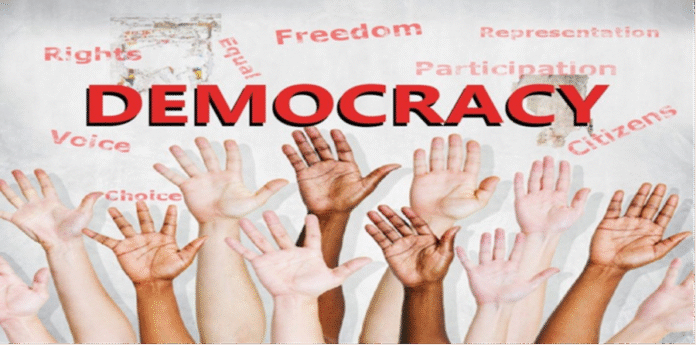
Democracy: The Voice and Responsibility of the People : Democracy is more than just a political system—it is the embodiment of collective will, shared responsibility, and the belief that every individual’s voice matters. At its heart, democracy rests on a simple yet profound principle: the power to govern belongs to the people, and those in authority derive legitimacy only through the consent of the governed.

The Essence of Democracy

Democracy, derived from the Greek words demos (people) and kratos (power), is defined as a form of government where power is in the hands of the people. It is based on the principles of popular sovereignty, political equality, and rule of law. In a democracy, citizens have the right and duty to participate in shaping policies, electing representatives, and holding leaders accountable. This is what distinguishes it from authoritarian systems: the people are not mere subjects, but active stakeholders.

Strengths of a Democratic System

Representation and Inclusion: Democracy allows diverse communities, beliefs, and opinions to coexist under one political framework.

Protection of Rights: Constitutional democracies safeguard fundamental rights, ensuring that freedom of speech, religion, and expression are upheld.

Peaceful Transitions of Power: Through regular elections, leadership changes occur without violence, ensuring political stability.

 Main Features of Democracy:

1. Free and Fair Elections : In a democracy, people vote to choose their leaders. Elections are essential where the existing rulers stand a real chance of losing power.

   2. Equality:   All people are equal before the law. No one is above the law , not even the People in highest powers.

  3. Freedom : Citizens have freedom of speech, religion, and expression. They can share their views openly.  

4. Justice:  People get justice in every form .eg _social justice

5. Rule of Law: The law is the same for everyone. The government works according to the Constitution and laws.    

     Benefits of Democracy:

Gives people a voice.

Protects individual rights.

Economic growth and development

Reduces chances of dictatorship or misuse of power.

Contemporary Challenges to Democracy :

In an age where more countries hold elections, democracy appears to be flourishing. But beneath the surface of ballots and campaigns, modern democracies are facing serious cracks some visible, some deeply embedded which sometimes appear as a slap to people’s expectation.

Everywhere a silent shift is occuring where democratic values are weakening, even as democratic structures remain in place.Despite these threats, democracy is far from dead. Massive protests in Israel, the Farmer Protests  demonstrations in India, the Black Lives Matter movement in the U.S., and climate protests worldwide reflect the power of civic action. They remind us that democracy is not just about voting it’s about participation and dialogue.

While elections continue, the spirit of democracy  built on transparency, justice, and equality needs stronger protection than ever.The future of democracy may not lie solely in the hands of leaders, but in the watchful eyes and active voices of its citizens.

Democracy in India – A Living Example:

India is the world’s largest democracy, functioning as a parliamentary form or representative form. The Constitution of India guarantees universal adult franchise and a multi-party system. Institutions like the Election Commission, Supreme Court, and an independent media are vital pillars of Indian democracy. Despite being a post colonial society with vast socio-economic diversities, India has sustained democratic governance for over seven decades.One man one vote is the concept in democracy.

However, concerns have arisen over recent years regarding freedom of the press, centralization of powers etc but judicial interventions prove these wrong.

The Role of Citizens :

Democracy is a living system, and its vitality depends on everyday actions. Voting is essential, but so is staying informed, questioning policies, engaging in community work, and upholding democratic values in daily life. A democracy thrives not merely on laws, but on the civic responsibility of its people.

Delay in decisions , A matter of concern :

Democracy is based on discussion, debate etc.The participation of citizens in decision making can indeed result in prolonged decision making processes.

In india every topic is being debated in the Parliament .Example -recent debates on Operation Sindoor, debates before passing of an Bill. Excessive delays caused by political deadlock, corruption, or inefficiency can harm public trust and stall urgent reforms.

Are delays always bad ?

No ,not really dealys in democracy can actually be a sign of strength in some cases. since it leads to Protection of minority rights, Better policy-making etc.

Conclusion :

Democracy today faces a paradox: it is widely accepted as an ideal, yet threatened in practice. It requires not just electoral procedures but also a strong culture of participation, tolerance, accountability, and justice. As the saying goes, “The price of freedom is eternal vigilance.” In a democracy, that vigilance begins with us.

Voices, Votes, and Vigilance: The Spirit of Democracy!!

(The author is Muskan Mudgal, BA first year student at Kanoria PG Mahila Mahavidyalaya  )

The Tech Behind Smarter Messaging

0

Telegram has grown into one of the world’s most popular messaging platforms, thanks to its focus on speed, security, and flexibility. While the official Telegram app is powerful in its own right, a thriving ecosystem of third-party applications – often called Telegram clients – has emerged to enhance the experience. These alternative apps offer unique features, customization options, and extra privacy tools that the default version may lack.The Tech Behind Smarter Messaging

https://unsplash.com/de/fotos/mann-im-grauen-hemd-sitzt-auf-einem-stuhl-vor-dem-computermonitor-B6JINerWMz0

For users who want to push Telegram’s capabilities further, exploring the best telegram client options is the way to go. Whether you’re seeking more privacy, advanced automation, or deeper customization, these clients show what’s possible when developers build on top of Telegram’s open API.

Why People Choose Third-Party Telegram Clients

The official Telegram app offers encrypted chats, cross-platform syncing, and powerful group features, but it cannot satisfy every use case. This is where third-party clients step in, offering features tailored to specific needs:

  • Enhanced privacy tools like passcode locks for individual chats
  • Interface customization with themes, layouts, and icon packs
  • Automation for managing large groups or channels
  • Multiple account handling in one app
  • Region-specific optimizations for speed and accessibility

One standout example is Nicegram, a highly customizable Telegram client that has gained attention for unlocking hidden chats, providing better chat organization, and offering an ad-free experience for free. Many users gravitate toward Nicegram because it merges extra functions with a smooth interface that stays true to Telegram’s speed.

://unsplash.com/de/fotos/frau-in-grauem-button-up-hemd-mit-weissem-keramikbecher-T90gWliuCQQhttpsThe Tech Behind Smarter Messaging

Key Technical Differences Between Clients

All Telegram clients connect to the same backend infrastructure using Telegram’s public API, but how they implement features can vary. Some focus on interface customization, while others are built for power users who need more control over data and chats.

Here are some of the technical differences you might find when comparing the best telegram client options:

  • Custom UI rendering: Some clients modify how chats and menus are displayed, improving usability for specific devices or user preferences.
  • Extra encryption layers: While Telegram’s end-to-end encryption works for Secret Chats, some clients add their own local encryption for message storage.
  • Automation and bots: Advanced clients allow integration with scripts and automation tools for power users.
  • Extended cloud storage tools: Certain clients add easier file management, batch downloads, or categorization for shared media.
  • Network optimization: Some clients tweak connection handling for users in areas with weak or unstable internet.

How Telegram Clients Are Built

The process of creating a third-party Telegram client is straightforward in theory but requires attention to detail. Telegram’s open-source code for its official apps and its well-documented API allow developers to create alternative versions.

The typical development steps include:

  1. Choosing a platform: Most clients are built for Android, iOS, or desktop environments like Windows, macOS, and Linux.
  2. Adapting the UI: Developers decide how much to change from the official design while keeping core functions intact.
  3. Adding extra features: This could range from theme support to advanced media handling or security functions.
  4. Testing and security audits: Clients must ensure that no feature compromises user privacy or violates Telegram’s terms.
  5. Ongoing updates: To remain compatible, clients must regularly update to match Telegram’s core API changes.

Why Security Matters in Telegram Clients

When choosing the best telegram client, security is one of the most important factors. Even though all clients connect to the same Telegram servers, a poorly coded app could mishandle data locally or lack strong encryption for stored chats.

A trustworthy client should:

  • Be open-source or have publicly verifiable security audits
  • Clearly state how it handles local message storage
  • Not request unnecessary permissions beyond messaging functionality
  • Stay up-to-date with the latest Telegram API updates and security patches

While Telegram’s API ensures messages are sent and received securely, local device handling is entirely up to the client you use.

Best Telegram Clients

Here’s a list of top contenders, with Nicegram taking the first spot for its well-rounded feature set and reliability:

Nicegram

  • Unlocks hidden chats and channels
  • Supports multiple accounts
  • Offers advanced privacy settings
  • Ad-free and regularly updated
  • User-friendly interface that mirrors Telegram’s core look but with added tools

Plus Messenger

  • Highly customizable themes and layouts
  • Advanced chat categorization
  • Extended privacy options
  • Great for users who want a unique visual style

Telegram X

  • Official experimental app from Telegram
  • Optimized for speed and smooth animations
  • May have early access to new features before the main app

Kotatogram

  • Open-source with enhanced user controls
  • Improved keyboard shortcuts for desktop
  • Useful for power users managing large chats

BGram

  • Customizable interface
  • Built-in translator for messages
  • Better file and media handling options

Use Cases for Advanced Clients

1. Privacy-Conscious Users
If you want more control over who sees your activity and how your data is stored, a client with enhanced privacy settings is ideal.

2. Power Users Managing Groups
For admins handling large Telegram groups, features like automated moderation, advanced search, and better file management can save hours of work.

3. Multi-Account Professionals
Users juggling multiple Telegram accounts for work, personal life, and side projects benefit from clients that make switching seamless.

4. Content Creators
Creators who run channels with frequent posts may prefer clients that offer better scheduling tools, quick media access, and analytics integrations.

5. Aesthetic Customizers
Some clients exist purely to let you make Telegram look and feel exactly how you want it, with colors, icons, and layouts tailored to your style.

Advantages of Using the Best Telegram Client

  • Customization: Tailor the look and feel of your messaging app to match your workflow.
  • Additional Tools: Gain access to file management, better notifications, or enhanced security.
  • Performance Improvements: Some clients run lighter and faster than the official app.
  • Specialized Features: Features like chat folders, message filters, and auto-translation can make daily use smoother.

Potential Risks and How to Avoid Them

While third-party clients can be fantastic, not all are created equally. Risks include:

  • Outdated software that no longer works properly with Telegram’s API
  • Unverified apps from unofficial sources, which could pose security risks
  • Privacy concerns if the app mishandles local data

To avoid these issues, always:

  • Download clients from official app stores or the developer’s verified website
  • Check user reviews and community discussions
  • Prefer open-source clients with transparent code

The Future of Telegram Clients

The future of Telegram clients looks promising. As Telegram expands its API and features, third-party developers will continue to innovate. Expect to see:

  • Deeper integration with AI for chat management and translation
  • Improved multimedia handling, especially for large files
  • More modular designs, letting users pick and choose which extra features they want
  • Tighter security measures as privacy regulations increase globally

Exploring the best telegram client options can significantly improve your messaging experience. Whether you value customization, privacy, speed, or advanced group management, there’s likely a client out there that meets your needs better than the official app alone.

From the user-friendly and privacy-focused Nicegram to highly customizable options like Plus Messenger, the Telegram ecosystem is richer and more versatile than ever. As developers continue to push boundaries, the gap between standard messaging and fully personalized communication tools will only grow smaller – benefiting every type of user, from casual chatters to professional power users.

Who Is Saaniya Chandok Engaged With Sachin Tendulkar’s Son Arjun? Watch Out Pics…

0


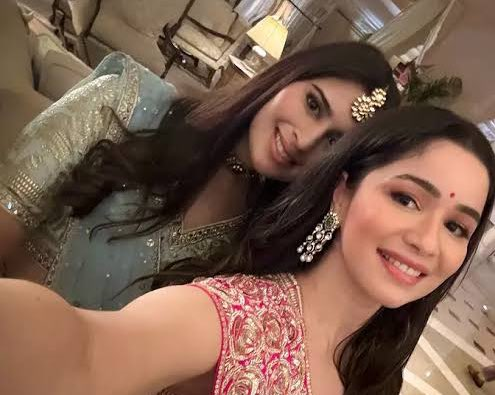
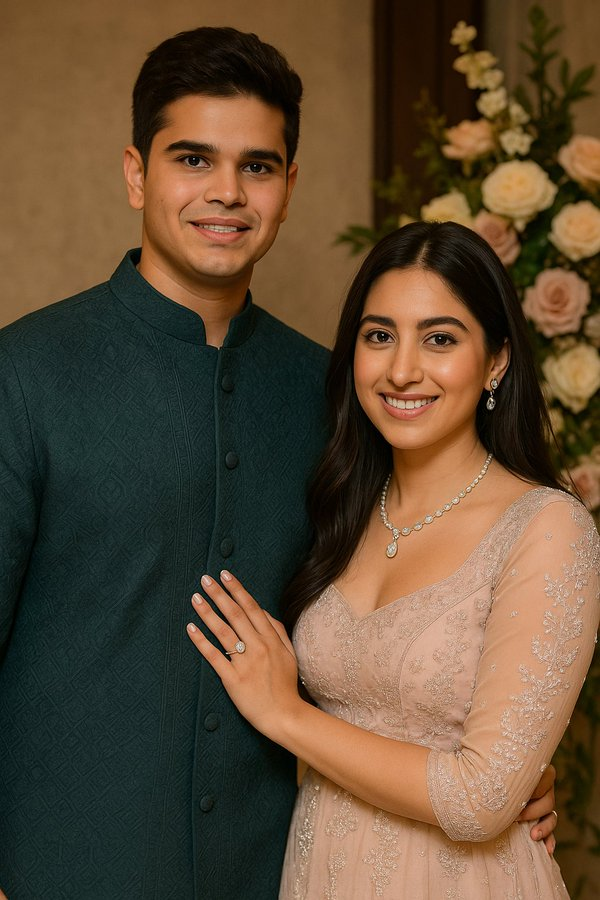
Arjun Tendulkar, son of former India captain and cricket icon has got engaged to #SaaniyaChandok, the granddaughter of prominent Mumbai businessman Ravi Ghai. The engagement was a private affair, attended by close friends and family from both sides.

Arjun, 25, is a left-arm fast-bowling all-rounder who represents Goa in domestic cricket and has played for the Mumbai Indians in the Indian Premier League.

Saaniya comes from one of Mumbai’s most recognised business families and is known to keep a low public profile. Neither the Tendulkar family nor the Ghai family has issued an official statement about the engagement.

Who Is Saaniya Chandok Engaged With Sachin Tendulkar's Son Arjun? Watch Out Pics...

Who Is Saaniya Chandok Engaged With Sachin Tendulkar's Son Arjun? Watch Out Pics...