Home Blog Page 208

Assam King Prithu: Reclaiming a Forgotten Legacy

0

The Assam Cabinet’s recent decision to name a flyover in Guwahati after Maharaja Prithu, a 13th-century ruler credited with resisting Turko-Afghan incursions, has sparked renewed public interest in a largely forgotten chapter of Indian history. The move is not just about infrastructure naming—it reflects a larger attempt to weave Prithu into Assam’s cultural memory alongside icons like Lachit Borphukan, the celebrated 17th-century Ahom general.

The Historical Backdrop

Prithu is believed to have ruled Kamrup in the early 13th century, during a time of political fragmentation in Assam. His significance arises from accounts of his resistance against Bakhtiyar Khilji, the infamous Turko-Afghan general who destroyed Nalanda University and attempted to extend his campaign into eastern India around 1206 CE.

While Khilji’s Bengal victories are well documented, his defeat in Assam remains a less clear episode. The Persian chronicle Tabaqat-i-Nasiri and inscriptions from North Guwahati mention a ruler called “Bartu” or “Prithu” who successfully checked Khilji’s advance. However, Assamese records from this period are sparse, leaving historians to rely heavily on external texts and oral traditions.

Evidence and Controversy

The historical evidence for Prithu comes primarily from:

  • A rock inscription near Guwahati,
  • References in Persian chronicles, and
  • Oral traditions that link him to forts and battle sites.

Yet, doubts remain. The Persian term “rae” used for Prithu may suggest he was a local chieftain rather than a sovereign monarch. Some scholars argue his victory was more of a regional skirmish than a decisive geopolitical event. The lack of indigenous written records makes it difficult to establish his precise status or the scale of his resistance.

Renewed Scholarship

In recent years, historians such as Raktim Patar have attempted to elevate Prithu’s profile, presenting him as a heroic defender of Assam and Indian civilisation. The narrative is being amplified by cultural organisations, seminars, and educational campaigns, aiming to position Prithu as an Assamese equivalent of Lachit Borphukan. This reflects a broader movement in India to reclaim regional heroes from relative obscurity and integrate them into the national imagination.

Why Prithu Matters Today

The recognition of Maharaja Prithu goes beyond historical curiosity. It symbolizes:

  • Assam’s role as a frontier resisting early Islamic incursions,
  • An effort to assert regional identity within the larger canvas of Indian history,
  • The challenges of reconstructing medieval history where evidence is fragmentary and contested.

By naming a prominent flyover after him, the Assam government has turned Prithu into more than just a historical figure—he is now a cultural symbol of resistance and pride, reminding us that even obscure rulers played a role in shaping India’s civilisational story.
‘Soon, India to See Skyscrapers Near Airports; Govt Study to Mirror New York, London and Hong Kong Models’

0

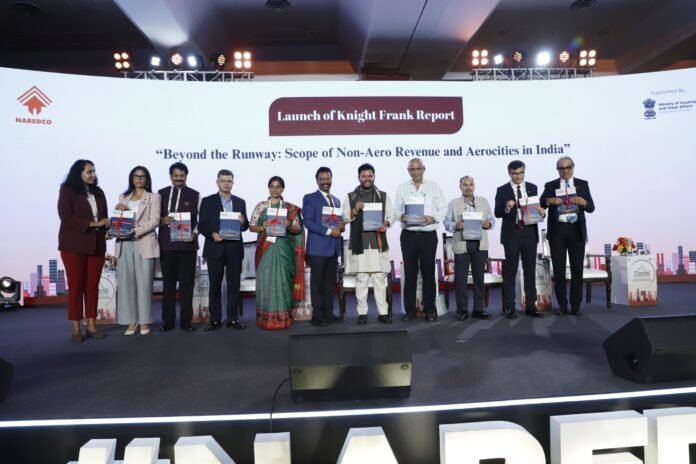
Kinjarapu Ram Mohan Naidu, Minister of Civil Aviation, Government of India, on Saturday announced that the Government would make serious efforts to amplify real estate activities within close proximity to upcoming and new airports in order to ensure sectoral growth to an intended level of 15% in the near future.

Addressing the second day of the NAREDCO 17th National Convention here today, the Minister indicated that a study is being undertaken to draw development cues from leading airports of the world such as those in New York, London, and Hong Kong, so that multiple large-scale economic activities can be ensured around upcoming airports in the country.

He pointed out that airports generate huge footfalls not only for recreation but also for diverse economic activities in and around their vicinity. Hence, the Government intends to encourage the creation of convention centers and hotels close to such airports for multiple economic gains.

The Minister emphasized that airports around New York, London, and Hong Kong operate at very high economies of scale with multiple associated activities, including real estate development. India, he said, would take a cue from these examples to develop similar utilities around new greenfield airports.

According to the Minister, the Government plans to add hundreds of airports to its civil aviation trajectory because of the sector’s potential for growth. He noted that in the recent past, the Government has already operationalized 88 airports, with many more in the pipeline.

“Since I come from the State of Andhra Pradesh, I would like the Members of NAREDCO to proactively come forward to build the new capital, Amravati, which will be a huge smart city with world-class facilities and infrastructure of the highest standards,” said Mr. Naidu.

Earlier, Kuldip Narayan, Joint Secretary, Ministry of Housing & Urban Affairs, Government of India, urged real estate developers to expand their horizons from building 4–5 lakh houses each year to 40–50 lakh annually so that the real estate and housing sector grows substantially and contributes critically to national GDP.

According to him, funding for such activities should come through institutionalized arrangements such as Real Estate Investment Trusts (REITs) and HUDCO. He added that the future challenge for the builder community is to manage housing—particularly affordable housing—through innovative housing management techniques, with a focus that goes beyond retail loans.

In his welcome remarks,  G Hari Babu, President, NAREDCO, assured the Minister that NAREDCO would come forward to participate in building the proposed Amravati capital city in close cooperation with the Government of Andhra Pradesh, with all its strength and resources.

Niranjan Hiranandani, Chairman, NAREDCO, in his address, pointed out that the growth of the real estate sector must be aligned with national requirements, and the industry must rise to deliver on those expectations.

India’s First Floating Ganpati Mandal Adds Spark to Surat’s Tapi River

0

By Nirjala Gaud

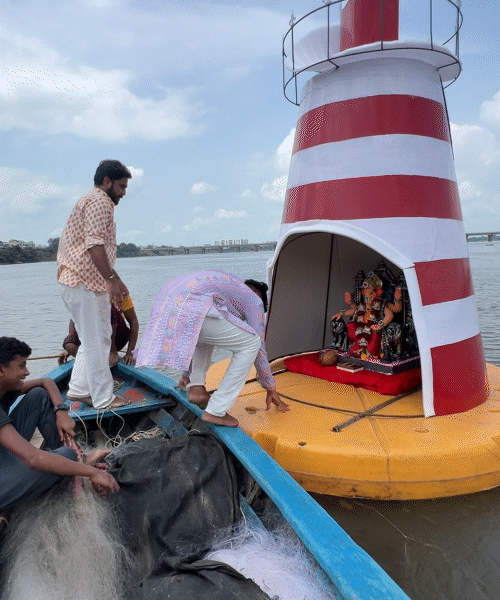
This Ganesh Chaturthi, Surat has unveiled a breathtaking spectacle with India’s first floating Ganpati Mandal on the Tapi River. Located at Panjpipla Street in Rander, the pandal, designed as a towering lighthouse, has captured hearts nationwide. Complete with a glowing torch at its peak, symbolizing guidance and light, the structure houses a cave-like chamber where a beautifully adorned idol of Lord Ganesha resides, appearing to glide gracefully on the water.

A Lighthouse of Devotion

The pandal’s unique lighthouse design is both a visual marvel and a feat of engineering. Built on a circular floater, the structure creates the illusion of a serene drift along the Tapi River. Inside, the Ganpati idol is enshrined in a cave-like chamber, blending artistry with spiritual reverence. The lighthouse motif serves as a powerful symbol of hope and direction, resonating deeply with devotees.

A Tradition Born from Resilience

The floating Ganpati Mandal traces its origins to 2007, established by the Rander community in the wake of devastating floods that struck Surat the previous year. The initiative was a heartfelt prayer for the city’s safety and to appease the Tapi River’s fury. Though paused during the pandemic, this cherished tradition has returned with renewed vigor, showcasing the community’s resilience and devotion.

Viral Sensation and Public Admiration

A video shared by the local Instagram page Kemcho Surat has catapulted the floating pandal to viral fame. The clip, showcasing devotees arriving by boat for darshan, has sparked widespread curiosity and admiration. Social media users have hailed the mandal as a stunning blend of faith, innovation, and artistry, setting a new benchmark for Ganesh Chaturthi celebrations.

A Celebration of Creativity and Spirituality

In a nation where Ganesh Mandals are renowned for their creativity, Surat’s floating Ganpati stands out as a unique marvel. Combining devotion with cutting-edge design and engineering, this lighthouse-inspired pandal not only honors Lord Ganesha but also reflects the indomitable spirit of Surat’s people. As the festival continues, the floating Ganpati Mandal shines as a beacon of inspiration, drawing devotees and onlookers to the banks of the Tapi River.

Lollapalooza India 2026: Linkin Park, Playboi Carti, and More to Headline Mumbai’s Music Extravaganza

0

By Nirjala Gaud

A Star-Studded Lineup at Mahalaxmi Racecourse

Lollapalooza India is set to electrify Mumbai’s Mahalaxmi Racecourse on January 24–25, 2026, with its fourth edition, featuring a powerhouse lineup headlined by Linkin Park, Playboi Carti, YUNGBLUD, Kehlani, and Knock2. Over 40 artists will perform across four stages, blending global superstars with India’s finest talent, promising an unforgettable two-day musical celebration.

Global Icons Meet Indian Talent

The 2026 edition marks the India debut of rock legends Linkin Park, who will perform as part of their “From Zero” World Tour. Fans can expect a setlist packed with classics like “Numb” and “In the End,” alongside tracks from their recent comeback album, From Zero. American rapper Playboi Carti, joined by his Opium labelmates Ken Carson, Destroy Lonely, and Homixide Gang, will also make their first-ever appearance in India. British punk-pop sensation YUNGBLUD and Grammy-nominated R&B star Kehlani, known for her soulful blend of R&B, neo-soul, and pop, add further star power to the lineup. Electronic music fans are in for a treat with Knock2, alongside other international acts like LANY, Fujii Kaze, The Midnight, Mother Mother, Sammy Virji, and Calum Scott.India’s vibrant music scene will shine through with performances from folk-metal pioneers Bloodywood, Ankur Tewari & The Ghalat Family, electronic fusion maestro Karsh Kale, and the dynamic duo OAFF-Savera. Emerging artists such as MXRCI, Sen, Zoya, and Gauley Bhai will also take the stage, showcasing the country’s next generation of musical talent.

Lollapalooza India’s Growing Legacy

Since its debut in 2023, Lollapalooza India has solidified its place as a global music festival, blending international heavyweights with homegrown artists. The inaugural edition featured Imagine Dragons, The Strokes, and Jackson Wang, while 2024 saw performances from The Jonas Brothers, Sting, Halsey, and OneRepublic. Last year’s event brought Green Day, Shawn Mendes, and Glass Animals to Mumbai, cementing the festival’s reputation for diverse, high-energy lineups. Produced by BookMyShow Live in partnership with Perry Farrell and C3 Presents, Lollapalooza India continues to elevate the country’s live music scene.

A Weekend of Music and Memories

With its eclectic mix of genres—spanning rock, rap, R&B, punk, and electronic—Lollapalooza India 2026 is poised to deliver a spectacular experience. As Mumbai gears up to host this global phenomenon, fans can look forward to a weekend of iconic performances, cultural fusion, and unforgettable moments under the city’s vibrant skyline.

What Is Zurich Diamond League Final Where Neeraj Chopra Made a Mark?

0

Indian javelin throw star Neeraj Chopra clinched second place at the Zurich Diamond League Final, narrowly missing the coveted title. Germany’s Julian Weber dominated the event, unleashing two throws over 90 meters, with his best at 91.51 meters, to claim the championship. Chopra, a two-time Olympic medalist, recorded a season-best throw of 85.01 meters in the fifth round, securing silver. Trinidad and Tobago’s Keshorn Walcott, the 2012 London Olympic gold medalist, took bronze with a throw of 84.95 meters.Reflecting on his performance, Neeraj admitted to facing challenges during the competition. “It was a tough day. There are always some difficult days in sport, and today was one of them. Still, I managed to throw over 85 meters in my final attempt. My run-up and timing weren’t perfect, and I felt something was off. But with three weeks left for the World Championships, I’ll work on getting back in rhythm,” he said post-match.

Season Highlights: A Mix of Triumphs and Near Misses

Neeraj’s 2025 season has been a blend of brilliance and close calls. At the Doha Diamond League in May, he breached the 90-meter mark for the first time with a throw of 90.23 meters but settled for silver as Weber’s 91.06 meters stole the show. However, Neeraj bounced back at the Paris Diamond League in June, clinching gold with an 88.16-meter throw, outpacing Weber (87.88 meters) and Brazil’s Mauricio da Silva (86.62 meters).Despite his consistent performances, the Zurich final marked Neeraj’s third consecutive year finishing second in the Diamond League Final. He previously won the prestigious Diamond League trophy in 2022, a highlight of his illustrious career.

What is the Diamond League?

The Diamond League is the pinnacle of track and field competitions, featuring 16 events held annually from May to September. The world’s top athletes compete for ranking points across various meets, with the best qualifying for the final. The winner of each event in the final is awarded the coveted Diamond Trophy and a substantial cash prize.

Next Stop: Defending Gold in Tokyo

Neeraj now sets his sights on the World Athletics Championships 2025, scheduled for September 13–21 in Tokyo. As the reigning Olympic champion, he aims to maintain his golden streak and return to peak form. With three weeks to fine-tune his technique, India’s javelin icon is determined to overcome his recent challenges and shine on the global stage once again.

Jonathan, the World’s Oldest Tortoise, Turns 192 in 2025 on St. Helena

0
Jonathan, the World's Oldest Tortoise, Turns 192 in 2025 on St. Helena

Jonathan: The Timeless Tortoise – Part 1

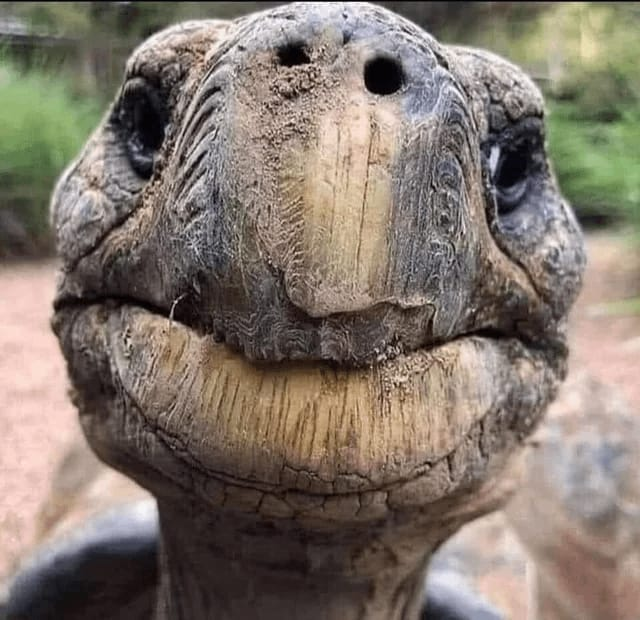
Jonathan, a majestic giant Seychelles tortoise residing on the remote island of Saint Helena, holds the distinguished title of the oldest living creature on Earth. Believed to have been born in 1832, Jonathan will reach an extraordinary age of approximately 192 years by 2025, earning him the status of the oldest known terrestrial animal. His remarkable longevity is officially recognized in the Guinness World Records.

Jonathan: The Timeless Tortoise – Part 2

Jonathan’s journey began when he was brought to Saint Helena in 1882 from the Seychelles as a prestigious gift to the then-governor, Sir William Grey-Wilson. Since that time, the island has seen 28 governors come and go. Historical evidence of his age includes rare photographs taken between 1882 and 1886, capturing him shortly after his arrival, as well as a cherished image of him alongside a young Queen Elizabeth II during her visit to the island. While no direct record of his birth exists, experts estimate his 1832 origin based on the fact that Seychelles giant tortoises reach full maturity around 50 years of age, aligning with his appearance upon arrival. Some speculate he could even be over 200 years old. In November 2022, Saint Helena Governor Nigel Phillips officially designated December 4, 1832, as Jonathan’s birthday, cementing his legacy.

Witness to History

Jonathan stands as a living testament to history, having witnessed the reigns of eight British monarchs. His life spans monumental events, including World War I, the construction of the Eiffel Tower, and countless other milestones. Now residing in the serene British Overseas Territory of Saint Helena in the South Atlantic Ocean, he embodies a living connection to the past.

Current Condition

Despite the toll of time, Jonathan remains a symbol of resilience. His advanced age has robbed him of his sense of smell and left him nearly blind due to cataracts. Yet, he continues to thrive in good health, captivating admirers and serving as an awe-inspiring example of longevity in the natural world. As of 10:57 AM IST on Saturday, August 30, 2025, Jonathan’s enduring spirit continues to inspire.

Daruma Doll: A Cultural Bridge Between India and Japan

0

When Prime Minister Narendra Modi received a Daruma doll during his recent visit to Japan, the moment was more than a simple exchange of gifts. It was a reminder of how symbols travel across borders, evolve with cultures, and yet preserve their spiritual essence. The Daruma doll, often regarded in Japan as a charm for perseverance and good fortune, carries within it the echoes of India’s ancient philosophical traditions.

Origins Rooted in India

The Daruma doll is inspired by Bodhidharma, a 5th-century monk from Kancheepuram, India. Known in Japan as Daruma Daishi, he is credited with founding Zen Buddhism after traveling to China. His legendary nine years of meditation—sitting motionless, facing a wall—became the basis of the doll’s unique design: rounded, limbless, and unblinking. The very name “Daruma” comes from “Dharma,” Sanskrit for universal law, underlining its Indian spiritual foundation.

Symbolism of Resilience

Crafted from papier-mâché, Daruma dolls are designed with a weighted base so that they always return upright when tipped over. This feature embodies the Japanese proverb “Fall seven times, stand up eight”, a philosophy of persistence in adversity. The ritual of painting in one eye when setting a goal and the other upon achieving it transforms the doll into a living metaphor for human determination—progress is only complete when purpose is fulfilled.

Daruma-ji: The Temple of Perseverance

The Shorinzan Daruma-ji Temple in Takasaki, founded in 1697, is the spiritual home of the Daruma doll. It grew into a cultural and economic hub, producing dolls that emperors, shoguns, and commoners alike sought for blessings of victory and success. Even today, students and entrepreneurs flock to the temple to seek good fortune, illustrating how an ancient symbol continues to shape modern aspirations.

India–Japan Cultural Convergence

What makes the Daruma doll particularly fascinating is its dual identity. For Japan, it is a local icon of luck and resilience. For India, it is a reminder of Bodhidharma—the wandering monk whose teachings seeded Zen. In this sense, the Daruma is not merely a talisman but a cultural bridge, embodying shared philosophies of perseverance, discipline, and spiritual awakening.

At a time when global diplomacy often emphasizes economics and defense, the Daruma doll reminds us that cultural symbols can be just as powerful in binding nations together. A small figure with blank eyes, it urges us to envision our goals clearly—and to rise, again and again, until they are fulfilled.

Jaipur Surgeon Restores National Rifle Shooter’s Dream After Injury

0

By Dr Yash Goyal 

A rifle shooter returns to play again after a rare thigh and shoulder reconstruction surgeries in small town of Kishangarh in Rajasthan recently.

In a remarkable blend of medical expertise and surgical precision, Dr. Rohil Singh Kakkar, Consultant Orthopaedic & Joint Replacement Surgeon at Eternal Hospital, Jaipur, has helped a 17-year-old rifle shooter from Kishangarh, Ajmer district, return to competitive sports after a devastating injury nearly halted his budding career.

In May 2023, Master Shiv Pratap Singh Rathore suffered multiple traumatic injuries: a Grade 3 compound wound to the right thigh, a displaced mid-shaft fracture of the clavicle, and a rotator cuff tear in the right shoulder – all on his dominant side. For a rifle shooter who relies on shoulder stability and precision, these injuries came close to shattering his sporting ambitions.

Shiv was admitted to Marble City Hospital, Kishangarh, where Dr. Kakkar undertook the challenging case. On 6 May 2023, he performed complex reconstructive surgeries on the young athlete’s right shoulder and thigh.

“Operating on an athlete’s dominant side is never easy. Beyond repairing the injury, the goal is to restore performance and confidence,” Dr. Kakkar explained.

Pic :Dr Rohil Singh Kakkar 

Following surgery, Shiv underwent a rigorous rehabilitation protocol designed and supervised by Dr. Kakkar. This included early pain and swelling management, progressive range-of-motion exercises, targeted muscle strengthening, and eventually sports-specific training. Within months, Shiv regained full mobility and returned to competitive shooting.

His comeback has been nothing short of inspirational. Post-surgery, Shiv qualified for and competed in several prestigious tournaments, including the 67th National Shooting Championship in Bhopal, the 43rd North Zone Air Rifle Championship in New Delhi, the India Open Shooting Championship in Bhopal, and the 23rd Rajasthan State Rifle Pistol Championship in Jaipur.

“I had almost given up hope, but Dr. Kakkar assured me I could return stronger,” Shiv said. “Today, I am competing at state and national levels, and my dream is to represent India internationally.”

Dr. Kakkar, who has been internationally published for his innovative surgical techniques, believes this case underlines the growing importance of advanced sports medicine and orthopaedic reconstruction in Rajasthan. His intervention not only saved a career but also set an example of how timely surgery, scientific rehabilitation, and expert care can turn adversity into achievement.  

Salwa Judum Verdict: Justice Beyond Politics

0

By Soniya Yadav

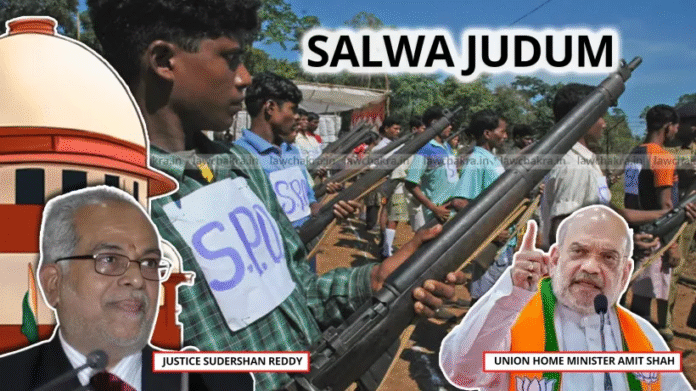
In 2011, the Supreme Court of India delivered a historic judgment in Nandini Sundar & Others vs State of Chhattisgarh, striking down the state-backed militia movement known as Salwa Judum. What seemed at the time like a decisive closure has resurfaced now, as political debates drag this verdict back into controversy.

This case was not just about one state or one conflict—it was about the very foundations of India’s constitutional democracy. At its heart lay a difficult question: how far can the state go in the name of security, and at what cost to fundamental rights?

Salwa Judum Verdict: Justice Beyond Politics

Salwa Judum, initiated in 2005, was promoted as a “people’s movement” against Maoist insurgency in Chhattisgarh. Supporters claimed it was a grassroots uprising where tribal communities themselves had decided to fight back against Naxalite domination. However, the ground reality turned out to be very different.

Under this initiative, the state armed tribal youth by designating them as Special Police Officers (SPOs) and pushed them into direct conflict with the Maoists. With little to no training and minimal accountability, these young men became foot soldiers in a brutal war. Very soon, reports began to emerge of large-scale human rights violations: villages being burnt down, families being displaced, and innocents being caught in the crossfire.

Instead of providing protection, Salwa Judum left vulnerable communities trapped between two forces—on one side the violence of Naxal insurgents, and on the other the coercion of state-backed vigilantism. What was presented as empowerment soon turned into exploitation of tribal populations who were already among the most marginalized groups in the country.

The 2011 Supreme Court Verdict

On 5 July 2011, Justices B. Sudershan Reddy and S.S. Nijjar declared Salwa Judum unconstitutional. Their judgment was a landmark because it firmly reminded the state that in a democracy, the end can never justify the means.

The Court held that:

Arming untrained civilians violated the Right to Equality (Article 14) and the Right to Life (Article 21) guaranteed by the Constitution.

The state cannot outsource policing to civilians; the duty to protect citizens lies solely with the government and its trained institutions.

All weapons issued to SPOs must be withdrawn immediately, and the movement itself had to be disbanded.

This was not merely a technical legal ruling. It was a powerful reminder that constitutional morality cannot be sacrificed even in the name of fighting extremism. The verdict reaffirmed that in India, rule of law stands above expediency, and even the state cannot bend constitutional principles to serve short-term goals.

The Recent Controversy

The Salwa Judum verdict entered the spotlight again more than a decade later when Union Home Minister Amit Shah publicly criticised Justice B. Sudershan Reddy, one of the judges behind the ruling. Shah argued that the judgment had harmed India’s fight against Naxalism. His remarks came in the context of Justice Reddy’s nomination as the opposition’s Vice-Presidential candidate.

This statement reignited old debates and shifted the focus from the legal principles of the case to a political tug-of-war. What was once a judicial decision rooted in constitutional values was suddenly turned into a tool for political scoring. Instead of debating policy choices, the conversation became about questioning the wisdom of judges who upheld fundamental rights.

By criticising a decade-old judgment in this manner, the controversy blurred the boundary between judicial independence and political rivalry. It sent a message that constitutional decisions could be reopened, not through the judicial process, but through political attacks.

My View

To me, this controversy highlights an important principle: judicial judgments and political conflicts should never be mixed.

The Supreme Court’s verdict in 2011 was not about supporting Maoists or opposing the state—it was about protecting the Constitution. The judgment emphasised that even when the nation faces grave security threats, we cannot allow fear or politics to erode the rights and dignity of citizens.

When political leaders attack judicial rulings for short-term gains, it weakens both institutions—the judiciary and politics itself. Such statements risk creating a precedent where leaders may casually undermine judicial decisions, shaking public trust in the impartiality of the courts.

Amit Shah’s remarks may set a dangerous example, encouraging future leaders to exploit judicial decisions for partisan advantage. If judicial verdicts are dragged into political mudslinging, the very independence of justice is threatened. The judiciary is meant to be the guardian of the Constitution, not an arena for political battles. Mixing these two spheres endangers the balance of democracy itself.

Conclusion

The Salwa Judum verdict of 2011 remains a landmark in Indian constitutional history. It was not just about dismantling a controversial movement—it was about reaffirming that the Constitution stands above the state’s convenience. Even in the toughest of times, humanity, dignity, and rights cannot be compromised.

Today, as this judgment is once again drawn into political controversies, we must remember its deeper lesson. Democracy thrives when institutions respect their boundaries: politics may debate policies, but the judiciary must always stand above partisanship.

Ultimately, respecting judicial independence is not about protecting judges—it is about protecting democracy itself

Salwa Judum Verdict: Justice Beyond Politics

(Written by Soniya Yadav, B.A pass course, Kanoriya College)

Padmanabh from Jaipur Selected in CBSE West Zone Under 17 National Cricket Team

0

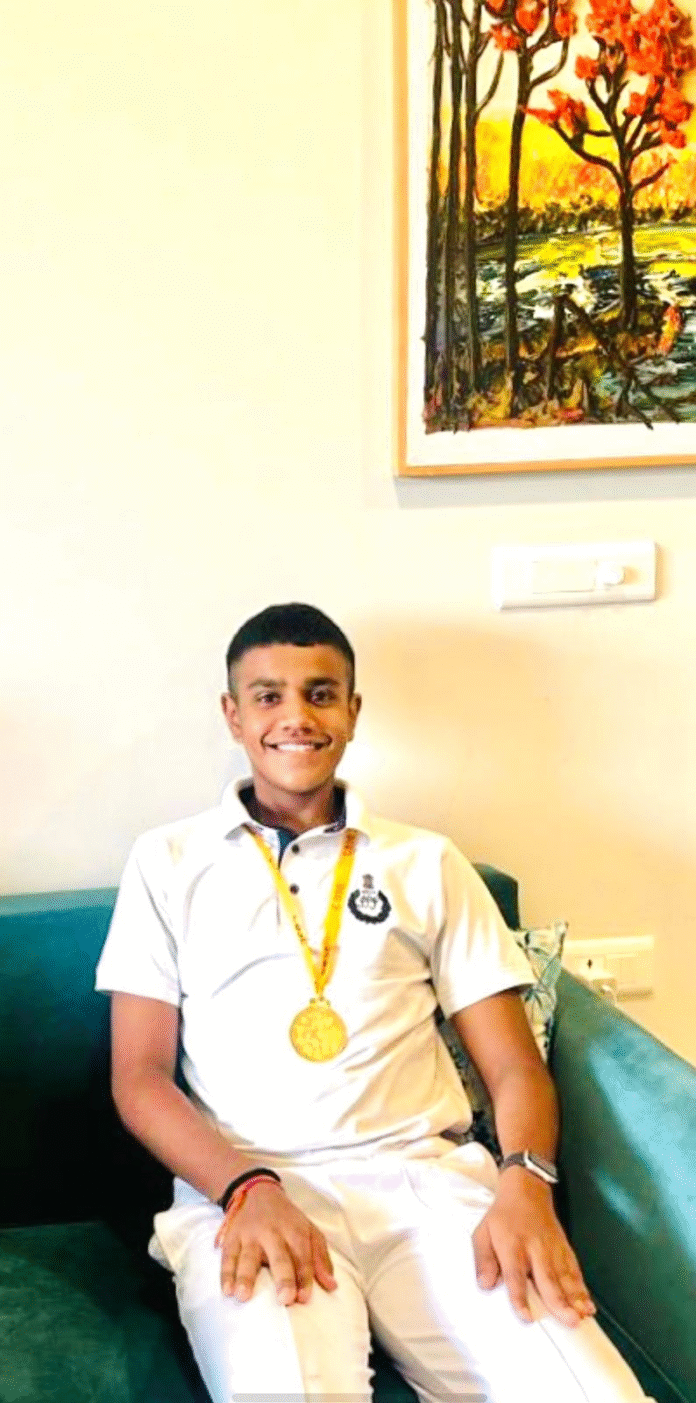
A ninth class student Padmanabh Chaudhary selected in the “CBSE West Zone” Under- 17 National cricket team.

It is a matter of pride for Jaipur and Rajasthan. Padamnabh is son of Pankaj Choudhary IPS and student of the prestigious Saint Xavier’s School, Jaipur, is the only player in the history of cricket to have won a gold medal.

Padmanabh from Jaipur Selected in CBSE West Zone Under 17 National Cricket Team

Padmanabh’s name emerged in the West Zone’s team in the selection competition held on 26, 27 and 28 August in Bhopal (Madhya Pradesh). He performs well as a right-hand batsman and a good fielder.

Padmanabh from Jaipur Selected in CBSE West Zone Under 17 National Cricket Team

Padmanabh Chaudhary’s cricket enthusiast father developed an interest in cricket. Pankaj Chaudhary also led the national, state level and many universities. Next month he is participating in the CBSE national team.