Home Blog Page 198

The Power of ₹1: Why India’s Shagun Lifafa Is Never Just A Round Number

0

In the vibrant tapestry of Indian traditions, few customs are as quietly profound as the humble Shagun lifafa—an envelope of money gifted during weddings, birthdays, housewarmings, and festivals. But look closely, and you’ll notice something curious: the amounts are rarely round. Instead of ₹100, it’s ₹101. Instead of ₹500, it’s ₹501. That extra one rupee isn’t just spare change—it’s a symbol steeped in cultural, emotional, and spiritual significance.

What Is a Shagun Lifafa?

A Shagun lifafa is more than a monetary gift. It’s a gesture of goodwill, a blessing wrapped in paper. Whether handed to a bride and groom, a newborn’s parents, or a host during Diwali, it carries the giver’s best wishes for prosperity, happiness, and continuity.

Why the Odd Numbers?

The tradition of gifting odd-numbered amounts—₹51, ₹101, ₹501, ₹1001—is rooted in symbolism:

  • Indivisibility: Odd numbers like ₹101 cannot be split evenly, representing unity and unbreakable bonds. In weddings, this is especially meaningful, symbolizing a marriage that cannot be divided.
  • Continuity Over Completion: Round numbers like ₹100 feel final, closed. Adding ₹1 transforms the gift into a symbol of ongoing blessings and growth. It’s a way of saying, “May this be the beginning, not the end”.
  • Spiritual Resonance: In Hindu belief, the number one signifies new beginnings. It invokes the blessings of Lord Ganesha, the remover of obstacles, and Goddess Lakshmi, the bringer of wealth. That one rupee coin is often seen as a token of divine goodwill.

The Coin That Carries Legacy

Even in today’s digital age—where UPI transfers and QR codes dominate—many Indians still add ₹1 to their digital Shagun amounts. A ₹1001 transfer feels more intentional, more heartfelt, than ₹1000. Psychologists note that non-rounded gifts are remembered longer, adding emotional weight to the gesture. Historically, this tradition traces back to Vedic rituals where dakshina (offerings) were given in odd numbers, believed to bring infinite returns. Over centuries, the practice evolved—from coins wrapped in cloth to envelopes and now digital lifafas—but the essence remains unchanged.

A Blessing, Not Just a Gift

The extra rupee in a Shagun lifafa is a quiet whisper of hope. It says: “May your joy multiply. May your bond remain indivisible. May your journey begin anew.” It’s a reminder that in India, even the smallest coin can carry the weight of generations. So the next time you slip ₹501 into an envelope, know this: you’re not just giving money. You’re giving meaning.


She Faced Anxiety, Fashioned Resilience, And Now Wears International Crown—Meet Roosh Sindhu

0

Once bullied for her looks and silenced by anxiety, Roosh Sindhu now stands tall as Miss International India 2025, ready to represent the nation in Tokyo. Her journey—from a childhood TV commercial in Nagpur to walking the ramp at New York Fashion Week, and now clinching India’s crown—is a masterclass in resilience, reinvention, and raw ambition. Armed with a degree in Psychology and a passion for mental health advocacy, Roosh isn’t just a beauty queen—she’s a voice for healing, hope, and high fashion. Her story is India’s story: dramatic, determined, and destined for the world stage.

Early Life & Roots

Born in Nagpur and now based in New Delhi, Roosh began her journey in entertainment at just four years old with a TV commercial. She pursued Journalism and Fashion Design, even showcasing her work at New York Fashion Week 2019.

Struggles & Advocacy

Roosh faced bullying and anxiety during her formative years, which later fueled her passion for mental health advocacy. With six years of academic training in Psychology and UK-accredited certifications in psychotherapy, she’s become a voice for emotional resilience. Her work earned her national recognition from the NSUI for contributions to student mental health.

Pageant Journey

After an unplaced run at Miss Universe India 2024, Roosh returned stronger in 2025, clinching multiple subtitles including Miss Photogenic and Best National Costume, before being crowned Miss International India. Her story isn’t just about beauty—it’s about breaking barriers, healing through purpose, and turning pain into power. A true campaign moment waiting to be dramatized, Anjali-style.

Navi Mumbai International Airport: India’s Bold New Gateway to the Skies, Reddy To Inaugurate

0

In the heart of Maharashtra’s booming coastline, a lotus is about to bloom—and it’s not just symbolic. The Navi Mumbai International Airport (NMIA), officially named Loknete DB Patil Navi Mumbai International Airport, is set to redefine India’s aviation landscape with its dramatic design, cutting-edge infrastructure, and transformative regional impact.

What Makes NMIA Special?

1. A Second Gateway to Mumbai

  • Designed to ease the load on Chhatrapati Shivaji Maharaj International Airport, NMIA will serve as Mumbai’s second major airport.
  • Strategically located between Ulwe and Panvel, it connects seamlessly to South Mumbai via the Atal Setu (MTHL) and the upcoming Ulwe Coastal Road, which literally lands inside the airport campus.

2. Lotus-Inspired Architecture

  • The terminal, crafted by Zaha Hadid Architects, draws inspiration from the lotus flower—India’s symbol of purity and resilience.
  • Expect light-filled spaces, intuitive wayfinding, and a design that blends heritage with futuristic elegance.

3. Phased Powerhouse

  • Phase 1 will handle 20 million passengers annually and 0.5 million tonnes of cargo.
  • Full capacity aims for a jaw-dropping 90 million passengers per year, making it one of the largest in Asia.

4. Multimodal Connectivity

  • NMIA isn’t just an airport—it’s a hub. Integrated with metro, rail, road, and sea links, it promises frictionless movement for travelers and cargo alike.

5. Greenfield Brilliance

  • Built from scratch (greenfield), NMIA avoids legacy constraints and embraces smart systems, sustainable design, and digital-first operations.

What’s New, What’s Next

Opening Date: Projected for 30 September 2025, with phased operational trials to follow.

Passenger Costs: Interim User Development Fees (UDF) are set—₹620 for domestic departures, ₹1,225 for international, subject to change post March 2026.

Final Touches: Civil works are nearly complete. Interior fit-outs, safety checks, and systems integration are in full swing

NMIA isn’t just infrastructure—it’s aspiration made concrete. It signals India’s readiness to host global traffic, boost regional economies, and offer travelers a world-class experience rooted in Indian identity.

You Can’t Do It, Bro’? He Did It All. Elvish Yadav’s Viral Revenge, Flips his iconic roast line into a victory

0

(PC:newsresolution.com)

“Bhai tumse na ho payega!”
That iconic roast line didn’t just spark laughter—it sparked a movement. Elvish Yadav didn’t become India’s digital darling by accident. His rise is a full-blown desi blockbuster: small-town boy, big dreams, viral fame, and a reality show crown.

Real name: Siddharth Yadav
Born: September 14, 1997, in Wazirabad, Gurgaon, Haryana
Education: Amity International School → Hansraj College, Delhi (B.Com)

Elvish grew up in a middle-class family, surrounded by the everyday drama of small-town life. But even as a kid, he had a knack for storytelling and humor. He was the guy who’d turn a boring school skit into a laugh riot. That flair for drama? It never left him.

The YouTube Breakthrough

In 2016, inspired by creators like Ashish Chanchlani and Amit Bhadana, Elvish launched his first channel—originally called The Social Factory, later rebranded to Elvish Yadav. His early content was raw, relatable, and packed with punchlines. He roasted TikTokers, spoofed college life, and built a loyal fanbase that loved his Haryanvi swag.

Today:

  • 15.5M+ subscribers on his main channel
  • 3B+ views across all platforms
  • Multiple channels: comedy, vlogs, gaming

Bigg Boss OTT 2: The Gamechanger

In 2023, Elvish entered Bigg Boss OTT 2 as a wildcard—and walked out as the first wildcard winner in the show’s history. His unapologetic attitude, sharp wit, and emotional moments won hearts across India. Suddenly, he wasn’t just a YouTuber—he was a household name.

Beyond the Screen

Elvish is also a savvy entrepreneur and philanthropist:

  • Systumm Clothing: His fashion brand, dripping with Gen-Z attitude
  • Elvish Yadav Foundation: Supporting underprivileged children
  • Entertainers Cricket League: Captain of Haryanvi Hunters, who won the 2024 title

Why He’s More Than Just an Influencer

Elvish blends mass appeal with authenticity. He’s not chasing trends—he’s setting them. Whether it’s roasting celebs, launching merch, or winning reality shows, he’s always in “systumm” mode.

Singapore’s Urban Mobility: A Model for Sustainable City Travel

0

(PC:Tommorow city)

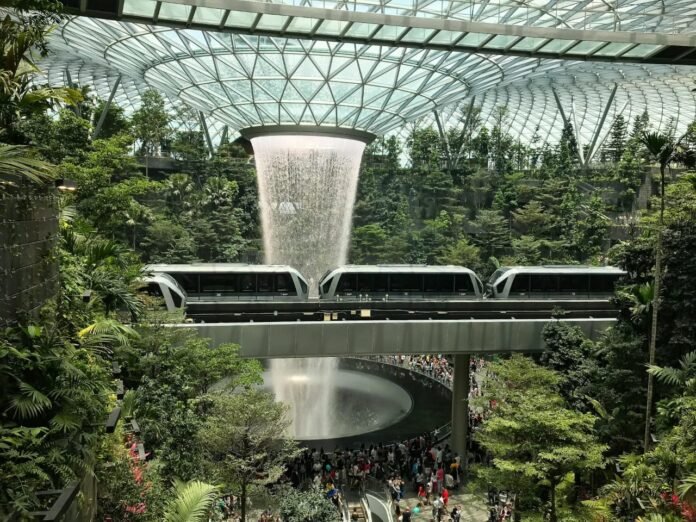
Singapore’s urban mobility model stands as a global benchmark for balancing limited urban space with efficient, sustainable transportation. Through decades of deliberate policy-making, the city-state has prioritized public transport, active mobility, and controlled car ownership to create a highly connected, eco-friendly urban environment. This article explores the key components of Singapore’s approach, highlighting its innovative strategies for managing vehicle growth and promoting greener commutes.

The Certificate of Entitlement System

A cornerstone of Singapore’s urban mobility strategy is its strict control over private vehicle ownership. The Certificate of Entitlement (COE) system, a market-based licensing mechanism, limits the number of vehicles on the road by requiring owners to bid for a 10-year permit. This makes car ownership significantly expensive, effectively regulating vehicle population and easing pressure on Singapore’s limited road infrastructure. By keeping car growth low, the COE system ensures that congestion remains manageable, allowing the city to focus on alternative modes of transport.

The Backbone of Urban Mobility

Public transportation is the lifeline of Singapore’s mobility ecosystem, with over half of its residents relying on buses and trains for daily commutes. The government has invested heavily in expanding the Mass Rapid Transit (MRT) and bus networks, prioritizing connectivity, reliability, and accessibility. Ongoing enhancements to rail lines and bus services ensure that public transport remains a convenient and efficient option for commuters, reducing dependence on private vehicles and supporting a sustainable urban lifestyle.

Walking and Cycling Networks

Singapore is committed to fostering healthier and greener commutes through its growing infrastructure for walking and cycling. The city boasts over 730 km of cycling paths and park connectors, linking residential areas to MRT stations, bus interchanges, amenities, and recreational spaces. With ambitious plans to expand this network to 1,300 km by 2030, Singapore is creating a seamless active mobility ecosystem. These pathways encourage residents to embrace cycling and walking, reducing carbon emissions and promoting physical well-being.

Integrated Urban Planning for a Connected Future

Singapore’s urban mobility success is underpinned by forward-thinking urban planning. Policies prioritize transit-oriented development, ensuring that residential and commercial areas are closely integrated with public transport hubs. This approach minimizes travel distances, enhances accessibility, and supports a car-lite lifestyle. By aligning land use with transportation infrastructure, Singapore maximizes the efficiency of its mobility systems while maintaining a high quality of urban life.

A Blueprint for People-Centric Urban Travel

Singapore’s urban mobility model demonstrates how strategic policies can transform a city into a hub of sustainable, efficient, and people-centric transportation. Through the COE system, robust public transport networks, and an expanding active mobility infrastructure, the city-state has created a blueprint for managing urban growth while prioritizing environmental sustainability. As Singapore continues to innovate and expand its mobility solutions, it remains a leading example of how cities can thrive by putting people and the planet first.

A Giant Feast: Nigerian Chef Hilda Baci Attempts World’s Largest Pot of Jollof Rice

0

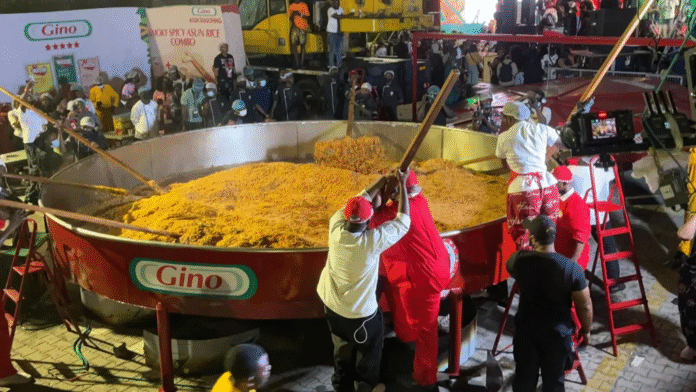
In the heart of Lagos, the aroma of tomato, spices, and slow-simmering rice drifted through the air as thousands gathered to witness history in the making. At the center of it all was Nigerian chef and culinary star Hilda Baci, who set out to cook what could become the world’s largest pot of jollof rice—a dish as symbolic as it is beloved across West Africa.

Baci, 28, is no stranger to headline-making feats. In 2023, she stunned the world with a grueling 93-hour-and-11-minute cooking marathon, earning her the Guinness World Record for the longest continuous cooking session. Two years later, she returned with an even bigger dream—literally.

This time, her challenge was measured not in hours but in sheer scale. Into a custom-built steel vessel the size of a small swimming pool, Baci and her team poured 4,000 kilograms of rice, 500 cartons of tomato paste, and 600 kilograms of onions, creating a bubbling pot that could feed a town. The pot itself—crafted over two months by engineers and artisans—held nearly 23,000 liters of food.

The preparation was nothing short of monumental. A 300-person crew worked in shifts, stirring the enormous pot with giant wooden spatulas to ensure even cooking. After several hours, the steaming jollof rice was dished out and shared with the crowd—a fitting tribute to a food known for its communal spirit.

For Baci, this wasn’t just about breaking records. “We are the giant of Africa, and jollof is a food that everybody knows Africans for,” she told BBC Pidgin. “It would make sense if we had the biggest pot of jollof rice. It would be nice for the country.”

Jollof rice, with its bright red tomato base, fiery spices, and versatility with meat or seafood, is more than a meal—it’s a cultural icon, fiercely debated across West Africa over whose version is best.

Baci’s attempt now awaits official verification by Guinness World Records, backed by photo and video evidence. Whether or not it makes the books, the event has already carved its place in Nigerian history—a celebration of food, culture, and the power of one chef’s determination to dream bigger than anyone imagined.

How America Earns from India’s Tech Sector: A Breakdown of the Economic Ties

0

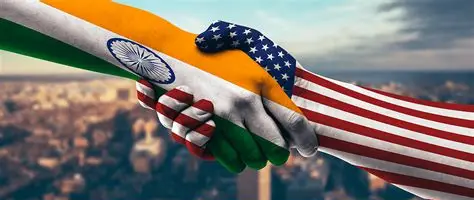
Every time an Indian engineer writes code for a Silicon Valley startup, or a Bengaluru firm troubleshoots a New York bank’s software, money quietly flows westward. India’s tech brilliance may be lighting up the global stage—but behind the scenes, the United States is cashing in. From billion-dollar outsourcing deals to student tuition and software royalties, America earns massively from India’s digital rise. This isn’t just a partnership—it’s a profit engine.

Indian Tech Powers American Business

India’s IT sector is one of the largest in the world, with companies like TCS, Infosys, Wipro, and HCLTech providing services to over 75% of Fortune 500 companies—most of which are headquartered in the United States.

According to a joint report by Nasscom and IHS Markit:

  • Indian tech firms generated $396 billion in U.S. sales in 2021
  • They contributed $198 billion to the U.S. economy, more than the combined GDP of 20 U.S. states
  • They directly employed 207,000 people in the U.S., with an average salary of $106,360 per year

Key Channels of U.S. Earnings from India

Here’s how the U.S. benefits financially:

ChannelDescription
Outsourcing ServicesU.S. companies pay Indian firms for IT services, but often resell them at higher margins domestically.
Corporate TaxesIndian firms operating in the U.S. pay taxes that support American infrastructure and programs.
STEM InvestmentsIndian companies have invested $1.1 billion in U.S. STEM education and workforce development.
Digital PlatformsU.S. tech giants like Google, Microsoft, and Amazon earn billions from Indian users via cloud services, ads, and app sales.
Education & IP RoyaltiesIndian students and businesses pay for U.S. education, software licenses, and intellectual property rights.

The Hidden Surplus

While trade debates often focus on goods, the real story lies in services and digital revenues. A 2025 report by the Global Trade Research Initiative (GTRI) revealed:

  • The U.S. earns $80–85 billion annually from India through services, education, and digital platforms
  • This creates a $35–40 billion surplus, contradicting claims of a trade deficit

Why It Matters

India’s tech sector is not just exporting code—it’s exporting value, jobs, and innovation. But the U.S. earns significantly from this relationship, often in ways that aren’t visible in traditional trade statistics. As India negotiates future trade deals, understanding these hidden flows of money and influence is crucial. It’s not just about exports—it’s about leverage

US HIRE Act 2025: Impact on Indian IT Industry and Students in STEM Fields

0

The United States has recently intensified its protectionist policies targeting global trade and immigration. The proposed Halting International Relocation of Employment (HIRE) Act 2025 aims to discourage outsourcing by imposing heavy taxes on foreign service providers. This legislation could reshape India’s IT exports and restrict opportunities for Indian students in US STEM fields.

What is the HIRE Act 2025?

The HIRE Act, introduced in the US Senate, proposes:

  • A 25% excise tax on payments made to foreign service providers.
  • A ban on tax deductions for such expenses.
  • A possible 50% duty on imported hardware.

These measures could increase the effective cost of offshored IT services by nearly 60% after taxes, making outsourcing to India less attractive for American companies.

Implications for the Indian IT Industry

India’s IT sector generates over 60% of its revenues from exports to the US. The HIRE Act directly threatens this model by making outsourcing costlier.

  • Large firms may absorb some of the impact due to long-term contracts.
  • Small and mid-sized IT companies could face survival challenges.
  • US firms might increase onshore hiring, but this comes with higher costs, expertise gaps, and operational risks.

Outsourcing remains 20–40% cheaper than onshore services, so while immediate disruptions are likely, long-term economic logic still favours hybrid outsourcing models.

Impact on Indian Students in the US

The broad definition of “foreign person” under the Act could affect international students, including F-1 visa holders under the OPT (Optional Practical Training) scheme.

  • Wages paid to foreign students could face higher taxes.
  • This may reduce job opportunities for Indian students in STEM fields.
  • Career prospects in areas like AI, cybersecurity, and semiconductor design could narrow despite high US demand.

US STEM Talent Shortage vs. Protectionism

The US faces a critical shortage of STEM graduates, particularly in emerging fields such as:

  • Artificial Intelligence (AI)
  • Cybersecurity
  • Semiconductor design

Indian graduates from US institutions are a key part of the tech workforce. Restricting them could hurt US innovation while limiting opportunities for Indian talent.

Strategic Response for India

To safeguard its workforce and IT exports, India must:

  • Diversify student destinations to Germany, Canada, Australia, and other countries.
  • Invest in deep technologies such as AI, biotechnology, and advanced R&D.
  • Support IT firms in developing resilient global business models less dependent on US outsourcing.

Future Outlook

Although the HIRE Act 2025 may face resistance from US corporate lobbyists, the current climate of protectionism increases its chances of approval. The potential risks to India’s IT industry and Indian students abroad are significant, demanding proactive strategies from policymakers and industry leaders.

Udaipur Earns Ramsar Wetland City Accreditation

0
Jaisamand Lake
Winter Capital of Udaipur

Udaipur, the famed “City of Lakes,” has been awarded the Ramsar Wetland City Accreditation, recognising its outstanding efforts in conserving urban wetlands and promoting sustainable management. The honour was conferred during the Swachh Vayu Sarvekshan Awards and Wetland Cities Recognition Ceremony organised by the Ministry of Environment. With this, Udaipur joins a select group of global cities committed to balancing urban growth with ecological preservation.

Why Wetlands Matter
Wetlands are often described as the “kidneys of the environment” by the Ramsar Convention. They act as natural filters, regulate floods, absorb pollutants, and provide habitat for diverse biodiversity. Beyond ecology, wetlands also sustain cultural traditions and local economies. However, urban wetlands face severe pressures from rapid city expansion, making their active management essential.

Criteria for Accreditation
The Ramsar Wetland City Accreditation demands strict compliance with conservation norms. Cities must demonstrate strong wetland protection policies, community engagement, integration of wetland zones in urban planning, biodiversity conservation, and sustainable livelihood promotion. Udaipur met these standards through decades of lake conservation efforts, public participation initiatives, and eco-tourism development.

Swachh Vayu Sarvekshan Awards 2025
The ceremony also recognised 130 cities under the National Clean Air Programme (NCAP). Indore topped the rankings with a perfect 200/200 score, while Jabalpur, Agra, Surat, Amravati, and Dewas were among the other high performers. Eleven cities were honoured for achievements in air quality, green transport, pollution control, and waste management.

Financial Push for Clean Air
To back clean air initiatives, ₹1.55 lakh crore has been mobilised across 130 cities—₹20,130 crore under NCAP and additional funds through central and state schemes. The support will strengthen tree plantation, e-vehicle adoption, waste-to-energy projects, and real-time air quality monitoring.

India’s Wetland Progress
India now has 91 Ramsar sites, the highest in Asia and third worldwide, covering 1.36 million hectares. National campaigns like Mission Amrit Sarovar and Ek Ped Maa Ke Naam focus on restoring water bodies and mass afforestation. Udaipur’s global recognition highlights the success of combining community participation, eco-tourism, and modern urban planning with traditional conservation practices.

Do you know Where Is The lord Shiva’s Tallest Statue? Its Not In India, Know All About It…..

0

(PC: indiatoday)


In a historic celebration of faith and cultural heritage, the Bhavani Shankar Mandir in Brampton unveiled a 54-foot-tall statue of Lord Shiva, now officially the tallest Shiva statue in North America. Towering above Nexus Avenue, the statue has instantly become a spiritual landmark and a symbol of the South Asian community’s growing presence in Canada.

Sculpted by a Master, Powered by the People

The statue was designed and sculpted by Naresh Kumar Kumawat, a renowned artist from Rajasthan, India, whose work spans over 80 countries and includes more than 200 monumental sculptures. Kumawat is also the creative force behind:

  • The 55-foot Hanuman statue at Hindu Sabha Mandir, Brampton
  • The 51-foot Ram statue at Hindu Heritage Centre, Mississauga
  • A 75-foot Samudra Manthan mural in India’s new Parliament building
  • The 369-foot Shiva statue in Nathdwara, Rajasthan—one of the tallest in the world

The Brampton Shiva statue was constructed over two years, assembled in multiple pieces, and features Lord Shiva in his meditative pose with blue skin, a trident (trishul), a staff, and a serpent around his neck.

A Community-Led Triumph

The project was made possible through grassroots fundraising, generous donations, and volunteer labor. The unveiling ceremony included a Rath Yatra procession, traditional consecration rites, and collective chanting of “Har Har Mahadev,” drawing thousands of devotees from across the Greater Toronto Area.

More Than a Monument

Visible from multiple vantage points across Brampton, the statue is expected to become a major tourist and spiritual destination, especially during weekend pujas and festivals when the temple plaza comes alive with processions, flower offerings, and devotional music. For Canada’s Indian diaspora, the installation is more than architectural—it’s a living symbol of heritage, resilience, and identity, bridging continents and generations