Home Blog Page 190

Google Gemini AI Can Now Transcribe Audio Files: How It Works

0

Google’s Gemini AI assistant has rolled out a significant update that enables users to upload audio files for transcription, summarization, and key information extraction. The feature supports recordings of up to 10 minutes—covering voice memos, lectures, meetings, and interviews—and converts them into searchable documents within the Gemini platform.
Google Gemini AI Can Now Transcribe Audio Files: How It Works

Available across web and mobile apps via the standard file-upload option, this tool differs from Gemini Live, which manages real-time voice commands, by focusing specifically on pre-recorded audio analysis.

High Accuracy and Task Extraction

Josh Woodward, Google’s VP of Gemini, said audio uploads were the most requested feature, reflecting strong user demand for simplified audio handling. Early testing showed high transcription accuracy across varied formats like phone calls and comedy sketches, though some errors remain—especially with name recognition, reports trak.in.

Beyond transcription, Gemini can extract tasks, generate to-do lists, and highlight key elements from recordings, enhancing its value for both personal and professional workflows.

Expanding Gemini’s Capabilities

This update builds on Gemini’s growing integrations, including app connections, a card-based interface in testing, and personalization tools. By comparison, OpenAI’s ChatGPT uses Whisper for transcription, Anthropic’s Claude supports audio in select developer environments, and Perplexity extracts data from YouTube. Google is aiming to stand out by emphasizing everyday usability.

Advanced Processing and Study Tools

Gemini also introduces flexible audio data processing. Users can:

  • Request simplified language outputs
  • Isolate speaker-specific remarks
  • Generate questions from content
  • Build study guides from recordings

These tools allow audio to be repurposed into actionable insights and study material.

Limitations and Constraints

Despite the advances, limitations remain:

  • The 10-minute cap restricts longer recordings
  • Free-tier users face daily usage limits
  • Google has not disclosed pricing for large-scale processing

Since the service draws from the standard Gemini quota, users will need to manage resources carefully.

Summary:
Google’s Gemini AI now allows audio file uploads of up to 10 minutes for transcription, summarization, and task extraction. It accurately processes varied recordings, creates to-do lists, and offers advanced tools like speaker isolation and study guide generation. However, usage limits, the short recording cap, and unclear pricing for bulk processing remain challenges.

“BCCI’s Business Over Indians’ Blood? Social Media Erupts With #BoycottIndVsPak Calls After Pahalgam Incident”

0

In the wake of the recent Pahalgam incident, social media platforms have erupted with calls to boycott the upcoming India-Pakistan cricket match. Hashtags demanding the cancellation of the high-voltage clash have been trending across X, Facebook, and Instagram, with thousands of users urging cricket fans to stand in solidarity with the victims.

Many netizens argue that holding a sporting event against Pakistan at such a time would be insensitive, while others have linked the match to broader questions of national security and public sentiment. Several influencers and local leaders have also amplified the demand, asking cricket boards to reconsider the fixture.

However, there are also voices cautioning against mixing sports with politics, saying that cricket can serve as a bridge between nations even during tense times.

The controversy has sparked a heated debate online, with opinions sharply divided. Whether the outcry will impact the scheduled match remains to be seen, but the emotional pitch of the public conversation is undeniably high.

Hindi Diwas Trends on Social Media With Interesting Posts and Wishes…Here Comes The Best Quotes And Wishes…

0

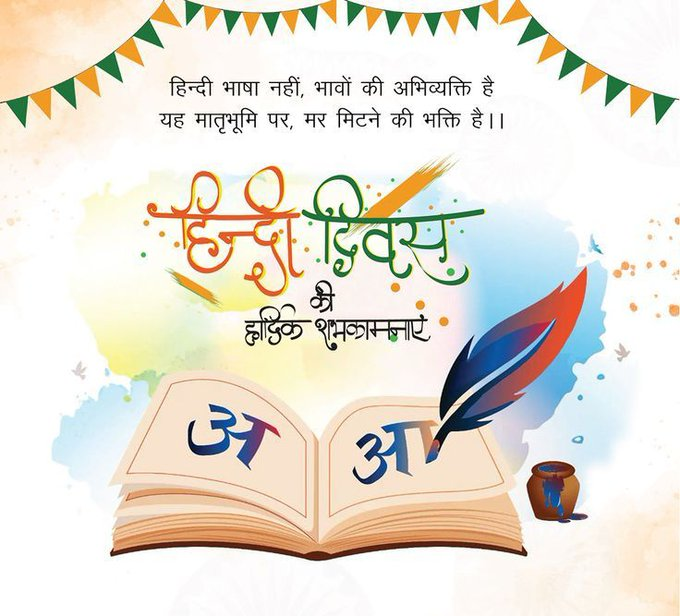
Hindi Diwas 2025: Celebrating the Soul of Our LanguageHindi is not just a language — it is the voice of our culture, our identity, and the expression of our soul. Every year, on 14 September, we celebrate Hindi Diwas, a day that reminds us of the dignity, depth, and pride of our mother tongue.

In today’s digital age, where English often dominates, Hindi too has carved out a strong and growing presence. From social media to cinema, from literature to education, the influence of Hindi is expanding across every sphere.

On this special occasion, share heartfelt wishes with your loved ones and celebrate the richness of our language.

Signs of Life on Mars? NASA’s Perseverance Rover Detects Intriguing Clues

0

For decades, the question has fascinated humanity: Are we alone in the universe? Now, NASA’s Perseverance rover may have brought us closer than ever to an answer.

In 2024, the rover stumbled upon a rock on the Martian surface, later named Cheyava Falls. What seemed like just another piece of Martian geology is now at the centre of one of the most exciting scientific debates of our time. Instruments on Perseverance detected a cocktail of ingredients — clay, silt, organic carbon, sulphur, oxidised iron, and phosphorus. On Earth, these very elements often lock away traces of ancient microbial life.

Even more compelling, the rock’s chemistry suggests electron-transfer reactions — processes that microbes typically use to generate energy. Taken together, scientists call this a potential biosignature: a tantalising hint that Mars may once have hosted life.

The Mystery of Biosignatures
Biosignatures are nature’s fingerprints — patterns, chemicals, or structures that might be biological in origin. But the challenge is huge. These same features can also form through non-living, geological processes. Distinguishing life’s imprint from natural chemistry requires extraordinary caution. As NASA scientists put it, this is a clue, not confirmation.

A Global Scientific Moment
The discovery has electrified researchers around the world. “If confirmed, it could change our understanding of life in the universe,” one NASA scientist noted. Yet, for now, the evidence remains ambiguous. Perseverance’s onboard tools are powerful, but they cannot deliver the final word. That verdict will have to wait until the samples are brought back to Earth.

The Road Ahead
Perseverance has already sealed more than 30 rock and soil samples, including the Cheyava Falls specimen, in preparation for the ambitious Mars Sample Return mission. The mission, still wrestling with budgetary and engineering hurdles, could one day allow scientists to study Martian rocks with the full arsenal of Earth’s laboratories.

Why It Matters
Mars has always loomed large in human imagination — the dusty neighbour that just might have once been alive. If Perseverance’s find turns out to be the real deal, it won’t just be a scientific breakthrough; it will be a turning point in human history, reshaping how we see our place in the cosmos.

Until then, the world waits, watching a small rover on a distant planet slowly write the next chapter of the greatest story ever told: the search for life beyond Earth.

The Power of ₹1: Why India’s Shagun Lifafa Is Never Just A Round Number

0

In the vibrant tapestry of Indian traditions, few customs are as quietly profound as the humble Shagun lifafa—an envelope of money gifted during weddings, birthdays, housewarmings, and festivals. But look closely, and you’ll notice something curious: the amounts are rarely round. Instead of ₹100, it’s ₹101. Instead of ₹500, it’s ₹501. That extra one rupee isn’t just spare change—it’s a symbol steeped in cultural, emotional, and spiritual significance.

What Is a Shagun Lifafa?

A Shagun lifafa is more than a monetary gift. It’s a gesture of goodwill, a blessing wrapped in paper. Whether handed to a bride and groom, a newborn’s parents, or a host during Diwali, it carries the giver’s best wishes for prosperity, happiness, and continuity.

Why the Odd Numbers?

The tradition of gifting odd-numbered amounts—₹51, ₹101, ₹501, ₹1001—is rooted in symbolism:

  • Indivisibility: Odd numbers like ₹101 cannot be split evenly, representing unity and unbreakable bonds. In weddings, this is especially meaningful, symbolizing a marriage that cannot be divided.
  • Continuity Over Completion: Round numbers like ₹100 feel final, closed. Adding ₹1 transforms the gift into a symbol of ongoing blessings and growth. It’s a way of saying, “May this be the beginning, not the end”.
  • Spiritual Resonance: In Hindu belief, the number one signifies new beginnings. It invokes the blessings of Lord Ganesha, the remover of obstacles, and Goddess Lakshmi, the bringer of wealth. That one rupee coin is often seen as a token of divine goodwill.

The Coin That Carries Legacy

Even in today’s digital age—where UPI transfers and QR codes dominate—many Indians still add ₹1 to their digital Shagun amounts. A ₹1001 transfer feels more intentional, more heartfelt, than ₹1000. Psychologists note that non-rounded gifts are remembered longer, adding emotional weight to the gesture. Historically, this tradition traces back to Vedic rituals where dakshina (offerings) were given in odd numbers, believed to bring infinite returns. Over centuries, the practice evolved—from coins wrapped in cloth to envelopes and now digital lifafas—but the essence remains unchanged.

A Blessing, Not Just a Gift

The extra rupee in a Shagun lifafa is a quiet whisper of hope. It says: “May your joy multiply. May your bond remain indivisible. May your journey begin anew.” It’s a reminder that in India, even the smallest coin can carry the weight of generations. So the next time you slip ₹501 into an envelope, know this: you’re not just giving money. You’re giving meaning.

She Faced Anxiety, Fashioned Resilience, And Now Wears International Crown—Meet Roosh Sindhu

0

Once bullied for her looks and silenced by anxiety, Roosh Sindhu now stands tall as Miss International India 2025, ready to represent the nation in Tokyo. Her journey—from a childhood TV commercial in Nagpur to walking the ramp at New York Fashion Week, and now clinching India’s crown—is a masterclass in resilience, reinvention, and raw ambition. Armed with a degree in Psychology and a passion for mental health advocacy, Roosh isn’t just a beauty queen—she’s a voice for healing, hope, and high fashion. Her story is India’s story: dramatic, determined, and destined for the world stage.

Early Life & Roots

Born in Nagpur and now based in New Delhi, Roosh began her journey in entertainment at just four years old with a TV commercial. She pursued Journalism and Fashion Design, even showcasing her work at New York Fashion Week 2019.

Struggles & Advocacy

Roosh faced bullying and anxiety during her formative years, which later fueled her passion for mental health advocacy. With six years of academic training in Psychology and UK-accredited certifications in psychotherapy, she’s become a voice for emotional resilience. Her work earned her national recognition from the NSUI for contributions to student mental health.

Pageant Journey

After an unplaced run at Miss Universe India 2024, Roosh returned stronger in 2025, clinching multiple subtitles including Miss Photogenic and Best National Costume, before being crowned Miss International India. Her story isn’t just about beauty—it’s about breaking barriers, healing through purpose, and turning pain into power. A true campaign moment waiting to be dramatized, Anjali-style.

Navi Mumbai International Airport: India’s Bold New Gateway to the Skies, Reddy To Inaugurate

0

In the heart of Maharashtra’s booming coastline, a lotus is about to bloom—and it’s not just symbolic. The Navi Mumbai International Airport (NMIA), officially named Loknete DB Patil Navi Mumbai International Airport, is set to redefine India’s aviation landscape with its dramatic design, cutting-edge infrastructure, and transformative regional impact.

What Makes NMIA Special?

1. A Second Gateway to Mumbai

  • Designed to ease the load on Chhatrapati Shivaji Maharaj International Airport, NMIA will serve as Mumbai’s second major airport.
  • Strategically located between Ulwe and Panvel, it connects seamlessly to South Mumbai via the Atal Setu (MTHL) and the upcoming Ulwe Coastal Road, which literally lands inside the airport campus.

2. Lotus-Inspired Architecture

  • The terminal, crafted by Zaha Hadid Architects, draws inspiration from the lotus flower—India’s symbol of purity and resilience.
  • Expect light-filled spaces, intuitive wayfinding, and a design that blends heritage with futuristic elegance.

3. Phased Powerhouse

  • Phase 1 will handle 20 million passengers annually and 0.5 million tonnes of cargo.
  • Full capacity aims for a jaw-dropping 90 million passengers per year, making it one of the largest in Asia.

4. Multimodal Connectivity

  • NMIA isn’t just an airport—it’s a hub. Integrated with metro, rail, road, and sea links, it promises frictionless movement for travelers and cargo alike.

5. Greenfield Brilliance

  • Built from scratch (greenfield), NMIA avoids legacy constraints and embraces smart systems, sustainable design, and digital-first operations.

What’s New, What’s Next

Opening Date: Projected for 30 September 2025, with phased operational trials to follow.

Passenger Costs: Interim User Development Fees (UDF) are set—₹620 for domestic departures, ₹1,225 for international, subject to change post March 2026.

Final Touches: Civil works are nearly complete. Interior fit-outs, safety checks, and systems integration are in full swing

NMIA isn’t just infrastructure—it’s aspiration made concrete. It signals India’s readiness to host global traffic, boost regional economies, and offer travelers a world-class experience rooted in Indian identity.

You Can’t Do It, Bro’? He Did It All. Elvish Yadav’s Viral Revenge, Flips his iconic roast line into a victory

0

(PC:newsresolution.com)

“Bhai tumse na ho payega!”
That iconic roast line didn’t just spark laughter—it sparked a movement. Elvish Yadav didn’t become India’s digital darling by accident. His rise is a full-blown desi blockbuster: small-town boy, big dreams, viral fame, and a reality show crown.

Real name: Siddharth Yadav
Born: September 14, 1997, in Wazirabad, Gurgaon, Haryana
Education: Amity International School → Hansraj College, Delhi (B.Com)

Elvish grew up in a middle-class family, surrounded by the everyday drama of small-town life. But even as a kid, he had a knack for storytelling and humor. He was the guy who’d turn a boring school skit into a laugh riot. That flair for drama? It never left him.

The YouTube Breakthrough

In 2016, inspired by creators like Ashish Chanchlani and Amit Bhadana, Elvish launched his first channel—originally called The Social Factory, later rebranded to Elvish Yadav. His early content was raw, relatable, and packed with punchlines. He roasted TikTokers, spoofed college life, and built a loyal fanbase that loved his Haryanvi swag.

Today:

  • 15.5M+ subscribers on his main channel
  • 3B+ views across all platforms
  • Multiple channels: comedy, vlogs, gaming

Bigg Boss OTT 2: The Gamechanger

In 2023, Elvish entered Bigg Boss OTT 2 as a wildcard—and walked out as the first wildcard winner in the show’s history. His unapologetic attitude, sharp wit, and emotional moments won hearts across India. Suddenly, he wasn’t just a YouTuber—he was a household name.

Beyond the Screen

Elvish is also a savvy entrepreneur and philanthropist:

  • Systumm Clothing: His fashion brand, dripping with Gen-Z attitude
  • Elvish Yadav Foundation: Supporting underprivileged children
  • Entertainers Cricket League: Captain of Haryanvi Hunters, who won the 2024 title

Why He’s More Than Just an Influencer

Elvish blends mass appeal with authenticity. He’s not chasing trends—he’s setting them. Whether it’s roasting celebs, launching merch, or winning reality shows, he’s always in “systumm” mode.

Singapore’s Urban Mobility: A Model for Sustainable City Travel

0

(PC:Tommorow city)

Singapore’s urban mobility model stands as a global benchmark for balancing limited urban space with efficient, sustainable transportation. Through decades of deliberate policy-making, the city-state has prioritized public transport, active mobility, and controlled car ownership to create a highly connected, eco-friendly urban environment. This article explores the key components of Singapore’s approach, highlighting its innovative strategies for managing vehicle growth and promoting greener commutes.

The Certificate of Entitlement System

A cornerstone of Singapore’s urban mobility strategy is its strict control over private vehicle ownership. The Certificate of Entitlement (COE) system, a market-based licensing mechanism, limits the number of vehicles on the road by requiring owners to bid for a 10-year permit. This makes car ownership significantly expensive, effectively regulating vehicle population and easing pressure on Singapore’s limited road infrastructure. By keeping car growth low, the COE system ensures that congestion remains manageable, allowing the city to focus on alternative modes of transport.

The Backbone of Urban Mobility

Public transportation is the lifeline of Singapore’s mobility ecosystem, with over half of its residents relying on buses and trains for daily commutes. The government has invested heavily in expanding the Mass Rapid Transit (MRT) and bus networks, prioritizing connectivity, reliability, and accessibility. Ongoing enhancements to rail lines and bus services ensure that public transport remains a convenient and efficient option for commuters, reducing dependence on private vehicles and supporting a sustainable urban lifestyle.

Walking and Cycling Networks

Singapore is committed to fostering healthier and greener commutes through its growing infrastructure for walking and cycling. The city boasts over 730 km of cycling paths and park connectors, linking residential areas to MRT stations, bus interchanges, amenities, and recreational spaces. With ambitious plans to expand this network to 1,300 km by 2030, Singapore is creating a seamless active mobility ecosystem. These pathways encourage residents to embrace cycling and walking, reducing carbon emissions and promoting physical well-being.

Integrated Urban Planning for a Connected Future

Singapore’s urban mobility success is underpinned by forward-thinking urban planning. Policies prioritize transit-oriented development, ensuring that residential and commercial areas are closely integrated with public transport hubs. This approach minimizes travel distances, enhances accessibility, and supports a car-lite lifestyle. By aligning land use with transportation infrastructure, Singapore maximizes the efficiency of its mobility systems while maintaining a high quality of urban life.

A Blueprint for People-Centric Urban Travel

Singapore’s urban mobility model demonstrates how strategic policies can transform a city into a hub of sustainable, efficient, and people-centric transportation. Through the COE system, robust public transport networks, and an expanding active mobility infrastructure, the city-state has created a blueprint for managing urban growth while prioritizing environmental sustainability. As Singapore continues to innovate and expand its mobility solutions, it remains a leading example of how cities can thrive by putting people and the planet first.

A Giant Feast: Nigerian Chef Hilda Baci Attempts World’s Largest Pot of Jollof Rice

0

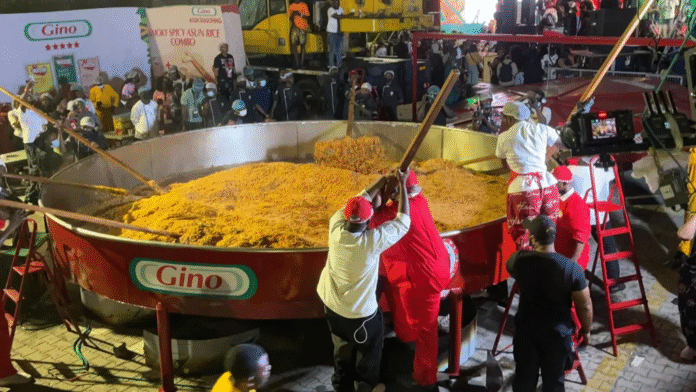
In the heart of Lagos, the aroma of tomato, spices, and slow-simmering rice drifted through the air as thousands gathered to witness history in the making. At the center of it all was Nigerian chef and culinary star Hilda Baci, who set out to cook what could become the world’s largest pot of jollof rice—a dish as symbolic as it is beloved across West Africa.

Baci, 28, is no stranger to headline-making feats. In 2023, she stunned the world with a grueling 93-hour-and-11-minute cooking marathon, earning her the Guinness World Record for the longest continuous cooking session. Two years later, she returned with an even bigger dream—literally.

This time, her challenge was measured not in hours but in sheer scale. Into a custom-built steel vessel the size of a small swimming pool, Baci and her team poured 4,000 kilograms of rice, 500 cartons of tomato paste, and 600 kilograms of onions, creating a bubbling pot that could feed a town. The pot itself—crafted over two months by engineers and artisans—held nearly 23,000 liters of food.

The preparation was nothing short of monumental. A 300-person crew worked in shifts, stirring the enormous pot with giant wooden spatulas to ensure even cooking. After several hours, the steaming jollof rice was dished out and shared with the crowd—a fitting tribute to a food known for its communal spirit.

For Baci, this wasn’t just about breaking records. “We are the giant of Africa, and jollof is a food that everybody knows Africans for,” she told BBC Pidgin. “It would make sense if we had the biggest pot of jollof rice. It would be nice for the country.”

Jollof rice, with its bright red tomato base, fiery spices, and versatility with meat or seafood, is more than a meal—it’s a cultural icon, fiercely debated across West Africa over whose version is best.

Baci’s attempt now awaits official verification by Guinness World Records, backed by photo and video evidence. Whether or not it makes the books, the event has already carved its place in Nigerian history—a celebration of food, culture, and the power of one chef’s determination to dream bigger than anyone imagined.