Home Blog Page 183

Daspara: India’s First Self-Sustaining Bio-Village Leading the Way in Sustainable Development

0

PC:(THE Better India)

In the heart of Tripura’s Sepahijala district lies Daspara, a small village that has earned the distinction of being India’s first self-sustaining bio-village under the state government’s transformative Bio Village 2.0 initiative. Launched in 2018, this ambitious program initially aimed to promote organic farming but has since evolved into a comprehensive model for sustainable rural development. By integrating climate-smart technologies and green practices, Daspara has become a global exemplar of eco-friendly living and economic empowerment.

The Evolution of Bio Village 2.0

The Bio Village 2.0 initiative, introduced by the Tripura government, began with a focus on organic farming but has grown to encompass a wide range of sustainable practices. These include the adoption of improved livestock breeds, solar-powered tools, energy-efficient appliances, and biogas plants. The initiative equips communities with the tools and knowledge to combat climate change while fostering economic resilience. In Daspara, where 75% of the population relies on agriculture and fishery, these interventions have transformed lives and landscapes.

Green Technologies for a Greener Future

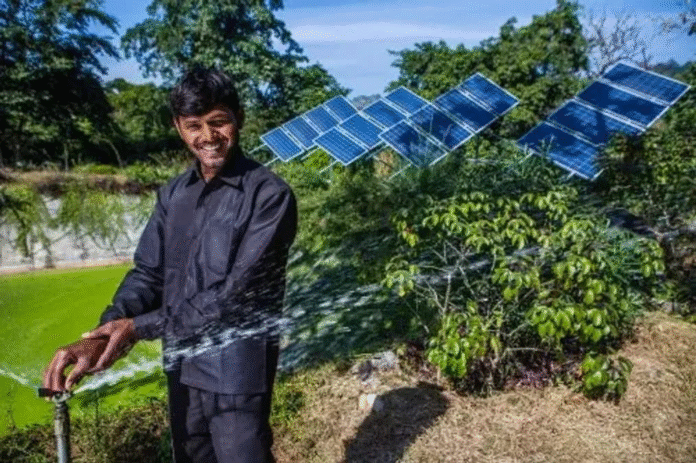
Daspara’s residents have embraced a suite of eco-friendly technologies that have revolutionized their agricultural and domestic practices. Solar-powered pumps irrigate fields, while biogas systems provide a clean alternative for cooking, significantly reducing the village’s carbon footprint. The shift from chemical fertilizers to organic alternatives has improved soil health and boosted crop yields, lowering production costs and environmental impact. Additionally, energy-efficient appliances have reduced electricity consumption, making Daspara a model of sustainable energy use.

Economic Empowerment Through Sustainability

The Bio Village 2.0 initiative has not only enhanced environmental sustainability but also brought significant economic benefits to Daspara’s households. By adopting sustainable farming practices, families have increased their productivity, earning an additional ₹5,000 to ₹15,000 per month. The initiative has also introduced new income streams through skills like mushroom cultivation, beekeeping, and bio-composting. These efforts have diversified livelihoods, improved food security, and empowered the community’s most vulnerable members, particularly farmers and artisans.

Global Recognition and Future Aspirations

Daspara’s remarkable transformation has garnered international acclaim. The Climate Group, a London-based NGO, recognized the village’s eco-friendly technologies as one of the world’s top ten best practices for sustainable development. This accolade has positioned Daspara as a global model for climate change mitigation and rural poverty alleviation. Inspired by this success, the Tripura government has established 10 bio-villages so far and plans to expand the initiative to 100 villages, ensuring long-term sustainability and scalability.

A Blueprint for Sustainable Rural Development

Daspara’s journey from a traditional agrarian village to a self-sustaining bio-village is a testament to the power of innovative, climate-smart solutions. By blending green technologies with economic empowerment, the Bio Village 2.0 initiative has not only transformed lives but also set a precedent for sustainable rural development across India and beyond. As Tripura continues to expand this model, Daspara remains a shining example of how sustainability and prosperity can go hand in hand.
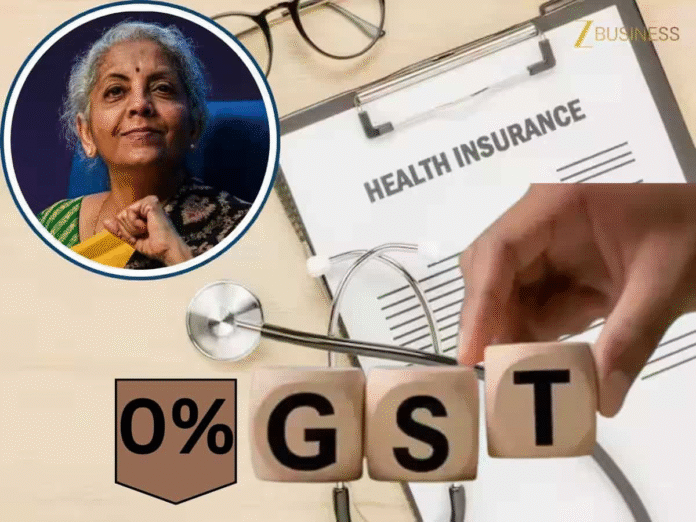
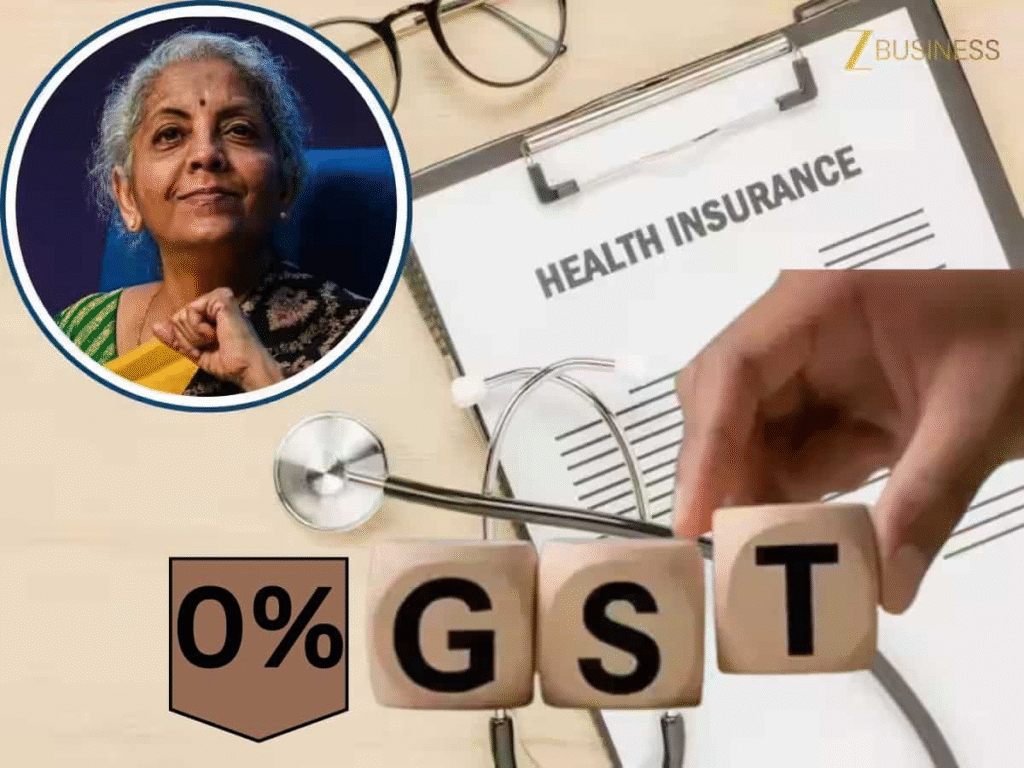
Zero GST Revolution: India’s Big Relief for Education, Healthcare, and Essential Goods from September 22, 2025

0
Zero GST Revolution: India’s Big Relief for Education, Healthcare, and Essential Goods from September 22, 2025

PC:(Zee business)

In a landmark decision, the GST Council of India, during its 56th meeting on September 3, 2025, announced the removal of Goods and Services Tax (GST) on essential goods and services, effective from September 22, 2025. This move, aimed at easing the financial burden on the middle class, low-income groups, farmers, laborers, and small traders, eliminates GST on critical sectors like education, healthcare, and daily essentials. By setting a 0% GST rate on items such as life-saving medicines, health insurance, and educational materials, the government is set to make these necessities more affordable, driving down costs and providing significant relief to millions.

Key Changes in GST Rates

The GST Council’s decision introduces sweeping changes to the tax structure, targeting affordability and accessibility. Here’s a breakdown of the major updates:

Healthcare: The 18% GST on all individual life and health insurance policies has been eliminated, making insurance more accessible. Additionally, 36 life-saving and critical illness medicines, including drugs like Agalsidase Beta, Imiglucerase, and Eptacog Alfa, are now tax-free, previously taxed at 5% or 12%.

Education: GST has been removed from educational materials such as exercise books, notebooks, maps, charts, pencils, crayons, pastels, chalk, and erasers. Private tuition, coaching centers up to Class 12, vocational training institutes, and skill development courses are also exempt from the previous 18% GST.

Food and Essentials: Everyday items like roti, chapati, khakhra, paratha, parotta, ultra-high temperature (UHT) milk, paneer (pre-packaged and labeled), and pizza bread now carry 0% GST, down from 5% or 18%.

Other Goods: Glass bangles (without gold or silver), uncoated paper and paperboard for notebooks, and charitable hospital and trust services in health and education are now tax-free, previously taxed at 12%.

Reduced GST Rates: Daily-use items have been shifted to a 5% GST slab, while products like air conditioners, televisions, small cars, and certain electronic devices now attract an 18% GST rate.

Impact on the Common Man

This bold initiative by the Modi government is poised to bring significant relief to the masses. By removing GST on essential goods and services, the prices of food items, life-saving medicines, and educational materials are expected to drop, making them more affordable for farmers, laborers, and small traders who often bear the brunt of inflation. The zero GST policy on health insurance and critical medicines will particularly benefit those reliant on costly treatments, while tax exemptions on educational services and materials will ease the financial strain on students and families.

A Step Toward Inclusive Growth

The decision to eliminate GST on these essentials reflects the government’s commitment to inclusive growth. By reducing the cost of living for low- and middle-income households, this reform is expected to boost purchasing power and stimulate economic activity. The export of these benefits is already visible, with farmers and small traders likely to gain from reduced financial pressures, enabling them to invest in their livelihoods.

A New Era of Affordability

The zero GST policy, effective from September 22, 2025, marks a transformative step in making essential goods and services accessible to all. From life-saving medicines to educational resources and daily food items, this reform promises to alleviate the burden of taxes on the common man. As India moves toward a more equitable economic landscape, this decision underscores the government’s focus on empowering its citizens, particularly the most vulnerable, by ensuring affordability and accessibility in critical sectors.

From Muddy Ponds to Market Shelves: The Untold Story of Makhana and the Mallah Community

0

PC:(Radio pitara agriculture)

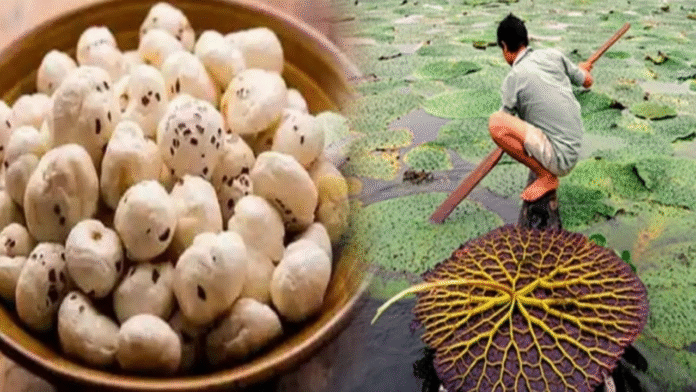
Makhana, also known as foxnut or gorgon nut, has earned its place as India’s prized superfood, gracing the shelves of metropolitan supermarkets in glossy packets. Cultivated predominantly in the Mithilanchal and Seemanchal regions of Bihar, this nutrient-rich seed is celebrated globally for its health benefits. Yet, behind its journey from muddy ponds to popping units and retail shelves lies a tale of relentless labor, poverty, and resilience of the Mallah community, which produces nearly 85% of India’s makhana harvest. While the world calls it a superfood, for the Mallah community, it remains a bittersweet harvest, often referred to as “Kala Pathar” (black stone) before it transforms into the “Kala Sona” (black gold) of the market.

The Labor Behind the Superfood

Makhana cultivation is no easy feat. Grown in waterlogged fields or ponds with water depths of up to one foot, the process demands backbreaking effort. Men from the Mallah community dive into muddy waters for hours, risking injuries, scars, and rashes to collect the seeds. These harsh conditions and meager earnings—often just a fraction of makhana’s retail price—reflect the hidden costs borne by the laborers. Despite their pivotal role, small producers and laborers struggle to secure fair prices, access to credit, or adequate support, leaving them trapped in a cycle of poverty.

The Cultivation Process: A Blend of Tradition and Toil

The journey of makhana begins in nurseries, where plants are carefully nurtured before being transplanted into water-filled fields or ponds. This unique farming method allows farmers to cultivate makhana alongside paddy and other crops in the same field, maximizing land use. The process is labor-intensive, requiring meticulous care from sowing to harvesting. Yet, the rewards can be significant. A farmer from the region shared that one acre of land can yield up to ₹1 lakh in income, making makhana a potentially lucrative crop for those who can navigate its challenges.

Economic Impact and Growing Demand

Over the past decade, the area under makhana cultivation in Bihar has doubled, leading to a significant increase in productivity. The crop has not only become a vital source of income for the Mallah community but also a symbol of cultural identity in Mithilanchal, where it is affectionately called “Makhana.” With support from the agricultural department and organizations like COMFED (Sudha), makhana has found its way to international markets, including the United States, boosting its economic value and global recognition.

Challenges and the Path Forward

Despite its economic potential, the Mallah community faces systemic challenges. The lack of fair pricing, limited access to credit, and inadequate infrastructure hinder small producers from fully capitalizing on makhana’s growing demand. For makhana to truly become “Kala Sona” for those who cultivate it, comprehensive support systems—such as fair trade practices, financial assistance, and modern processing facilities—are essential.

A Cultural and Economic Lifeline

Makhana is more than just a superfood; it is a lifeline for the Mallah community and a cultural cornerstone of Mithilanchal. Its journey from the muddy ponds of Bihar to global markets is a testament to the resilience and hard work of those who cultivate it. However, for the Mallah community to break free from poverty and reap the true benefits of this “black gold,” systemic changes are needed to ensure fair compensation and sustainable growth. Only then can the story of makhana become one of triumph for all involved.

Darjeeling’s 777-B Steam Locomotive to Breathe Again This Durga Puja

0

The misty hills of Darjeeling are preparing to welcome back a legend. The Darjeeling Himalayan Railway (DHR), a UNESCO World Heritage Site, is set to revive one of its oldest steam locomotives—Sharp, Stewart & Co. 777-B—just in time for the festive Durga Puja season.

Built in 1881 at the Atlas Works in Glasgow, the 16-ton beauty once thundered along Darjeeling’s narrow-gauge tracks before retiring in 1957. For decades, it stood silently at the National Rail Museum in Delhi, admired as a relic but never in motion. Now, in a symbolic homecoming, it is being transported back to the Tindharia Workshop—the very place where it underwent a major restoration in 1917.

“The green signal has already been received,” confirmed DHR Director Rishabh Chowdhury. “Once the engine reaches Tindharia, our team—along with experts from India and abroad—will attempt to bring it back to life. Imagine not just riding in a toy train, but in a living, breathing chapter of railway history.”

The Workshop That Keeps Steam Alive

The Tindharia Workshop, established in 1913 and expanded in 1927, remains the beating heart of the DHR. Spread over 6,670 square meters, it is responsible for maintaining 13 working steam locomotives that continue to enchant tourists. Its craftsmen, many of whom represent generations of expertise, are now entrusted with reviving the 777-B.

A Boost for Tourism and Heritage

The timing of the revival is no coincidence. Darjeeling sees a surge of domestic and international visitors during Durga Puja, and the sight of a steam locomotive chugging through tea gardens and mountain ridges is expected to become a magnet for travelers.

“World Railway Day is approaching. If the DHR receives such a gift at this moment, it will be an extra treat—not only for tourists but for heritage itself,” said Samrat Sanyal, editor of Himalayan Hospitality Travel and Tour Development Network.

More Than Just a Locomotive

The 777-B has had a remarkable journey—from service in Himachal Pradesh to Darjeeling, then decades of display in Delhi. Out of 32 locomotives built in its series, very few remain today, making its restoration a matter of pride and poetic justice for the hills.

If the project succeeds, it may open the door for other forgotten locomotives lying idle in Guwahati, Howrah, and Delhi to find a second life. For now, Darjeeling waits eagerly for the moment when the whistle of the 777-B once again echoes through the mountains, carrying not just tourists, but the weight of history itself.

New GST Rates in India 2025: List of Goods and Service Tax Rates, Slab & Revision Implemented From Tomorrow

0

Goods and Services Tax (GST) rates in India are crucial for every segment of the economy. Every time the GST Council meets, Indian enterprises and consumers alike are watching out for the next set of GST rate changes. India’s GST regime is undergoing a landmark transformation with the 56th GST Council meeting unveiling GST 2.0 – next-generation reforms simplifying tax slabs to 5%, 18%, and 40%. Effective from September 22, 2025, these reforms aim to ease compliance, boost consumption, and fuel economic growth.

New GST Rates in India 2025: List of Goods and Service Tax Rates, Slab & Revision Implemented From Tomorrow

Latest Updates

1. The most awaited 56th GST Council meeting happened 3rd September 2025. The council rationalised the GST rate structure from four GST slabs (5%, 12%, 18%, 28%) to a simplified structure:

  • Standard rate: 18% – Applicable to most goods and services
  • Merit rate: 5% – For essential items and priority sectors
  • Demerit rate: 40% – Selective application to sin goods and luxury items

2. GST on individual health & life insurance has been made exempted.

3. GST on dairy products, 33 lifesaving drugs and educational essentials have been brought down to Nil rate.

4. GST on daily essentials, agriculture goods, health care equipment have been brought down to 5%.

5. GST on electronic appliances, small cars and motor cycles (≤350cc) have been brought down to 18%.

6. GST on sin goods such as pan masala, aerated waters, caffeinated beverages, carbonated beverages of fruit drinks / with fruit juice has been increased to 40%.

7. All these GST rate changes will be effective from 22nd Sept 2025 except tobacco products.T

This GST rates in India 2025 guide breaks down GST rate structures, latest changes, and item-wise tax lists to help you stay informed and compliant. 

GST Rates Meaning 

GST rate in India means a tax percentage applied on the sale of goods or services.

In simple words, every business registered under GST must raise invoices with GST amounts charged on the taxable supply value. These GST amounts are derived by multiplying a tax percentage with taxable supply value. Such as percentage rate refers to the GST rate. For instance, in the example where GST of Rs.1,800 is charged on taxable value of Rs.10,000. Here, 18% is the GST rate. 

GST Rate Changes from 56th GST Council Meeting

GST reforms represent the most comprehensive GST rate overhaul since the introduction of GST, directly impacting financial strategies, cash flows, and competitive positioning.

GST rate cuts-

CategoryItemsFrom (%)To (%)
Daily EssentialsHair Oil, Shampoo, Toothpaste, Toilet Soap Bar, Tooth Brushes, Shaving Cream185
Butter, Ghee, Cheese & Dairy Spreads125
Pre-packaged Namkeens, Bhujia & Mixtures125
Utensils125
Feeding Bottles, Napkins for Babies & Clinical Diapers125
Sewing Machines & Parts125
Uplifting Farmers & AgricultureTractor Tyres & Parts185
Tractors125
Specified 12 bio-pesticides and micro-nutrients125
Drip Irrigation System & Sprinklers125
Agricultural, Horticultural or Forestry Machines (Soil Preparation, Cultivation, etc.)125
Healthcare SectorIndividual Health & Life Insurance18Nil
Thermometer185
Medical Grade Oxygen125
All Diagnostic Kits & Reagents125
Glucometer & Test Strips125
Corrective Spectacles125
33 drugs and medicines, listed in the press release12Nil
Agalsidase Beta, Imiglucerase and Eptacog alfa activated recombinant coagulation factor VIIa drugs5Nil
Drugs and medicines such as Faricimab, Pertuzumab, Fluticasone Furoate + Umeclidinium + Vilanterol FF/UMEC/VI, Ocrelizumab, and Brentuximab Vedotin125
AutomobilesPetrol & Petrol Hybrid, LPG, CNG Cars (≤1200cc & ≤4000mm)2818
Diesel & Diesel Hybrid Cars (≤1500cc & ≤4000mm)2818
Three wheelers2818
Motorcycles (≤350cc)2818
Motor Vehicles for the transport of goods2818
EducationMaps, Charts & Globes12Nil
Pencils, Sharpeners, Crayons & Pastels12Nil
Exercise Books & Notebooks12Nil
Eraser5Nil
Electronic AppliancesAir Conditioners2818
Television (above 32″) (inc. LED & LCD TVs)2818
Monitors & Projectors2818
Dish Washing Machines2818

GST rate hikes-

CategoryItem descriptionFrom (%)To (%)
MiningCoal, lignite, peat 18
      Sin goodstobacco/ pan masala*2840 
Aerated waters 28 40 
Caffeinated beverages28 40 
Carbonated beverages of fruit drinks / with fruit juice 28 40 
Other non‑alcoholic beverages 18 40 
Motor cars and larger hybrids (beyond small‑car thresholds) 28 40 
Motorcycles exceeding 350cc 28 40 
Aircraft for personal use 28 40 
Yachts and vessels for pleasure/sports 28 40
Smoking pipes and cigarette/cigar holders 28 40 
Revolvers & pistols 28 40 
Admission to casinos, race clubs, and sporting events like IPL 28% with ITC 40% with ITC 
Licensing of bookmakers by race clubs 28% with ITC 40% with ITC 
Specified actionable claims (betting, casinos, gambling, horse racing, lottery, online money gaming) 28% with ITC 40% with ITC 
Leasing/rental without operator of goods attracting 40% GST 28% with ITC 40% with ITC 
Paper sectorDissolving‑grade chemical wood pulp 12 18
Various papers/paperboards, other than exercise‑book paper12 18 
TextilesApparel/Made‑ups > Rs 2,500 per piece 12 18 
Quilted/cotton quilts and quilted products more than Rs.2,500 per piece 12 18 

* To come into effect at a later date (not from 22nd Sept, 2025) through a notification, after the loan and interest obligations under the compensation cess are discharged.

Top 10 Countries in Global Innovation Index: Switzerland Tops, India Improves in Ranking…

0

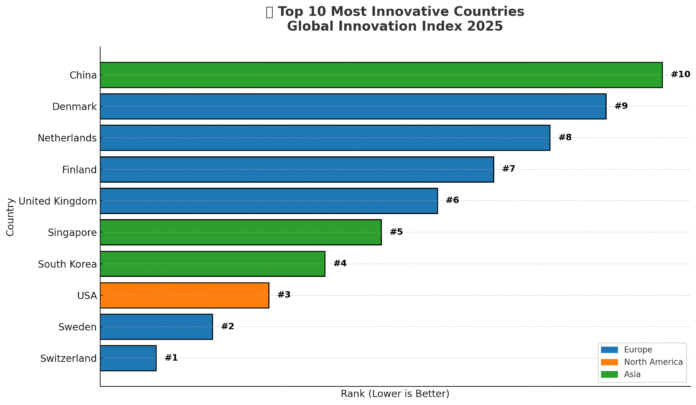
Top Innovative Countries Globally: The top 10 countries in the Global Innovation Index 2025 are Switzerland, Sweden, the USA, South Korea, Singapore, the UK, Finland, the Netherlands, Denmark, and China. China ranks 10th and excels in patent filings and R&D expenditure, surpassing Switzerland in knowledge and technology outputs. These countries lead through strong innovation ecosystems and investment in technology.

India’s Performance Improves on Global Innovation Index

India’s Performance and Growth India ranks 38th in the GII 2025, a rise from 48th in 2020. It is the top innovator among lower-middle-income economies and in the Central and Southern Asia region. India scores well in Knowledge and Technology Outputs (22nd) and Market Sophistication (38th). However, it lags in Business Sophistication (64th), Infrastructure (61st), and Institutions (58th). This mix reflects India’s growing research capacity but marks areas needing improvement.

Europe Remains Most Innovative

Regional Innovation Europe remains the most innovative region, led by Switzerland and Sweden. North America holds strong positions with the USA and Canada in the top 20. Asia’s rise is marked by South Korea, Singapore, China, and India making improvements. Southeast Asia, East Asia, and Oceania are emerging as important innovation hubs, reflecting shifting global innovation dynamics

Trump’s $100,000 H-1B Fee Order Takes Effect

0

The United States has officially begun implementing the controversial $100,000 fee for new H-1B visa applications from Sunday, September 21 (US time). The executive order, signed by President Donald Trump at the White House on Saturday, has created uncertainty and unease among immigrant communities, especially Indian workers, who form the largest group of H-1B beneficiaries.

The H-1B program, which allows US companies to hire skilled foreign workers in specialty occupations such as IT, engineering, finance, and healthcare, is particularly important for Indian technology firms. According to US government data, Indians account for nearly 70% of all H-1B visa holders.

White House Clarification Ends Confusion

After the announcement sparked panic, White House Press Secretary Caroline Levitt issued a clarification:

  • The $100,000 fee is not annual but a one-time charge at the time of filing.
  • It applies only to new H-1B visa applicants, not those renewing or extending their visas.
  • Existing H-1B holders will not be charged a re-entry fee if they travel abroad.
  • The new rule will apply from the upcoming H-1B lottery cycle.

“The announcement does not affect current H-1B visa holders or renewals. It applies only to new applications filed after September 21, 2025,” Levitt said.

The US Citizenship and Immigration Services (USCIS) also posted on X:

“President Trump’s new H-1B visa rules apply only to new, prospective applications that have not yet been filed. Applications submitted before September 21, 2025, will not be affected.”

Why the Rule Matters

The sharp fee hike marks a dramatic shift in US immigration policy. Previously, H-1B filing fees ranged between $1,500 to $6,000, depending on the size and type of employer. The new $100,000 fee is nearly 20 times higher than past charges.

Experts say the move could discourage small businesses and startups from hiring foreign talent, while large corporations may still afford the cost. Immigration lawyers warn it may also fuel brain drain away from the US, as skilled professionals consider other destinations like Canada, the UK, and Australia.

Impact on Indian Professionals and IT Companies

India’s $245 billion IT services sector, which relies heavily on H-1B visas to send engineers and consultants to US clients, is expected to be the hardest hit.

  • Indian professionals: For middle-class families, the $100,000 cost per application is prohibitively expensive, potentially limiting opportunities.
  • Indian IT firms: Companies like Infosys, TCS, and Wipro may have to absorb higher costs or reduce the number of employees sent to the US.
  • Startups and small firms: They may find the fee unaffordable, creating barriers to accessing US markets.

Industry bodies in India have expressed concern, calling the decision a “protectionist barrier” that could affect bilateral trade and technology collaboration.

Political & Historical Context

This is not the first time Trump has tightened H-1B rules. During his first presidency (2017–2021), he introduced the “Buy American, Hire American” policy, which increased scrutiny on visa approvals. The new $100,000 fee is seen as part of his second-term push to curb foreign worker inflows and encourage companies to hire locally.

However, critics argue that the US economy depends on foreign talent, especially in the STEM sector, where domestic worker shortages are acute. According to the US Chamber of Commerce, restricting H-1B visas could harm innovation and competitiveness.

Reactions and Next Steps

The announcement has sparked intense debate across tech hubs in Silicon Valley, Bangalore, and Hyderabad. Immigration attorneys are bracing for a wave of consultations, while advocacy groups are urging the Biden-era legal challenges against restrictive immigration policies to be revived.

For now, the rule stands. The first test will come in April 2026, when the next H-1B lottery cycle begins. Until then, businesses, workers, and governments will closely monitor the fallout.

In short, Trump’s $100,000 H-1B fee has shaken up the global talent market, and while the White House insists it is a one-time charge only for new applicants, the move could reshape how Indian professionals and companies engage with the US job market.

Surya Grahan 2025: The Last Solar Eclipse of the Year Will Begin Tonight; Know Where Will it be Visible and Will It Be Visible in India?

0

Surya Grahan 2025 – Overview

The last solar eclipse of 2025 is set to occur tonight, Sunday, September 21, 2025. Eclipses hold special significance in both religious and astrological traditions. Just two weeks ago, on September 7, the last lunar eclipse of the year was visible in India. Unlike that, however, tonight’s solar eclipse will not be visible from India.

This celestial event will be a partial solar eclipse, during which the Moon will cover a portion of the Sun.

Timing of the Solar Eclipse

  • Date: September 21–22, 2025
  • Start Time (IST): 10:59 PM, September 21
  • End Time (IST): 3:23 AM, September 22
  • Duration: ~4 hours 24 minutes

Since the eclipse begins late at night in India, it will remain invisible to Indian viewers.

Will the Solar Eclipse Be Visible in India?

No. The eclipse begins around 11 PM IST, when it is already night in India. Therefore, it will not be visible from any part of the country.

Will the Sutak Period Be Applicable?

In Hindu tradition, the Sutak period is observed 12 hours before the start of a solar eclipse, during which all auspicious activities are avoided and temple doors are closed. However, since this eclipse is not visible in India, the Sutak period will not be valid here.

Where Will the Solar Eclipse Be Visible?

The last solar eclipse of 2025 will be visible from:

  • The Americas
  • Samoa
  • Australia
  • New Zealand
  • Fiji
  • Atlantic Ocean regions

What Causes a Solar Eclipse?

A solar eclipse occurs when the Moon, while orbiting Earth, comes directly between the Sun and Earth, blocking sunlight for a short duration. There are three types of solar eclipses:

  1. Total Solar Eclipse – The Moon completely covers the Sun.
  2. Partial Solar Eclipse – The Moon covers only a portion of the Sun.
  3. Annular Solar Eclipse – The Moon covers the center of the Sun, leaving a ring-like structure (the “Ring of Fire”).

H-1B: Trump’s $100,000 Visa Fee Rule Comes into Effect Today; White House Clears Confusion

0


US President Donald Trump’s decision to raise the H-1B visa fee to $100,000 has sparked widespread concern among Indian professionals. After initial confusion, the White House has clarified that the hefty charge is a one-time fee applicable only to new application.

H-1B Visa Fee Hike: Trump’s $100,000 Rule Takes Effect

The United States will now charge $100,000 (around ₹8.8 crore) for new H-1B visa applications, starting today (September 21, US time). President Donald Trump signed the executive order at the White House on Saturday, triggering anxiety among immigrants and tech workers, especially Indian professionals who make up the largest group of H-1B beneficiaries.

White House Clarification

White House Press Secretary Caroline Levitt clarified on Saturday that the $100,000 fee is a one-time charge, not an annual fee. The fee applies only to new applications, not to renewals or existing visa holders.

Key clarifications include:

  • The rule applies only to new H-1B applications.
  • Existing H-1B visa holders will not be charged again for re-entry.
  • Renewals and extensions of current visas are not affected.
  • The fee will be implemented starting with the upcoming H-1B lottery cycle.

USCIS Statement

The US Citizenship and Immigration Services (USCIS) also issued a clarification on X (formerly Twitter), stating:

“President Trump’s new H-1B visa rules apply only to new, prospective applications that have not yet been filed. Applications submitted before September 21, 2025, will not be affected.”

This announcement has stirred debate globally, particularly in India, where thousands of IT professionals depend on the H-1B program to work in the US.

Navratri 2025: FAQs (Frequently Asked Questions) On Dates, Significance and Greetings…

0

Photo courtesy: freepic

Navratri is a celebration of feminine power (Shakti). Each of the nine days is dedicated to a different form of Goddess Durga, each with its own unique significance. From the prayers and fasting to the vibrant Garba and Dandiya nights, Happy Navratri 2025 promises to be a time of devotion and cultural celebration across India and around the world.

Q1: What is the main significance of Navratri?
Ans: Navratri is a nine-night Hindu festival dedicated to the nine forms of Goddess Durga. It signifies the victory of good over evil, especially Maa Durga’s triumph over the demon Mahishasura.

Q2: When does Navratri 2025 start?
Ans: Navratri 2025 begins on Monday, September 22, 2025 (Ghatasthapana) and concludes on Wednesday, October 1, 2025, followed by Dussehra celebrations.

Q3: Can I share these wishes on WhatsApp and Instagram?
Ans: Yes, all the Navratri wishes, quotes, and messages in this article are perfect for sharing on WhatsApp, Instagram, Facebook, and Twitter to spread festive joy.

Q4: Is Navratri the same as Durga Puja?
Ans: Not exactly. While both festivals honor Maa Durga, Navratri is celebrated across India with fasting, Garba, and Dandiya, whereas Durga Puja is a grand celebration in West Bengal, Assam, Odisha, and eastern states, with elaborate pandals and cultural programs.