Home Blog Page 148

‘Stranger Things’ Season 5 Finale to Hit Theatres; Here’s What We Know

0

After much speculation and denial, Stranger Things fans finally have confirmation: the long-awaited series finale will get a theatrical release. According to a report by Puck News, Netflix is partnering with AMC and other major theatre chains to screen the two-hour series finale on New Year’s Eve, the same day it arrives on the streaming platform.

The decision marks a surprising turn for Netflix, which has traditionally reserved its biggest titles for home viewing. Industry watchers suggest the move could be a way to give the globally popular series a send-off that feels more like a cultural event than a standard streaming drop.

The final season will roll out in three parts.

Volume 1: The first four episodes – premieres on November 26, followed by Volume 2 on December 25.
The finale, labeled Volume 3, will close the saga on December 31. Each installment will go live at 5 p.m. PT globally.

For fans, the theatrical screenings will offer a communal way to experience the show’s conclusion, something closer to a film premiere than a binge session. While only select theatres are expected to participate, those who secure tickets will see Hawkins’ story reach its end on the big screen.

This marks the end of a television era that helped define Netflix’s original programming strategy. With Stranger Things closing its chapter both online and in theatres, it’s not just the characters saying goodbye but it’s a moment that signals how streaming and cinema might continue to overlap in the years ahead.


How Govt in India Plans Regulating AI-Generated Content

0

The government has taken a big step towards regulating the fast-growing world of artificial intelligence and synthetic media.
The Ministry of Electronics and Information Technology (MeitY) has released draft amendments to the Information Technology (Intermediary Guidelines and Digital Media Ethics Code) Rules, 2021 aiming to bring AI-generated or synthetically-created information under stricter scrutiny.

The draft, open for public feedback till November 6, introduces a new term “synthetically generated information” defined as any data that’s artificially or algorithmically created or modified to appear “reasonably authentic.”
In simpler terms, this means everything from AI-written text to deepfake videos could now fall under the same legal net as other online content.

One of the most talked-about provisions is mandatory labelling. Any image, video, or audio created using AI must clearly mention that it’s synthetic through a visible label or permanent metadata tag.
For visuals, this label must cover at least 10% of the frame; for audio, it must play during the first 10% of the clip. Social media platforms and AI tool providers will also have to ensure these tags can’t be removed or hidden.

For big platforms like Meta, X, or YouTube, the rules get even tighter. They’ll need to ask users to declare whether their uploads are AI-generated and deploy automated tools to detect such content. Failing to do so could cost them their legal immunity under India’s IT laws.

MeitY says the move is about ensuring an “open, safe, and accountable Internet” especially as deepfakes and AI-driven misinformation grow rampant worldwide.
Experts see it as India’s way of balancing transparency with innovation, setting early guardrails for an AI future that feels both exciting and risky.

Gold and Silver Prices Cool After Diwali Rally, Experts See Temporary Correction, Not a Crash

0

After months of steady gains, gold and silver prices have started to cool off, triggering questions among investors about whether the rally has finally run out of steam.
The recent dip follows one of the sharpest surges in years and while the correction has unsettled markets, analysts suggest it’s a normal phase after a prolonged climb rather than the start of a downturn

According to Puck News and market reports, spot gold prices recently saw their steepest one-day fall in over a decade, slipping by around 6.3% to $4,082 per ounce after hitting record highs above $4,380.
Analysts attribute this decline to profit-taking, a firmer US dollar, and easing safe-haven demand amid renewed optimism in US-China trade talks.

Industry experts, however, remain largely optimistic. Rajesh Rokde, Chairman of the All India Gem and Jewellery Domestic Council, said the pullback was expected after an extraordinary rally. “Gold has seen a one-sided rise from about $3,300 to $4,400 per ounce in just four months. A brief correction like this is healthy,” he told ANI.
Despite the fall, Rokde believes gold remains supported by strong global buying, central bank demand, and ongoing geopolitical tensions.
Silver, too, has experienced a pause after nearly doubling in price over the past year.

Ajay Kedia, Director at Kedia Commodities, noted that “after an 85% rise, a 10-20% correction is natural.” He added that while some short-term pressure may persist, a major decline seems unlikely, as both metals are likely entering a consolidation phase.

Experts broadly agree that these price adjustments are temporary. With central banks continuing to stockpile gold and economic uncertainties still lingering, both gold and silver are expected to retain their shine in the longer term even if the immediate sparkle has dimmed for now.

Dr. Ashokkumar Veeramuthu: This Tamil Nadu Scientist just made it to the World’s Top List – For the Third Time

0

Dr. Ashokkumar Veeramuthu from Tamil Nadu’s Nilgiris district has once again put India on the global research map for the third year in a row! The environmental scientist has been named among the World’s Top Scientists by Stanford University and Elsevier Publishers for 2023, 2024, and now 2025, a rare hat-trick that only a handful of Indian researchers have achieved.

But what makes his journey truly special is where it began, in the misty hills of Nilgiris, where he studied in a government school and saw firsthand how poor waste management and water scarcity affected daily life. Those early experiences shaped his curiosity about how science could offer real, everyday solutions.

After completing his PhD from the University of Madras in 2013 and postdoctoral research in Malaysia and Taiwan, Dr. Ashokkumar now heads the Centre for Waste Management and Renewable Energy at Saveetha University (SIMATS), Chennai. He’s also a visiting professor in Thailand and South Korea, collaborating with over a dozen global institutions.

His research focuses on turning “waste into wealth” from converting food waste into biofuels, using microalgae for renewable energy, to creating new ways to recycle plastic. In short, he’s proving that waste isn’t just a problem, it’s an opportunity waiting to be tapped.

Beyond the labs and papers, his work holds real meaning for local communities battling pollution and resource shortages. By linking innovation with social impact, Dr. Ashokkumar is inspiring a new generation of scientists especially those from small towns to believe that sustainable change can begin anywhere.

His story is a reminder that when science meets purpose, even waste can shine bright on the world stage.

A Kidney for Everyone: Breakthrough Makes Transplants Blood-Type Free

0

Imagine a world where you don’t have to wait years for a kidney that matches your blood type, where a donor organ could fit anyone, anywhere. That future just came one giant step closer.

In a medical breakthrough that could transform organ transplantation forever, scientists from Canada and China have created the world’s first “universal” kidney – one that can be transplanted into patients of any blood type.

The achievement, published in Nature Biomedical Engineering, was the result of more than a decade of research led by the University of British Columbia (UBC) and Avivo Biomedical Inc.

Here’s how it works: researchers took a kidney from a type-A donor and used special enzymes to strip away the sugars that determine blood type. This process converted the organ into type-O, the universal blood type, meaning it can be accepted by anyone. The converted kidney was then transplanted into a brain-dead patient (with family consent) and functioned normally for several days without signs of severe rejection.

Dr. Stephen Withers, the UBC chemist who co-led the project, called it a “historic first” proof that the concept works in a human setting.
The team had originally started out trying to make universal donor blood in the 2010s, but their enzyme technology evolved into something far more groundbreaking.

The potential impact is enormous. Today, type-O patients who make up over half of all kidney waitlists often wait 2–4 years longer for a compatible organ. This new approach could erase that inequality, speed up transplants, and reduce complications caused by immune rejection.

The next phase includes regulatory approvals and full clinical trials, but optimism is high. If successful, this could mean an end to the blood-type barrier and the beginning of a new era where every kidney could be the right one

A Daughter’s Tribute to a Hero: Diya Kumari Unveils Wax Statue of Mahavir Chakra Awardee Brigadier Bhawani Singh at Jaipur Wax Museum

0

A proud and emotional moment unfolded at the Jaipur Wax Museum, Nahargarh, as Rajasthan’s Deputy Chief Minister and Tourism Minister, Diya Kumari unveiled the wax figure of her father, Mahavir Chakra awardee Maharaja Brigadier Sawai Bhawani Singh Ji, the legendary warrior and former ruler of Jaipur.

The unveiling coincided with Maharaja Bhawani Singh Ji’s birth anniversary, making the occasion even more poignant and historic. The event celebrated not just the life of a royal warrior but also a national hero who exemplified courage, humility, and service to the nation.

Speaking at the ceremony, Diya Kumari said, “This is an extremely proud and emotional moment for me. My father was not only a symbol of valor but also of discipline and compassion. His life continues to inspire generations, and seeing his likeness here at Nahargarh fills my heart with pride.”

On this occasion, a special 8-minute documentary on Brigadier Bhawani Singh Ji’s life and military achievements was screened, moving everyone present. The film highlighted his heroic role in the 1971 Indo-Pak war, for which he was awarded the Mahavir Chakra, India’s second-highest gallantry award. On this occasion, Chairman of Amer Fort, Dr. Rakesh Cholak was also present.

Founder Director of Jaipur Wax Museum, Anoop Srivastava, expressed gratitude and pride, stating, “It is an honor to immortalize such a great son of India through art. Brigadier Bhawani Singh Ji was the first Maharaja from a royal family to join the Indian Army after Independence. His decision to trade royal luxury for military service represents true patriotism. His wax figure will continue to inspire countless visitors.”

Anoop also emphasized that Jaipur Wax Museum focuses on celebrating Rajasthan’s brave warriors and royal legacy, rather than just cinematic icons. The museum already houses life-size wax figures of Maharana Pratap, Sawai Jai Singh II, Sawai Ram Singh II, Sawai Madho Singh II, Maharani Gayatri Devi, among others. The addition of Brigadier Bhawani Singh Ji’s figure further enriches the museum’s “Royal Darbar” section.

The wax figure, meticulously crafted after months of research and modeling, stands as a symbol of valor, service, and Rajasthan’s royal pride. The unveiling ceremony concluded with attendees paying heartfelt tribute to the Maharaja, celebrating his life, legacy, and contribution to the Indian Army and the people of Jaipur.

Jammu and Kashmir Revives 150-Year-Old Darbar Transfer After Four-Year Hiatus

0

After a four-year suspension, Jammu and Kashmir has revived the historic “Darbar Transfer” system, a 150-year-old administrative practice where the government alternates between Srinagar and Jammu with the changing seasons. The tradition, paused in 2021 due to cost and efficiency concerns, returns this winter—marking the revival of one of India’s oldest bureaucratic customs.

A Historic Tradition Returns

The Darbar Transfer, also known as the “Darbar Move,” dates back to 1872, when Maharaja Ranbir Singh, the Dogra ruler of the erstwhile princely state, instituted it to ensure efficient governance across the region’s diverse terrains. Under this unique dual-capital system, Srinagar serves as the summer capital and Jammu as the winter capital, allowing officials to remain accessible to citizens throughout the year despite harsh Himalayan weather and challenging connectivity.

Administrative Shift for Winter 2025

According to a recent order by Commissioner Secretary M. Raju, all government offices in Srinagar, including the Civil Secretariat, will close after working hours on October 31, and reopen in Jammu on November 3.

This year’s transfer will see 38 key departments—including Revenue, Forest, Transport, and Technical Education—relocating entirely, while 47 others will operate from temporary camps in Jammu for the winter season. The Chief Minister’s Secretariat and several high-level offices will also move to the winter capital.

Cost and Controversy Over the Years

Historically, the Darbar Transfer involved shifting thousands of employees and tonnes of official records between the two cities—a process costing an estimated ₹200 crore annually.

In 2020, the Jammu and Kashmir High Court questioned the legality of the practice, calling it “wasteful” and without constitutional basis. However, many residents view the move as a symbol of unity that bridges regional divides and supports Jammu’s economy during the lean winter months.

Quick GK Facts

  • The Darbar Move was started in 1872 by Maharaja Ranbir Singh, not Gulab Singh.
  • Initially, documents were transported by horses and mules before modern road networks existed.
  • Other Indian states with dual-capital arrangements include Maharashtra (Mumbai & Nagpur) and Himachal Pradesh (Shimla & Dharamshala).
  • The Jammu–Srinagar distance is approximately 270 km via National Highway-44.

Significance and Modern Relevance

Supporters of the revived Darbar Transfer argue that the system continues to play a vital administrative and cultural role, maintaining Jammu’s winter economy while preserving a symbolic balance between the two capitals.

As government offices prepare to reopen in Jammu in early November, the restoration of this 150-year-old tradition underscores a blend of governance, heritage, and regional harmony unique to Jammu and Kashmir.

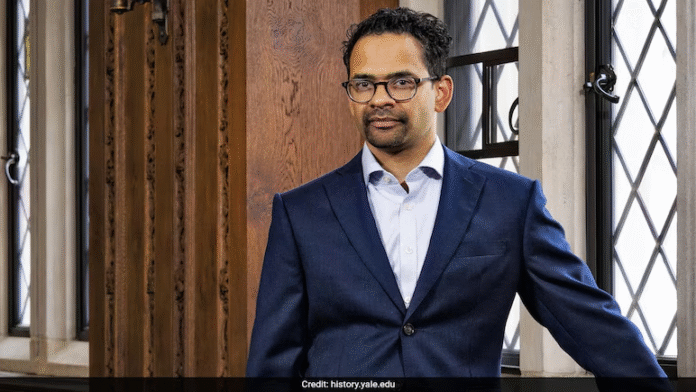
Who is Sunil Amrith? Indian-Origin Historian Wins British Academy Book Prize 2025 for ‘The Burning Earth’

0

Renowned Indian-origin historian Sunil Amrith has been awarded the 2025 British Academy Book Prize for his pathbreaking work “The Burning Earth: An Environmental History of the Last 500 Years.” The £25,000 award celebrates outstanding non-fiction writing in the humanities and social sciences that deepens global understanding through exceptional research and storytelling.

A Global Scholar with Indian Roots

At 46, Sunil Amrith stands among the world’s most respected historians. Born in Kenya to South Indian parents and raised in Singapore, Amrith developed a keen interest in history and migration early in life. He graduated from the University of Cambridge, where his fascination with the environmental and social consequences of global movement and empire took shape.

Today, he serves as a Professor of History at Yale University (USA), where he continues his pioneering research connecting environment, empire, and migration.

The Burning Earth: A History of Human and Environmental Transformation

Amrith’s award-winning book, “The Burning Earth,” traces five centuries of environmental change — from the European conquests of the Americas and British gold mining in South Africa to the global industrial revolution and modern ecological crises.

The British Academy praised the book for reframing world history through an ecological lens, showing how colonisation, industrialisation, and human expansion have transformed the planet. It connects global events to the modern environmental emergency, making history urgently relevant to today’s world.

Honours and Recognitions

Sunil Amrith’s contribution to global history has earned him several international accolades:

  • MacArthur Fellowship (“Genius Grant”), 2017
  • Infosys Prize in Humanities (History), 2016
  • Fellow of the American Academy of Arts and Sciences
  • Author of acclaimed books such as
    • Crossing the Bay of Bengal: The Furies of Nature and the Fortunes of Migrants (2013)
    • Unruly Waters: How Rains, Rivers, Coasts, and Seas Have Shaped Asia’s History (2018)

British Academy Book Prize 2025: Celebrating Global Scholarship

The British Academy Book Prize, founded in 2013, honours excellence in non-fiction writing across the humanities and social sciences. This year’s shortlist reflected exceptional diversity, including authors like William Dalrymple (The Golden Road), Lucy Ash, Bronwen Everill, Sophie Harman, and Graeme Lawson.

In its citation, the Academy hailed The Burning Earth as “a powerful, deeply researched narrative that connects humanity’s past ambitions with the planet’s present peril.”

Legacy and Impact

Through his research and writing, Sunil Amrith urges readers to rethink the relationship between human progress and environmental degradation. His work bridges academic insight with global relevance, positioning him as a leading voice in understanding how history can guide solutions for our shared ecological future.


Kedarnath Temple Portals Close for Winter 2025; Lord Shiva’s Idol Begins Journey to Ukhimath

0

In a deeply symbolic and emotional ceremony, the portals of the sacred Kedarnath Temple in Rudraprayag district were officially closed for the winter season on the morning of Thursday, October 23, 2025 on Bhai Dooj, marking the end of this year’s Char Dham Yatra for thousands of devotees.

As per centuries-old tradition, the palanquin (doli) carrying Lord Kedarnath’s idol began its journey to the Omkareshwar Temple in Ukhimath, which serves as the deity’s winter abode.

Spiritual Rituals Before Closure

Devotees were permitted darshan from midnight until around 4 AM. Between 5 AM and 6 AM, the sacred “Samadhi Puja” was performed, during which the self-manifested Shivalinga was ceremonially covered with sacred ashes, grains, fruits, Rudraksha beads, and a white cloth, signifying the divine rest period.
The inner sanctum was closed at 6 AM, followed by the main gate at 8:30 AM, amid chants of “Om Namah Shivay” and the resonant sound of temple bells.

Journey of the Panchmukhi Doli

Following the closure, the five-faced (Panchmukhi) idol of Lord Kedarnath began its winter trek, halting first at Rampur, then Guptkashi, and finally reaching Ukhimath by October 25. Daily worship will continue at Omkareshwar Temple throughout the six-month winter period.

Significance and Seasonal Closure

Situated at an altitude of 3,584 meters in the Garhwal Himalayas, Kedarnath Temple experiences extreme cold and heavy snowfall during winter, making it unsafe and inaccessible for pilgrims. Therefore, the Utsava Murti (festival idol) is ceremonially relocated to Ukhimath to ensure uninterrupted worship.

Char Dham Yatra Update

Kedarnath, one of the four shrines in the revered Char Dham circuit, now joins Gangotri and Yamunotri, which have already closed for winter. Only Badrinath Temple remains open until its scheduled closure on November 25, 2025.

For Pilgrims and Devotees

Those planning a pilgrimage should note that Kedarnath Temple’s portals will reopen in late April or early May 2026, depending on weather conditions and the auspicious date declared by temple authorities.
In the meantime, devotees can seek blessings at Ukhimath’s Omkareshwar Temple, where the winter worship of Lord Kedarnath continues with full rituals and devotion.

Bhai Dooj 2025: Know The Story of Yamraj and Yamuna That Explains the Festival’s Significance

0

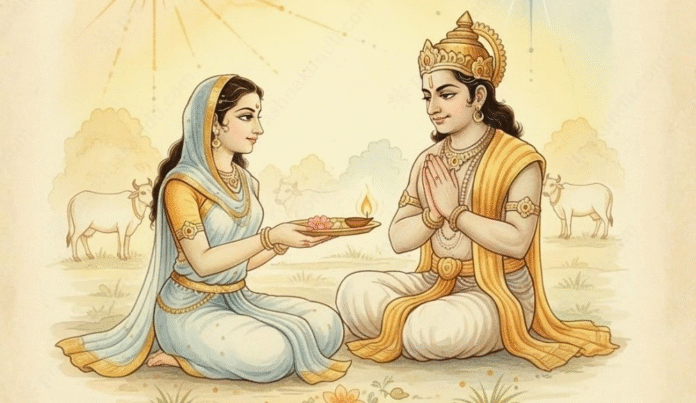
Bhai Dooj will be celebrated on October 23 across the country where sisters will apply tilak on the foreheads of their brothers praying for their long life and success. However do you know why this festival is celebrated? According to Hindu mythology, Lord Surya (the Sun God) had two children — Yamraj, the God of Death, and Yamuna, the river goddess. The siblings shared a deep bond of affection. Yamuna often invited her brother to visit her home, but Yamraj, burdened by his divine duties, could never find the time.

Bhai Dooj 2025: Know The Story of Yamraj and Yamuna That Explains the Festival’s Significance

Finally, on the second day of the bright fortnight (Shukla Paksha) in the month of Kartika, Yamraj decided to fulfill his promise and visit Yamuna. Though he initially hesitated — fearing that his role as the God of Death might bring unease to her home — his love for his sister overcame his doubts.

Yamuna joyfully welcomed her brother, performing his aarti and offering him a feast of delicious dishes she had lovingly prepared. Touched by her devotion, Yamraj asked Yamuna to request a boon. She wished that he would visit her home every year on this very day and bless all brothers and sisters who honor their bond with love and prayers.

Yamraj granted her wish, declaring that any brother who visits his sister on this day and receives her blessings shall be blessed with a long and prosperous life. From that day forward, this occasion has been celebrated as Bhai Dooj, a festival symbolizing the eternal bond between brothers and sisters.