Home Blog Page 139

Walchand Hirachand: The Man Who Dreamed a Nation Into Motion

0

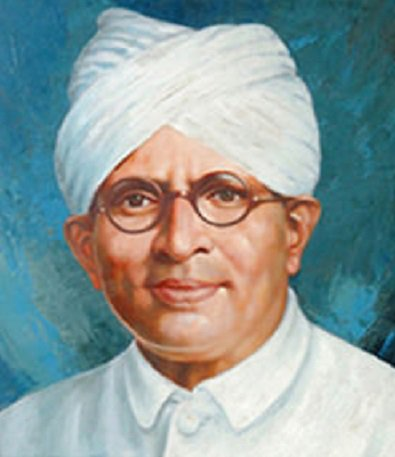
Walchand Hirachand: Long before India became an independent nation, one man dared to imagine an India that could build its own ships, fly its own planes, and drive its own cars. He was Walchand Hirachand Doshi (1882–1953) an industrialist who was a dreamer of impossible dreams, a visionary who believed that self-reliance was not just a political ideal but an industrial mission.

At a time when India was still under colonial rule and modern industries were scarce, Walchand set out to create what had never been attempted before. He founded India’s first aircraft factory, shipyard, and car manufacturing unit—each one a symbol of courage, ambition, and unshakeable belief in the country’s potential.

According to his Marathi biography, Walchand Hirachand played a pivotal role in building the foundation of India’s modern transport industry, which later became a driving force of the nation’s industrial growth. At a time when the British Indian government offered little support and largely acted in its own colonial interests, Walchand dared to “make in India” long before the slogan existed.

Earnest Beginnings

Born in 1882 into a well-off Doshi family in Sholapur, Walchand lost his mother days after birth and was raised by his aunt. His father, Hirachand, a cotton trader-turned-moneylender, moved the family to Bombay, where he ensured Walchand received higher education at St Xavier’s College. However, frequent plague outbreaks forced the family to move between Bombay and Poona, and the tragic loss of two elder brothers compelled Walchand to abandon his studies and support his father.

After an early setback in cotton trading, Walchand shifted to supplying firewood to mills—a move that proved profitable. A chance meeting with Laxman Balwant Pathak led him to railway contracting. Their first project, laying a line between Yedhi and Tadwal, launched Walchand into a rapid rise. Keen to master engineering and cost management, he soon bagged major contracts in Bombay, including challenging stretches between Reay Road and Kurla and between Vikhroli and Bhandup.

Venturing Into Shipping

During World War I, Walchand earned the Army’s confidence through profitable construction projects. After the war, shipping became his next frontier. Encouraged by an associate of the Gwalior Maharaja, he purchased his first ship, Loyalty, even though he knew nothing about the field. His biggest rival was the British India Steam Navigation Company, which dominated Indian waters for decades.

Despite initial losses, Walchand expanded his fleet by acquiring six cargo ships in Liverpool. Unable to access major ports due to British control, he operated from smaller ports like Porbandar, trading with Burma and Java, and became the first Indian to run a shipping company with an all-Indian crew.

In 1941, after two decades in shipping, he founded India’s first modern shipyard—Scindia Shipyard—in Visakhapatnam. Rajendra Prasad laid the foundation stone, and India’s first fully built ship was launched in 1948. The company later became Hindustan Shipping Limited.

Giving Wings to Indian Aviation

In 1939, a U.S. visit inspired Walchand to set up an aircraft manufacturing unit in India. With support from the Mysore State, which provided 700 acres near Bangalore, he founded Hindustan Aircraft Limited (HAL) on December 23, 1940. The runway and main buildings were completed in just three months. By March 1941, HAL had produced its first aircraft, the Harlow PC-5 Trainer. During World War II, the company became vital to Allied operations and was nationalised in 1942. After Independence, HAL evolved into Hindustan Aeronautics Limited, now the backbone of India’s defence aviation.

The Race to Build India’s First Car

Walchand had also envisioned an Indian-made car. In 1939, he approached Chrysler and visited major U.S. auto plants. But World War II halted automobile production in America, and delays in India slowed his plans. Rival industrialist G.D. Birla was also pursuing a car factory, but a proposed partnership did not materialise.

With support from Sir M. Visvesvaraya, Walchand founded Premier Automobiles in 1944. The company secured licences to produce Plymouth cars and Dodge trucks, beginning production in 1949. Later, it partnered with Fiat to manufacture the iconic Premier Padmini, a household name in the 1970s and 80s.

Walchand retired in 1950 due to ill health and passed away in 1953. While names like the Tatas and Birlas dominate India’s industrial narrative, Walchand Hirachand remains a remarkable yet under-recognised pioneer who shaped India’s shipping, aviation, and automobile industries

Walchand Hirachand reminded India of a simple truth—
that the future belongs to those who build it.

Who Was Jhalkari Bai, The Warrior Who Became A Part of 1857 Revolt With Rani Lakshmibai

0

Jhalkari Bai (22 November 1830 – 4 April 1858) was one of the most remarkable yet lesser-known warriors of the Indian Rebellion of 1857. A fiercely courageous Dalit woman soldier, she rose from humble origins to become a trusted advisor, strategist, and frontline fighter in the army of Rani Lakshmibai of Jhansi.

Early Life and Training

Born in a family in the Jhansi region to Suba Singh and Jamuna Devi, Jhalkari Bai’s father trained her in horseback riding, archery, weapon handling, and martial skills. Legends from Bundelkhand describe her extraordinary bravery—once driving away dacoits single-handedly, and in another instance, killing a tiger with an axe.

Entry into Rani Lakshmibai’s Army

Jhalkari Bai married a soldier in the Jhansi army. During a festival at the Jhansi fort, Rani Lakshmibai noticed her striking resemblance to the queen herself. When informed about Jhalkaribai’s skills and courage, the queen inducted her into the Durga Dal, the women’s regiment of the Jhansi army. Soon, she became a close confidant and military advisor to the Rani.

Role in the 1857 Revolt

In 1858, when British forces under Field Marshal Hugh Rose attacked Jhansi, Jhalkari Bai played a crucial strategic role. After betrayal by a commander weakened Jhansi’s defenses, Rani Lakshmibai fled to regroup her forces.

To protect her queen, Jhalkari Bai disguised herself as Rani Lakshmibai and infiltrated the British camp. Her uncanny resemblance created massive confusion among the British troops, delaying their advance and allowing the real queen to escape. Jhalkaribai continued fighting until her death on 4 April 1858, defending her motherland.

Legacy

Jhalkari Bai is revered across Bundelkhand—particularly among Dalit communities—as a symbol of courage and sacrifice. Her birth anniversary is celebrated as Jhalkaribai Jayanti.
A statue of her was installed in Gwalior in 2001, and the Government of India issued a commemorative postage stamp in her honour.

She remains one of the greatest unsung heroines of India’s freedom struggle—brave, loyal, and unforgettable.

56th IFFI Begins: Four Anupam Kher Films Screened — “A First in the History of Cinema,” Says Actor

0

The 56th International Film Festival of India (IFFI) opened today in Panaji, Goa, with Bollywood veteran Anupam Kher, filmmaker Shekhar Kapur, and Telugu star Nandamuri Balakrishna inaugurating the Waves Film Market. The festival runs from November 20–28, showcasing some of the finest films from across the globe.

Four Anupam Kher Films Selected

Anupam Kher expressed immense joy as four of his films—each in a different category—have been selected for screening at IFFI 2025. The films include:

  • “Tanvi the Great” – Indian Panorama
  • “The Bengal Files” – International Section
  • “1942: A Love Story” – Special Screening
  • “Kalari” – Canadian film by Indo-Canadian director Isha Marjara

“Kalari” will also host a masterclass at the festival.

Calling the rare achievement an “unofficial retrospective,” Kher said, “I don’t think any actor has had four films selected in different sections at a single festival in the history of cinema. I say this with love and humility.”

‘Giving Up Is Not a Choice’: Kher’s Masterclass

The actor, who has been attending festivals since 1984—when Saaransh was first screened—said he is thrilled with Goa’s growing identity as a global cinema hub.

Kher will conduct a masterclass titled “Giving Up Is Not a Choice.” He shared that over the years he has shaped his sessions to inspire aspiring artists, writers, and directors.
“People assume those with a name are always successful. But in 41 years, my life has seen many ups and downs. I’ve never given up, and that’s what I want young filmmakers to understand.”

Celebrating Cinema

Earlier on social media, Kher wrote that being able to showcase such diverse work—productions from home banners, collaborations with filmmakers like Vivek Agnihotri, and international cinema—feels special after a career spanning 41 years and 549 films.

“Very few actors get an opportunity like this at such a prestigious festival. See you all in Goa! Let’s celebrate the spirit of cinema.”

Indian-born Cheetah Mukhi Gives Birth to Five Cubs at Kuno: Know Cheetah History in India and Details on Project Cheetah too…

0

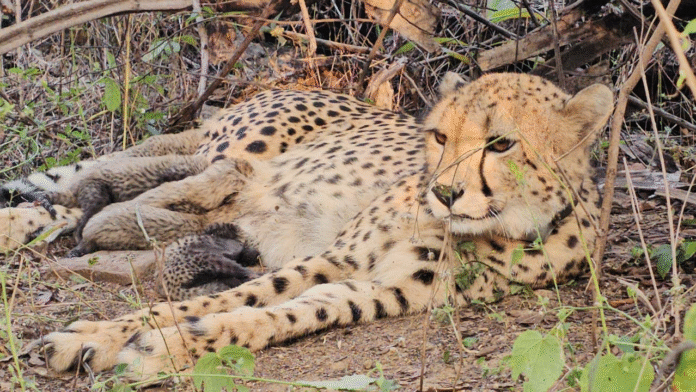
In a landmark moment for India’s wildlife conservation, Mukhi, a cheetah born at Kuno National Park in 2023 to Namibian female Jwala, has given birth to five healthy cubs. This is the first time a cheetah born in India has reproduced—an encouraging sign that the species is adapting well to Indian habitats.

Madhya Pradesh Chief Minister Mohan Yadav and Union Environment Minister Bhupender Yadav announced the news, calling it a major milestone for Project Cheetah, launched in 2022 to revive a species that disappeared from India more than seven decades ago. The large litter also lifts hopes for establishing a self-sustaining cheetah population, with Kuno now recording a cub survival rate higher than the global average.

A Species Lost and Found

Cheetahs once ran wild across India—from Punjab and Rajasthan to the Deccan Plateau. Mughal emperors and Indian royalty famously used them as hunting animals, a tradition that eventually contributed to their decline. Excessive trapping, habitat loss, trophy hunting during the British Raj, and a bounty system pushed the species to the brink.

The last three known cheetahs were killed in 1947, and in 1952, India officially declared the cheetah extinct.

The Return to Indian Grasslands

India began correcting that ecological loss in September 2022, when African cheetahs were reintroduced to Kuno National Park under one of the world’s most ambitious wildlife relocation programmes.

Mukhi’s successful litter marks a turning point—a signal that the species is beginning to settle, breed, and rebuild its future on Indian soil. Conservationists hope this momentum will help restore the balance of India’s grassland ecosystems and bring the world’s fastest land animal back to its historic home.

From IPC to English Classrooms: The Colonial Blueprint Macaulay Left Behind

0

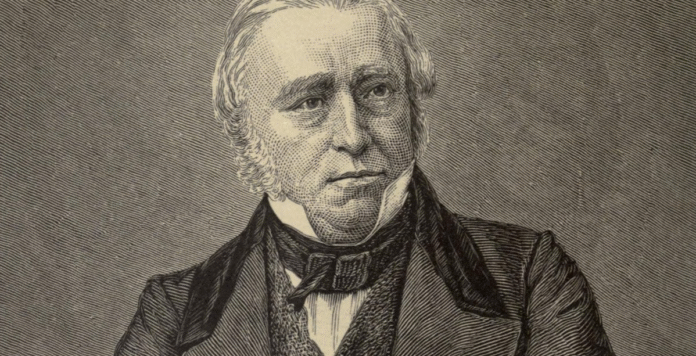
Why PM Modi says India paid a “heavy price” for one man’s philosophy. At the Sixth Ramnath Goenka Lecture, PM Narendra Modi reignited a powerful question: Did Thomas Babington Macaulay shape modern India or silently weaken its spirit? Modi called Macaulay’s mindset “his biggest crime,” accusing him of creating a class of Indians who were “Indian by appearance but British at heart.” According to the PM, this colonial psychology shattered national confidence and planted a long-lasting inferiority complex.

But who was this man whose ideas continue to guide India’s laws, schools, and mindset?

Macaulay: The Man Behind the Machinery
Early Life: A Childhood That Hardened Him

  • Born: October 25, 1800
  • Eldest of nine siblings
  • Sent to boarding school at 13, separated from family, bullied, and emotionally scarred
    Historians note these early experiences made him deeply protective of his own circle, yet harsh and uncompromising toward opponents, a duality that shaped his politics in India.

A British Politician Who Suddenly Looked East
By 1832, Macaulay threw himself into Indian affairs as the British Parliament debated the renewal of the East India Company’s Charter.
He complained that Parliament cared more about “minor English incidents” than the governance of millions in India.

The Law Reformer Who Created the IPC
Key Highlights:

  • Arrived in India in 1834 as the first Law Member
  • Chaired the Law Commission
  • Drafted the Indian Penal Code (IPC) in 1837
  • IPC came into force in 1862
  • Its influence spread across almost all former British colonies
    Macaulay had little courtroom experience, yet his sharp mind helped consolidate criminal law into a uniform code. Offences like “sodomy” were criminalised across the empire because of his draft.

The Education Shockwave: The 1835 English Manifesto
The biggest storm, however, came from his Minute on Education (2 February 1835).

What Macaulay Proposed:

  • Create a class of Indians “English in taste, opinions, morals, and intellect.”
  • Use English as the primary medium of education.
  • Close or minimise funding to Persian, Arabic, and Sanskrit institutions.
  • Build elite English institutions instead of mass schooling.
    This decision split Indian society uplifting some, alienating millions.

Two Centuries Later… Still Debating Him
Macaulay’s fingerprints remain on:

  • India’s courts
  • school textbooks
  • administrative structure
  • the dominance of the English language
    And now, nearly 200 years later, India is trying to reverse the blueprint he left behind.

Was Macaulay a moderniser or the architect of mental colonisation?
The debate is far from over.

Catstanbul: Inside the City Where Cats Rule the Streets

0

In Istanbul, the city never walks alone—because a cat is always just a step away.

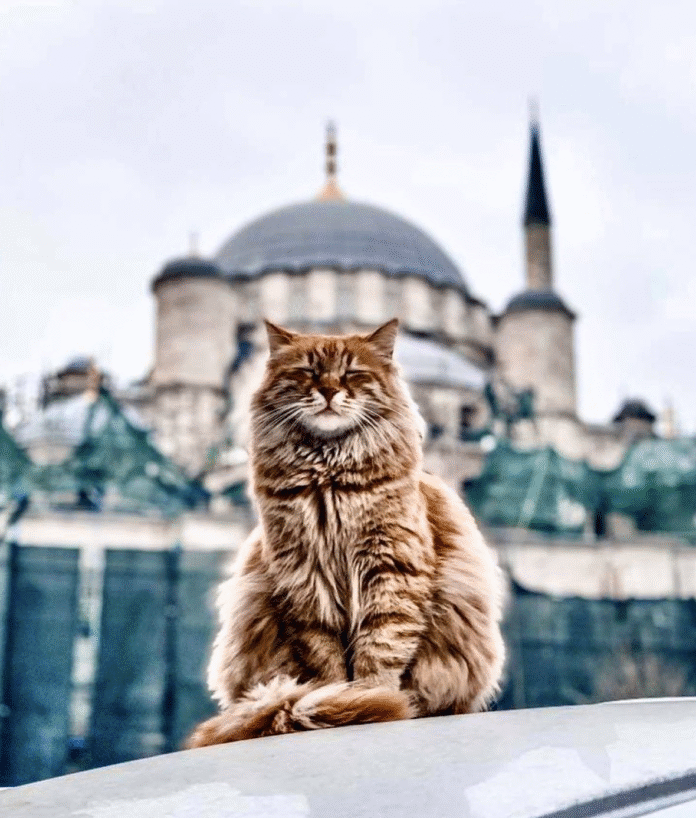
Turkey’s cultural capital, spread across Europe and Asia, is home to nearly 250,000 street cats who roam freely through mosques, markets, ferries, cafés, and historic alleys. They’re not exactly pets, not quite strays—more like cherished citizens with full community rights.

Photographer Marcel Heijnen, who documented them in City Cats of Istanbul, calls them “a community treasure”. Residents feed them, shopkeepers leave bowls outside their doors, and every municipality runs free veterinary care and neutering services. Even private clinics offer discounts for street cats—proof that Istanbul’s love for felines is more than folklore.

This bond runs deep. During the Ottoman era, the city even had official mancacıs—“cat sitters”—whose job was to feed and protect street cats. And long before that, Phoenician and Ottoman traders brought cats aboard ships to guard precious goods from rodents, creating centuries of coexistence.

Today, visitors find Istanbul’s cats everywhere: sunbathing on ancient walls, curled up on metro seats, or rolling atop yellow taxis. In a bustling city of 15 million, they offer the softest pauses—quiet companions who turn chaos into calm.

When an Istanbul cat hops into your lap amid the aromas of kebab, saffron and grilled corn, the city suddenly feels gentler. That’s why many call it not just Istanbul, but Catstanbul—a city shared by humans, history and a purring population that truly rules the streets.

Miss Universe 2025: Rajasthan’s Manika Vishwakarma in the Finals, India Just One Step Away From Its Fourth Crown

0

The 74th Miss Universe 2025 pageant is underway in Bangkok, and Rajasthan’s Manika Vishwakarma has secured a place in the finals among 130 contestants from across the globe. Her outstanding performance has sparked excitement and renewed hopes throughout the country.

Rajasthan’s daughter Manika is leading India’s journey on the global stage, impressing judges and audiences alike with her beauty, intelligence, and confidence. Her entry into the list of top finalists has placed India on the brink of winning its fourth Miss Universe crown.

Grand Finale on November 21

The grand finale of Miss Universe 2025 will be held on November 21 at the Impact Challenger Hall in Pakkret, Nonthaburi (Bangkok). Viewers can watch the event live for free on the official Miss Universe YouTube channel from 8:00 AM Thai time (6:30 AM IST).

Journey From a Small Town to the Global Stage

Manika’s journey began in the modest lanes of Sri Ganganagar, Rajasthan. She later pursued Political Science and Economics at Delhi University. Alongside her studies, she excelled in leadership, social service, and the arts. Her discipline as an NCC cadet, her training in classical dance, and her commitment to community work shaped her into a well-rounded personality.

Neuronova: A Mission for Mental Health

Manika founded Neuronova, a platform dedicated to spreading awareness about neurodivergence—conditions like ADHD and autism. She strongly believes these are not illnesses but unique ways of thinking. With this initiative, she demonstrated that true beauty reflects through compassion, awareness, and perspective.

Her involvement in the BIMSTEC Sewocon as India’s representative allowed her to share her views on foreign policy and social issues, inspiring many young minds. Recognition from institutions like the Lalit Kala Akademi and the JJ School of Arts further strengthened her artistic identity.

Rise to the National Crown

Manika won the title of Miss Universe Rajasthan and crowned her successor the same evening. On the very same day, she participated in the Miss Universe India auditions, creating a unique record.

On August 18, 2025, she claimed the Miss Universe India crown by defeating 48 contestants in a grand finale held in Jaipur. During her iconic ramp walk to the song “Tujhe Dekha Toh Yeh Jaana Sanam…”, her radiant smile and grace captivated the audience. In that moment, a new dream for India took flight.

Epstein Files Flashpoint: Inside the Viral Instagram Update That’s Shaking U.S. Politics

0

Epstein Files: The internet exploded on Wednesday night not because of a speech or a scandal, but because of a single Instagram update showing President Donald Trump seated in the Oval Office, signing a thick official binder. Above the photo, the headline blazed:
“Trump Administration Live Updates: President Signs Bill on Release of Epstein Files.”
Within minutes, the post went viral. Shares. Duets. Outrage. Celebration. Conspiracy threads.
Everyone had one question:

What exactly are the Epstein Files and why is their release such a historic moment?
The Instagram Post That Set Off a Digital Firestorm
The IG update breaks the news like a live ticker:

  • Trump has signed a bill demanding the Justice Department release Jeffrey Epstein’s files within 30 days.
  • But the post quickly adds:
    “His signature does NOT guarantee full release.”
  • The fine print reveals that ongoing investigations, classified material, and victim-related content can still be withheld.
    The image of Trump at his desk, binder open gives the moment a theatrical weight.
    This is the kind of picture that becomes history or controversy, depending on who you ask.

So What ARE the Epstein Files?
Why Is This Post Everywhere?
The Epstein Files are one of the most secretive, demanded, and mythologised document collections in modern U.S. history, containing:

  • Records of Epstein’s global trafficking network
  • Names of associates, visitors, and frequent flyers on his private jets
  • Emails, logs, transaction trails
  • DOJ and FBI internal notes
  • Details of the sweetheart deals and cover-ups that let him evade justice
  • Files on his death in federal custody in 2019

For years, the public has asked:
Who else was involved? Who protected him? What is still hidden?

But the Instagram Post Also Hints at the Twist
Despite the celebratory headline, the update adds tension:

  • Many files may remain confidential due to “ongoing investigations.”
  • Attorney General Pam Bondi refuses to confirm how much will be released.
  • A new investigation into Democrats mentioned in Epstein’s emails could delay disclosure.
  • Even Trump’s own critics say the bill is symbolic unless the DOJ complies.
    This mix of “big reveal” + “maybe nothing changes” is exactly what makes the story addictive.

Voices From the IG Update
The post also features survivor Maria Farmer’s powerful words:
“After decades in the dark… Congress finally listened.”
It’s the emotional counterpoint to Trump’s political framing claiming Democrats fear the files more, insisting he ordered the bill’s passage, and calling the attention “a distraction.”

Why This Is the Biggest Story on Instagram Right Now
Because the Epstein Files represent something bigger than politics:
They’re a symbol of hidden power and the hope of exposing it.
The IG post captures:

  • A president signing under pressure
  • Survivors demanding answers
  • Congress uniting 427-1
  • The DOJ hesitating
  • And millions of people watching like it’s a countdown to the truth
    Whether the files actually come out or stay behind redactions doesn’t matter yet.
    Right now, Instagram has turned this into the story of the moment, a rare intersection of power, secrecy, justice, and a single viral image from the Oval Office.

Delhi Khan Market Among World’s Priciest Streets, But How Does It Stack Up Against London, Milan & NYC?

0

India’s luxury retail story is quietly rewriting the global map as Delhi situated Khan Market has turned up as world’s priciest streets. Wa

Khan Market: India’s Costliest Address for Retail


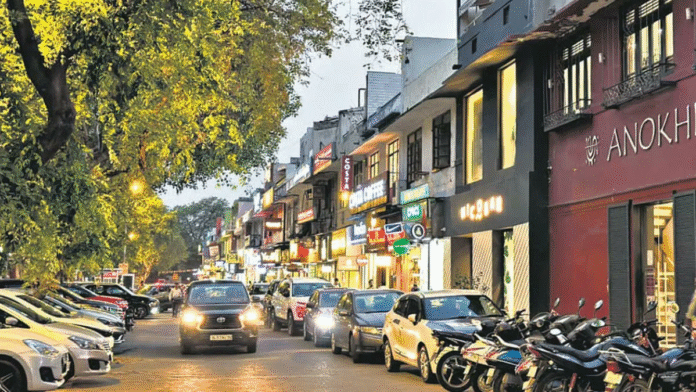
Delhi’s iconic Khan Market has once again been crowned India’s most expensive high street, with rents rising 3% YoY to $223 per sq ft per year, according to Cushman & Wakefield’s latest Main Streets Across the World report.
Despite this growth, its global position slipped slightly from 23rd to 24th reflecting the fierce competition among the world’s luxury retail corridors.

The Global Titans of Retail


The 2025 rankings are dominated by Europe and the US, with one major shift:
Top 3 Most Expensive Streets in the World

  • New Bond Street, London – $2,231 psf/yr
  • Via Montenapoleone, Milan – $2,179 psf/yr
  • Upper Fifth Avenue, New York – $2,000 psf/yr
    London’s New Bond Street surged to No. 1 for the first time, thanks to a 22% jump in rents.
    Hong Kong’s Tsim Sha Tsui, Paris’s Champs-Élysées, Tokyo’s Ginza, and Vienna’s Kohlmarkt rounded out the top ten, cementing their status as global luxury magnets.

India Is Quietly Outperforming the World
While global rental growth is moderate, India’s retail sector is booming, clocking a 6% YoY growth, outshining both global and Asia-Pacific averages.

Highest Rent Growth in India (YoY)

  • Gurgaon’s Galleria Market – 25%
  • Connaught Place, Delhi – 14%
  • Kemps Corner, Mumbai – 10%
    Limited supply + rising affluence = soaring demand for high-street retail spaces.
    “India’s high streets are becoming strategic hubs for brands,” says Gautam Saraf of C&W, noting that over 50% of retail leasing this year happened on high streets rather than malls.

APAC’s Most Affordable High Street? Also in India
In an interesting contrast, the report lists Anna Nagar 2nd Avenue in Chennai as APAC’s most affordable high street, with rents at just $25 per sq ft per year.

The Big Picture
From premiumisation to “phygital” retail experiences, India is emerging as one of Asia-Pacific’s most dynamic retail markets. And at the center of this evolution stands Khan Market a small, pricey, and globally significant square of India’s retail power.

Bhitiharwa Ashram: What Did Mahatma Gandhi Do at the Place Where Prashant Kishor Will Observe a Silent Fast?

0

Prashant Kishor has taken full responsibility for his party Jan Suraj’s poor performance in the Bihar Assembly elections, saying that despite sincere efforts, he was unable to win the trust of the people. “The responsibility for this defeat lies entirely with me,” he said. As atonement, Kishor has announced a 24-hour silent fast at Bhitiharwa Ashram — a symbolic return to the ideals of Mahatma Gandhi, whose concept of Swaraj originally inspired the Jan Suraj movement. After the setback, he appears to be once again turning towards the path shown by Gandhi.

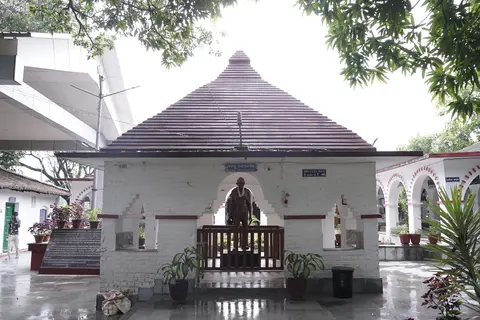
The Bhitiharwa Ashram, where Kishor will observe his fast, is located in Bhitiharwa, West Champaran. Mahatma Gandhi spent part of his Bihar stay here during the historic Champaran Satyagraha. Various symbols of Gandhi’s life are preserved within the premises, making it a significant site in Bihar’s tourism map. Many places visited by Gandhi have been recognized as historical landmarks, and Bhitiharwa Gandhi Ashram is often regarded as a temple of inspiration for Gandhians. According to the Bihar Tourism Department, it was from this ashram that Gandhi launched the Satyagraha movement in West Champaran.

A Hub of Gandhian Work

Gandhi established India’s first basic school here to promote self-reliance and skill-based education. The ashram houses several memorabilia associated with him, carefully preserved by the Bihar government. This historic site gained prominence during Gandhi’s 1917 stay, when he was deeply involved in the Champaran Satyagraha.

Prashant Kishor’s Statement:
“The people did not trust us. We collectively lost. I apologize for failing to meet the expectations of Bihar’s people. As penance, I will observe a 24-hour silent fast at the Bhitiharwa Gandhi Ashram.”

What Did Mahatma Gandhi Do Here?

Mahatma Gandhi arrived in Champaran in April 1917 after persistent requests from local farmer Raj Kumar Shukla. The British were forcing farmers to cultivate indigo and exploiting them through the oppressive teen-kathiya system. Gandhi stayed at Bhitiharwa Ashram, where he laid the foundation of the Satyagraha movement.

People at the ashram recount several stories of freedom struggle linked to his stay. A simple shelter was built for Gandhi using bricks and mud. Kasturba Gandhi also lived here and taught children in the schools established by Gandhi. Items such as Gandhi’s spinning wheel, table, bell, and personal belongings are still preserved, and his room remains intact. Visitors often come to meditate, reflect, and study his teachings.

Why Did Gandhi Come Here?

Moved by the plight of Champaran farmers, Gandhi launched a mass movement for Swaraj from this region. He mobilized villagers, formulated the structure of the movement, and worked tirelessly for social reform. Schools were set up, hygiene practices were promoted, and a new awakening spread across villages. Bhitiharwa thus became a cradle of India’s first civil disobedience movement.

How to Reach Bhitiharwa Ashram?

Bhitiharwa Ashram is accessible from both Bihar and Uttar Pradesh. Trains run from Gorakhpur (UP) to Narkatiaganj, from where the ashram is approximately 16 km away and reachable by auto or taxi. Some trains also stop at Bhitiharwa Ashram Railway Station. Visitors can also travel from Bettiah by taxi. Entry to the ashram is free.