Guru Tegh Bahadur Ji (1666–1708), the ninth Sikh Guru, was a poet, thinker, and warrior who carried forward the divine legacy of Guru Nanak Dev Ji and the Sikh Gurus who followed. His spiritual compositions reflect profound insights on the nature of God, human attachments, the mind and body, sorrow, dignity, service, death, and liberation. These teachings are preserved in 116 poetic hymns enshrined in the Sri Guru Granth Sahib Ji.
In May 1675, Hindu Pandits from Kashmir sought Guru Tegh Bahadur Ji’s support against the forced conversions being imposed by the Mughal authorities. Standing firmly for the freedom of faith, the Guru advised them to tell Emperor Aurangzeb that if he could convert the Guru himself, the Pandits would accept conversion as well.
Enraged by this defiance, Aurangzeb ordered the arrest and torture of Guru Tegh Bahadur Ji, attempting to compel him to accept Islam. The Guru unwaveringly refused, choosing martyrdom over surrender. He was publicly executed by beheading in Delhi, becoming a timeless symbol of sacrifice for religious freedom and the protector of Hindu dharma.
Gurdwara Sis Ganj Sahib in Chandni Chowk marks the site of his martyrdom, while Gurdwara Rakab Ganj Sahib stands where his remains were cremated. Alongside Guru Tegh Bahadur Ji, three devoted Sikhs—Bhai Mati Das, Bhai Sati Das, and Bhai Dyal Das—also embraced martyrdom.
Guru Tegh Bahadur Ji’s legacy endures as a beacon of courage, compassion, and steadfast faith, inspiring generations to uphold righteousness even in the face of tyranny.
Guru Tegh Bahadur’s teachings continue to inspire resilience, compassion and unwavering faith in the face of adversity. Here Comes his quotes…
On Courage and Sacrifice
“Give up your head but forsake not those whom you have undertaken to protect. Sacrifice your life but relinquish not your faith.”
On Detachment and Devotion
“Worship, O worship God, thy life is fast passing. What shall I tell thee again and again? Thou understand not, thou ignorant man: Thy body shall melt like a hailstone before long.
Give up all doubts and meditate on the Name of God. In the end this alone will accompany thee.
Give up like poison the sensual pleasures and enshrine the praise of Hari in thy heart. Nanak, the servant of God, reminds thee – Thy opportunity is slipping.”
O mother, I have been blessed with the wealth of God’s Name.
My Mind is free from wandering and is established in peace.
Avarice and worldly love dare not touch me and pure divine knowledge fills me.
Greed and desire cannot affect me. I am totally immersed in Lord’s devotion.
On Endurance and Enlightenment
“For whom praise, and dispraise are the same, and on whom greed and attachment have no effect. Consider him only enlightened whom pain and pleasure do not entrap. Consider such a person saved.”
One who vanquishes his ego and beholds the Lord as the Sole Doer of all things,
that person has attained ‘Jivan Mukti’ (is liberated while living), know this as the real truth, says Nanak.
“Thy life is passing in vain Day and night thou dost listen to religious books yet thou dost not understand the truth, ignorant man.
Death is approaching and thou hast nowhere to flee from it. Thy, body, which thou regards as permanent shall return to dust; why dost thou not remember God, O thou who are without shame and ignorant?
Nanak, the servant of God tells thee to give up pride in thy heart and devote thyself to God and thus live thy life in this world.”
On the Nature of the World
“True realization of the actual nature of this material world, its perishable, transitory and illusory aspects best dawns on a person in suffering.”
He (the Creator) has given you your body and wealth, but you are not in love with Him.
Says Nanak, you are insane! Why do you now shake and tremble so helplessly?
“O Man, hold firmly to this truth in thy mind;
The whole world is like a dream and like a dream will soon be no more.
A man may elaborately build a wall of sand, but it will not last even for a short while.
Similarly, transient are pleasures of Maya (illusions) why art thou entangled in them, O ignorant man.”
On Inner Peace
“O mother, I have been blessed with the wealth of God’s Name. My Mind is free from wandering and is established in peace.”
“Now that I have obtained the jewel of the Name, All desire has been removed from my mind: It is now absorbed in bliss.
He alone sings the praises of Hari, on whom the ocean of Grace showers His compassion.
Said Nanak, such wealth is found rarely by some through the Guru’s Word.”
“Mother, I have obtained the wealth of the God’s Name.
My mind is rid of running hither and thither – It has found its rest. Illusion and desire of possession have departed from my body – the pure knowledge of God has dawned.
Greed and delusion do not touch me now. I have grasped firmly devotion to God. The doubt about birth and death is no more.”
On Meditation and Liberation
“By singing His praises thy impurity will be removed and the poison of egoism spread all over will be destroyed.”
One who vanquishes his ego and beholds the Lord as the Sole Doer of all things,
that person has attained ‘Jivan Mukti’ (is liberated while living), know this as the real truth, says Nanak.
On Equality and Humility
“Why go to search forests (to find Him). He who dwells in all hearts but remains ever pure, pervades thy heart also.
Just as fragrance fills the rose and reflection the mirror, the Lord pervades all without a break; search Him inside thee.
The Guru hath revealed this knowledge that the Aum pervades inside and outside. Said Nanak, without knowing thyself the scum of doubt will not be removed.”
“O saints, renounce the Ego, and always flee from lust, wrath and evil company. One should consider pain and pleasure, honor and dishonor the same.
One should renounce both praise and blame and even the search for salvation.
This is a very difficult path and rare is a (Gurmukh) pious person who knows how to tread it.”
On Enduring Pain and Pleasure
“That man, who in the midst of pain, does not feel pain,
who is not affected by pleasure, affection or fear, and who looks alike upon gold and dust.”
||1||Pause||
Who is not swayed by either slander or praise, nor affected by greed, attachment or pride;
who remains unaffected by joy and sorrow, honor and dishonor.||1||
Who renounces all hopes and desires and remains desireless in the world;
who is not touched by sexual desire or anger – within his heart, God dwells. ||2||
That man, blessed by Guru’s Grace, understands this way.
O Nanak, he merges with the Lord of the Universe, like water with water. ||3||11||
Martyrdom of Guru Tegh Bahadur: Guru Tegh Bahadur’s martyrdom on 24 November 1675 stands as a defining moment in India’s battle for religious freedom. At a time when Mughal emperor Aurangzeb intensified pressure to convert, the ninth Sikh Guru emerged as the protector of the oppressed. His belief that “Fear not, and frighten not others” became the guiding principle behind his decision to intervene. His stand went beyond religion, it was about defending the universal right to faith.
The unexpected moment that pulled him into history Known for his calm wisdom, detachment, and courage, Guru Tegh Bahadur embodied Sikh ideals of justice. When Kashmiri Pandits approached him seeking protection, he saw their plea not as a religious question, but a human one. Accepting their cause meant challenging tyranny at its core, a step only a leader with deep spiritual conviction could take.
A journey from courage to captivity Standing up to the empire meant surrendering to captivity. Guru Tegh Bahadur and his companions: Bhai Mati Das, Bhai Sati Das, and Bhai Dyal Das were arrested and brutally tortured. Even as they witnessed unimaginable violence, their resolve remained unshaken. The Guru reminded followers that “True realisation of God comes to the person who surrenders himself completely.” Their steadfastness transformed their suffering into a message of fearless resistance.
Where a guru’s death turned into a national turning point On 24 November, at Chandni Chowk, Guru Tegh Bahadur was executed for refusing to convert or bow to imperial authority. His final act embodied his belief that “One who is not affected by pleasures or pain, greed or attachment… such a person is called a true sage.” Today, Gurdwara Sis Ganj Sahib marks the site of his martyrdom, a reminder of the moment when moral courage triumphed over oppression.
How one sacrifice redefined freedom in India Guru Tegh Bahadur is honoured as Hind-di-Chadar, the Shield of India because he gave his life to protect another community’s right to worship freely. His martyrdom reshaped India’s spiritual and cultural history, showing that defending justice for others is the highest form of bravery. His legacy continues to inspire generations to stand for truth with the same fearless clarity he preached.
Somewhere between strobe lights and DJ nights, India’s Gen Z has conjured a new kind of party: Bhajan Clubbing. Imagine a nightclub, dim lights, pulsating energy—but swap techno drops for “Shri Krishna Govind Hare Murari,” and the vibe is pure magic. The contradiction is the thrill.
1. A High Without the Hangover Every weekend, groups of 80–100 young people gather to chant, dance, and enter a collective flow state—no alcohol, no chaos, just rhythm and spiritual dopamine. “It wasn’t religious, just a happy high,” says Abhinav, an IT trainee who attended a bhajan jam recently. It’s a peak experience without the morning-after guilt.
2. Postmodern Pilgrimage: Why Gen Z Is Hooked Experts call this a rebellion wrapped in devotion. Screen-fatigued and stressed, Gen Z craves grounding through immersive, social experiences. “Spirituality today is tied to experience, not ritual,” says JNU’s Dr. Sakshi Sharma. Bhajan Clubbing acts as a reset button: safe, social, and deeply centering.
3. Quitting Finance for Bhajans: The Rise of Full-Time Devotional Performers Some have turned this trend into careers. Sibling duo Prachi and Raghav Agarwal, aka Backstage Siblings, went viral with their bhajan reels. From a tiny 50-person crowd at their first event, they recently sold out a 1,700-seat devotional show. Both quit full-time finance jobs to perform bhajan jams across India—and even Dubai. “Gen Z loves it, so we took the leap,” says Raghav. Their story symbolizes the bhajan-clubbing boom.
4. Clubs Go Sober Venues now swap cocktails for chai and vegetarian food—and business is still booming. Parents nod in approval, and Gen Z feels understood. The old nightclub model is being rewritten, one bhajan at a time.
5. Science Says Bhajans Heal Research shows group chanting boosts oxytocin (bonding), lowers cortisol (stress), and triggers theta waves (calm). Neuroscience meets nostalgia, creating a tangible “feel-good” effect.
Viral reels of jam-packed bhajan nights have turned devotional music into the new concert culture. With thousands attending, one thing is clear: Bhajan Clubbing isn’t a fad—it’s Gen Z remixing spirituality into a feel-good movement
Walter Orthmann: In a world where job-hopping every two or three years has become the new normal, the story of Walter Orthmann feels almost mythical. At 100 years old, the Brazilian centenarian holds the Guinness World Record for the longest career at a single company, an astounding 84 years and 9 days at Industrias Renaux S.A., now RenauxView.
Orthmann began his journey on January 17, 1938, at just 15. Growing up as the eldest of five children in a struggling family, he took up work to support his home. His fluency in German helped him secure a job as a shipping assistant, one that unknowingly would shape the rest of his life. “Back in 1938, kids were expected to work,” he told Guinness World Records. “As the oldest son, my mother took me to find a job at 14.”
From there, his rise was powered by discipline, curiosity, and a genuine love for learning. Known for his sharp memory and adaptability, Walter moved from shipping to administration, and eventually to sales manager, a role in which he thrived. “In less than a week, I filled the production with orders worth three months,” he recalled.
But Orthmann’s story is not just about one man’s dedication, it’s a reflection of a work culture that once valued stability and loyalty. Earlier, companies invested in employees, and employees stayed because they felt valued. Today, corporate life is a different landscape: long hours, toxic environments, declining work-life balance, and widespread burnout. Passion often gets lost somewhere between deadlines and deliverables.
Amid this modern chaos, Walter’s extraordinary career stands as a reminder of a time when purpose mattered more than paychecks. “I never thought of breaking a record,” he says. “I just found joy in what I did.” A rare story of loyalty, one we may never witness again in today’s restless job culture.
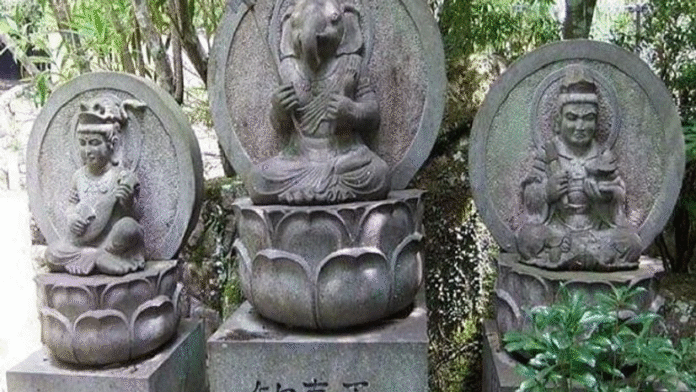
Japan’s spiritual landscape is a captivating blend of Shintoism, Buddhism, folklore, and ancient mythology. But what surprises most people is how deeply Indian deities have influenced Japanese culture for over a thousand years. From temple halls to Samurai traditions, Hindu gods quietly live on in Japan, sometimes with new names, sometimes with new forms, but always with the same divine essence.
Here are seven Hindu gods who traveled across borders, transformed with time, yet continue to be worshipped in Japan even today.
1. Lord Ganesha – Kangiten: The embracing god of bliss In Japan, Ganesha appears as Kangiten, an elephant-headed deity often shown as a male-female pair locked in an embrace. While the form is unique, the meaning is familiar, remover of difficulties, bringer of joy, success, and prosperity. Just like Ganesha, Kangiten is called upon when people seek breakthroughs and good fortune.
2. Maa Saraswati – Benzaiten: Goddess of art, wealth and warriors One of Japan’s most beloved deities, Benzaiten, comes from Saraswati. But in Japan, she evolves beyond music and knowledge, she becomes a goddess of wealth, beauty, fertility, and even battle. Samurai once worshipped her as a warrior goddess. With multiple arms and weapons at times, she resembles Saraswati, Lakshmi, and Durga all at once.
3. Lord Shiva – Daikoku: The smiling god of abundance Shiva’s Japanese counterpart, Daikoku, is part of the Seven Lucky Gods. Though Shiva is often linked with destruction, Daikoku represents prosperity and abundance standing on rice bales and holding a golden mallet that showers blessings. Some forms of Daikoku draw directly from Mahakala, one of Shiva’s fierce manifestations.
4. Goddess Lakshmi – Kichijoten: The Japanese vision of grace & prosperity Kichijoten embodies everything Lakshmi stands for beauty, fertility, happiness, and wealth. She is portrayed as a radiant woman with serene elegance. Her presence in Japanese temples shows how both cultures revere feminine energy as the source of abundance.
5. Indra Dev – Taishakuten: Protector of the realm Indra crosses borders as Taishakuten, a powerful protector deity often riding an elephant, just like his Hindu form. Revered especially by warriors, Taishakuten symbolizes strength, justice, and divine authority, a guardian watching over the nation.
6. Kubera/Vaisravana – Bishamonten: The warrior god In Japan, Kubera transforms into Bishamonten, the god of warriors and one of the Seven Lucky Gods. Depicted with armor, a spear, and a pagoda, he protects the righteous and punishes evil. Bishamonten is not just a god of wealth, he is Japan’s fierce defender of faith and justice.
7. Yama – Enma: The fearsome judge of the afterlife Just like Yama in Hindu mythology, Enma rules the realm of the dead and judges souls. Depicted with an intense expression, Enma ensures that justice prevails in the afterlife. The similarities between the two show how concepts like karma and retribution traveled across Asia.
A cultural connection that still thrives These shared deities prove that India and Japan have been connected in ways far deeper than trade routes or political ties. They reflect a cultural conversation thousands of years old, where ideas, stories, and gods evolved yet retained their essence. For spiritual seekers, this is a reminder of the universality of divine energies. It’s ’s magical to see how the gods of India continue to live, breathe, and evolvefar beyond the borders where they were born.
Modern teams need more than effort to succeed — they need systems that reduce friction, align priorities, and make communication seamless. Yet too many organizations still operate with a patchwork of disconnected apps, leading to duplicated work, scattered conversations, and missed opportunities. The solution lies in adopting project management tools that bring people, processes, and information together.
Lark provides exactly that. By combining structured information, real-time communication, streamlined scheduling, live documentation, data transparency, and decision-making into one platform, it enables teams to boost productivity and collaboration simultaneously.
Lark Base: Making it official how we operate together
Keeping your information in order is the most important thing you can do to get things done. Lark Base keeps all of the team’s documents, resources, and project details in one place, so they can all work from the same set of information. On the other hand, Base can also support the features of CRM software that turns projects, clients, data, and updates into one structured system.
Databases that can be changed: Make sure the team has ways to keep track of client information, project milestones, or service logs that work for them.
Linked records: Put projects, approvals, and deliverables in the same framework to keep everything in context.
Dashboards: They let leaders see how things are going in real time and provide them important metrics to keep an eye on.
Tags and filters: These help you find information fast, which saves you time that you would have spent looking for it.
Permissions based on roles: Make sure that only the right people may see private clients or project information and keep it safe.
Growth that can be scaled: You can add more records as teams and clients develop without compromising structure or clarity.
Lark Messenger: Enabling connected and accountable conversations
It’s important to talk to each other when you’re working together, but only when it has to do with work. Lark Messenger makes sure that conversations don’t get lost in a lot of apps and actually lead to action.
Channels just for this: To make sure everyone is on the same page, develop different channels for team and client conversations about projects or assignments.
Sharing files and links: Make sure that resources are linked to talks so that updates are never lost.
Pinned messages: Make sure that important information is easy to find so that people are less likely to overlook it.
Chat histories that last: Keep track of why decisions were taken so that things don’t alter as people depart the team.
Making tasks from chat: You can turn conversations into tasks that you can see without leaving Messenger.
Mentions and tagging: Get the relevant people into conversations right away, so there are no delays.
Lark Calendar: Keeping teams aligned on time and priorities
If you don’t plan your time wisely, you could miss deadlines and become stuck on your homework. Lark Calendar ensures that schedules are clear, current, and connected to outcomes.
Shared calendars: Everyone can see all the teams’ deadlines, milestones, and reviews.
Automatic time zone conversion: This makes it easier for people and clients all across the world to book appointments.
Things that happen over and over: Make a schedule for regular evaluations, check-ins, or updates.
Related resources: Add records or documents to events so that everyone is prepared when they arrive.
Smart reminders: Let teams know about sessions or deadlines ahead of time, so they don’t miss them.
Conflict alerts: Talk about schedules that are the same early on to avoid problems with working together.
Lark Docs: Capturing and evolving team knowledge
Documentation shows you how to make ideas into real objects. In Lark Docs, people can work together and see how the content changes as they complete their work.
Real-time co-editing: People can work on the same document at the same time without getting in each other’s way.
Notes in the document: Make it easier to understand by linking input directly to components.
Version histories: Keep track of changes throughout time so that people know what they are responsible for and have a better idea of what is going on.
Task conversion: Change comments on a document into tasks that can be done right away.
Linking across platforms: You can connect Docs to Calendar events or Base records so you can see everything.
Safe sharing: Control who can see important papers so that only the right people can see them.
Lark Sheets: Transforming data into a productivity driver
When teams have real, dependable facts, they do their best job. Instead of utilizing static spreadsheets, people may work collaboratively at Lark Sheets and always have the most up-to-date information.
Live collaboration: Multiple people can work on the same data and make changes at the same time.
Watching performance: Keep an eye on KPIs, budgets, and deadlines as they happen.
Visual dashboards: Turn data that is hard to grasp into useful information that is easy to understand.
Automatic updates: This will keep the information up to date and cut down on the number of people that have to provide it.
Integration with workflows: Connect data in Sheets to tasks or records so they may be completed right away.
Version control: Keep track of changes so that everyone can see what has changed and why.
Lark Approval: Streamlining decision-making with automated workflows
One of the most common things that slows down work is waiting for permissions. Lark Approval solves this problem by making the process for signing off clear and simple to follow.
Standardized forms: Make sure that requests are clear, whether they are for getting budget approvals or signing off on projects.
Automated routing: Create an automated workflow that sends requests to the right people.
Notifications: Get decision-makers to reply fast to cut down on delays.
Clear logs: Keep track of every choice so that other people may see and be held accountable.
Dashboards: Tell leaders which permissions are still waiting and which ones have been approved.
Role-based permissions: Keep sensitive requests safe while getting things done.
Conclusion
To be successful, teams nowadays require more than just hard work. They also need tools that help them talk to each other, lower their stress levels, and determine their priorities. But many businesses still use a combination of apps that don’t work together, which means that work is done twice, discussions are missed, and chances are wasted. Use project management software that connects people, processes, and information to get the job done.
That’s what Lark does. It combines structured information, real-time communication, easy scheduling, live documentation, data transparency, and decision-making into one platform. This enables teams to work together and get more done at the same time.
If your ecommerce online retail store consistently struggles to manage order fulfillment, that’s a clear sign that it’s the right time to consider outsourcing these tasks to expert third-party logistics companies. Fulfillment has become increasingly important for online retailers because it is the most important factor that determines overall customer satisfaction. Choosing the right 3PL firm to partner with to streamline your order fulfillment processes can make a huge impact on growth. Not meeting consumer expectations can lead to missed orders, shipping problems, and terrible customer shopping experiences. However, maintaining an efficient and profitable business requires you to avoid missing orders and shipping errors by investing in top-tier fulfillment centers.
3 Ways to Choose The Best Ecommerce Fulfillment Services
There are several ecommerce fulfillment companies in the US that help businesses take care of consumer orders. But with so many different options out there, choosing the right partner can be challenging. Online retailers should understand that fulfillment entails more than a daily grind. It’s one thing that can negatively affect margins. Whether you choose to partner with a 3PL or adopt a hybrid model, you can greatly improve your operational efficiency through effective order fulfillment. Here are the top four key factors to consider to help you select the right ecommerce fulfillment service provider.
Industry Knowledge
Ecommerce brands should want to work with fulfillment service providers with in-depth knowledge of their industry. Good fulfillment is not a generic service, but a tailored one. Experienced third-party logistics companies like Packageman have a great understanding of the most common fulfillment challenges confronting retailers in various niches. Whether you want to optimize your subscription box fulfillment or find the best way to handle fluctuating demands of peak seasons, collaborating with expert fulfillment partners who know your business needs is essential for success.
Technology Integration
It’s also necessary to ensure that the ecommerce fulfillment services provider you use has advanced technology integration, including strategic warehousing solutions to keep your business up to date. As a tip, using 3PLs with digital platforms that can easily integrate into your existing systems is a great advantage. If a third party logistics platform can seamlessly plug into your ecommerce website and order fulfillment systems, that can make it easier to use a single dashboard to monitor the state of your inventory and other stuff simultaneously.
Access to Multiple Carriers
Another great way to guarantee seamless order fulfillment is to choose service providers that have partnerships with multiple carriers to improve delivery time. Rising fuel prices has had a negative impact on shipping cost around the world. With many 3PL fulfillment providers dealing with thousands of parcels weekly on the behalf of clients, ecommerce brands should try to negotiate for the cheapest shipping rates to gain a competitive advantage. Order fulfillment partners with strong networks and industry-leading carriers can offer your ecommerce business access to more convenient delivery options.
Efficient fulfillment in ecommerce includes properly handling every task ranging from product locating within your inventory to correctly picking and packing, and choosing a reliable carrier to ensure that all ordered products reach the final consumer in time. Studies show that about 70% of potential customers visiting an ecommerce site abandon their carts before purchasing, with 22% citing delivery time as a key factor. High-speed shipping, like same-day shipping services offered by Packageman 3PL, is a great tool for any ecommerce business looking to impress buyers and maintain loyalty with innovative order fulfillment. Considering essential factors like customer satisfaction, shipping rates, technology integration, and industry knowledge can help you choose a great fulfillment partner.
Fatima Bosch Fernandez of Mexico has been crowned Miss Universe 2025. India’s representative, Manika Vishwakarma, secured a place in the top 30, but could not advance to the top 12.
Fatima Bosch made headlines earlier during the sash ceremony when she protested against Miss Universe Thailand director Nawat Itsagrisil, who allegedly called her a “dumbhead.” The incident escalated when the director called security, prompting all contestants to walk out in solidarity against the misbehavior.
Fatima Bosch of Mexico has officially won the Miss Universe 2025 title. She is the same contestant who had confronted director Nawat during the sash ceremony controversy.
During the Miss Universe 2025 finale, contestants were asked hard-hitting questions about gender equality, representation, and the evolving challenges faced by women around the world.
Miss Mexico and newly crowned Miss Universe 2025, Fatima Bosch, was asked: “From your perspective, what are the challenges of being a woman in 2025, and how will you use the title of Miss Universe to create a safe space for women around the world?”
Fatima responded with a strong message of solidarity and activism: “I will use my voice for others. We are here to speak out, to make change, and to achieve. We are women, we are brave, and we are the ones who make history.”
Her answer drew applause for highlighting courage, collective empowerment, and the responsibility of using global platforms for advocacy.
Olivia Yasay of Côte d’Ivoire faced a similarly impactful question: “If you were to win the Miss Universe title today, how would you use this platform to empower young girls?”
She delivered an inspiring vision for future generations: “As Miss Universe, I would like to be the face of a new generation, representing culture and tradition. I would like to be the new face of this era — a woman who is bold, a woman who is a leader, who is not ashamed of who she is. If I become Miss Universe, I will be a role model for young girls and show them that you can do it too. Go and shine in places where you think there is no place for you.”
Both responses reflected the evolving narrative of global pageants — where beauty is matched with purpose, leadership, and the power to influence change.
Winter wellness: The beetroot boost your body didn’t know it needed Most people drink beetroot juice for its colour, but its power goes far deeper. As nutritionists explain, having beetroot juice on an empty stomach dramatically improves your body’s uptake of iron, vitamins and antioxidants because no competing foods interfere with absorption. This becomes even more crucial in winter, when our metabolism slows and blood pressure tends to fluctuate.
Beetroot’s natural nitrates help in lowering blood pressure, improving oxygen flow, and supporting heart health, something especially beneficial in the colder months when circulation often drops. Its fibre also keeps digestion stable, an underrated winter challenge.
When the season changes, so should your plate Modern diets have become so uniform that we forget our bodies intuitively respond best to what grows in the current season. Winter produce: carrots, radish, amla, spinach, bathua was designed by nature to strengthen the body exactly when it needs protection. Carrots, for example, are at their sweetest in winter because the cold converts starch into natural sugar. This not only makes them tastier but also richer in beta-carotene, which boosts immunity and supports vision. Radishes work silently to detoxify the liver, helping the body handle heavier winter meals. Amla becomes a natural vitamin C powerhouse, giving the body antioxidant support that no supplement can replicate.
Greens that warm the body and calm the gut Spinach and bathua are winter’s most healing greens, yet most people don’t know that their mineral profile actually helps maintain body warmth. Bathua in particular has a gentle gut-healing effect; traditional households even use bathua raita as a home remedy for winter bloating and acidity. These greens provide folate, iron and fibre that urban diets often lack, making them essential for fighting seasonal fatigue.
Nature’s winter secret: timing is everything Beetroot juice works best on an empty stomach in the morning, while amla is most effective if eaten fresh or as murabba during daytime. Carrots and greens are best consumed for lunch, when digestion is stronger. Radish, surprisingly, is best eaten before sunset to prevent gas.
Winter nutrition is not about trends, it’s about returning to rhythms our ancestors trusted. And your body still trusts them too.
India celebrated Children’s Day on November 14 and World Children’s Day on November 20 with enthusiasm—hashtags trended, leaders sent warm wishes, and social media was flooded with colourful posts about hope, joy, and the “future of the nation.” But behind these festive posts lies a dark, uncomfortable truth that few dared to discuss: India’s children are crying silently, suffocating under pressure, and dying unheard.
The most heartbreaking reminder came from Jaipur, where 10-year-old Amayra, a Class IV student of the prestigious Neerja Modi School, died by suicide. A child who should have been drawing butterflies in her notebook ended up taking the most tragic step imaginable.
The details are devastating.
Amayra had repeatedly begged her teacher for help, pleading with folded hands to protect her from relentless bullying by classmates. She cried, she complained, she tried everything a child could do to escape that trauma. Butno action was taken. Reports said that there was no anti-bullying committee in the school—an essential requirement under CBSE rules—and shockingly, no representative from the school has contacted the grieving family till date.
Even though the Education Minister and the Deputy Chief Minister visited the parents and promised strict action, the family continues to wait.
This tragedy was not isolated.
On World Children’s Day itself, another horrific case emerged from Karauli, where a student ended his life after allegedly being beaten brutally by his teachers. Before dying, he told his parents, “If you want me to be happy, put my teachers behind bars.”
Across the nation, such stories appear with frightening regularity. In Kota, the coaching hub of the country, suicide has become so routine that it barely shocks anymore. Every few weeks, another student’s life crumbles under the crushing weight of expectations, competition, and loneliness.
So, on days when we post cheerful messages about our “precious children,” we must ask:
Are we giving them a life worth celebrating?
Why are our schools and coaching centres escaping accountability?
Who is monitoring teachers, institutions, counsellors—or the lack of them?
How many more children must die before the system wakes up?
The biggest sufferers are the parents—helpless spectators who lose everything, yet continue to fight a system that has repeatedly failed them.
Children’s Day wishes mean nothing when children are dying unheard. The nation owes its kids more than smiles and social media posts— it owes them protection, dignity, and the right to live.
Circulate this post till it awakens each parent to come forward and give justice to tiny soul Amayra who was too small to take this big step, to this student in Karauli who might have dreamed of some good career and to every student who succumbed under pressure…
Let’s pledge to releive this society from creating such cookers where students are succumbing under pressure.