Home Blog Page 139

Indian-born Cheetah Mukhi Gives Birth to Five Cubs at Kuno: Know Cheetah History in India and Details on Project Cheetah too…

0

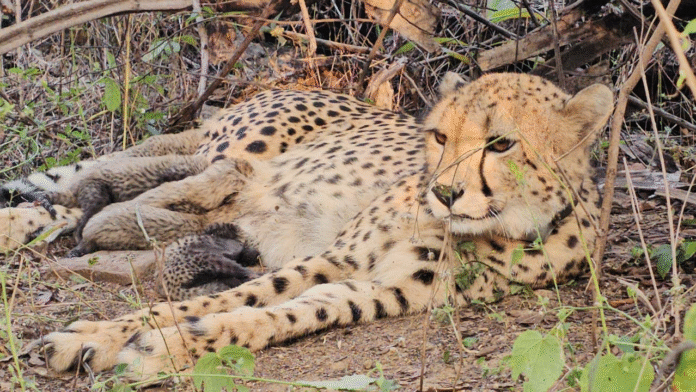
In a landmark moment for India’s wildlife conservation, Mukhi, a cheetah born at Kuno National Park in 2023 to Namibian female Jwala, has given birth to five healthy cubs. This is the first time a cheetah born in India has reproduced—an encouraging sign that the species is adapting well to Indian habitats.

Madhya Pradesh Chief Minister Mohan Yadav and Union Environment Minister Bhupender Yadav announced the news, calling it a major milestone for Project Cheetah, launched in 2022 to revive a species that disappeared from India more than seven decades ago. The large litter also lifts hopes for establishing a self-sustaining cheetah population, with Kuno now recording a cub survival rate higher than the global average.

A Species Lost and Found

Cheetahs once ran wild across India—from Punjab and Rajasthan to the Deccan Plateau. Mughal emperors and Indian royalty famously used them as hunting animals, a tradition that eventually contributed to their decline. Excessive trapping, habitat loss, trophy hunting during the British Raj, and a bounty system pushed the species to the brink.

The last three known cheetahs were killed in 1947, and in 1952, India officially declared the cheetah extinct.

The Return to Indian Grasslands

India began correcting that ecological loss in September 2022, when African cheetahs were reintroduced to Kuno National Park under one of the world’s most ambitious wildlife relocation programmes.

Mukhi’s successful litter marks a turning point—a signal that the species is beginning to settle, breed, and rebuild its future on Indian soil. Conservationists hope this momentum will help restore the balance of India’s grassland ecosystems and bring the world’s fastest land animal back to its historic home.
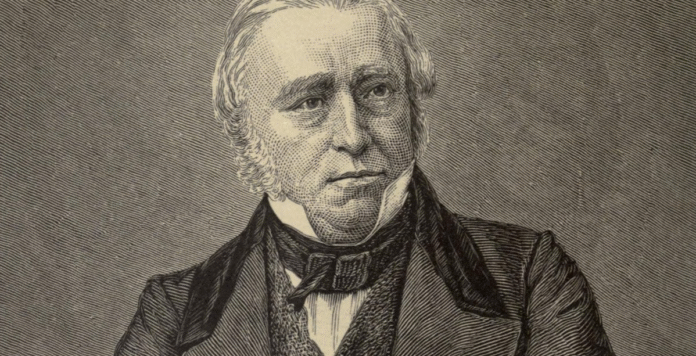

From IPC to English Classrooms: The Colonial Blueprint Macaulay Left Behind

0

Why PM Modi says India paid a “heavy price” for one man’s philosophy. At the Sixth Ramnath Goenka Lecture, PM Narendra Modi reignited a powerful question: Did Thomas Babington Macaulay shape modern India or silently weaken its spirit? Modi called Macaulay’s mindset “his biggest crime,” accusing him of creating a class of Indians who were “Indian by appearance but British at heart.” According to the PM, this colonial psychology shattered national confidence and planted a long-lasting inferiority complex.

But who was this man whose ideas continue to guide India’s laws, schools, and mindset?

Macaulay: The Man Behind the Machinery
Early Life: A Childhood That Hardened Him

  • Born: October 25, 1800
  • Eldest of nine siblings
  • Sent to boarding school at 13, separated from family, bullied, and emotionally scarred
    Historians note these early experiences made him deeply protective of his own circle, yet harsh and uncompromising toward opponents, a duality that shaped his politics in India.

A British Politician Who Suddenly Looked East
By 1832, Macaulay threw himself into Indian affairs as the British Parliament debated the renewal of the East India Company’s Charter.
He complained that Parliament cared more about “minor English incidents” than the governance of millions in India.

The Law Reformer Who Created the IPC
Key Highlights:

  • Arrived in India in 1834 as the first Law Member
  • Chaired the Law Commission
  • Drafted the Indian Penal Code (IPC) in 1837
  • IPC came into force in 1862
  • Its influence spread across almost all former British colonies
    Macaulay had little courtroom experience, yet his sharp mind helped consolidate criminal law into a uniform code. Offences like “sodomy” were criminalised across the empire because of his draft.

The Education Shockwave: The 1835 English Manifesto
The biggest storm, however, came from his Minute on Education (2 February 1835).

What Macaulay Proposed:

  • Create a class of Indians “English in taste, opinions, morals, and intellect.”
  • Use English as the primary medium of education.
  • Close or minimise funding to Persian, Arabic, and Sanskrit institutions.
  • Build elite English institutions instead of mass schooling.
    This decision split Indian society uplifting some, alienating millions.

Two Centuries Later… Still Debating Him
Macaulay’s fingerprints remain on:

  • India’s courts
  • school textbooks
  • administrative structure
  • the dominance of the English language
    And now, nearly 200 years later, India is trying to reverse the blueprint he left behind.

Was Macaulay a moderniser or the architect of mental colonisation?
The debate is far from over.

Catstanbul: Inside the City Where Cats Rule the Streets

0

In Istanbul, the city never walks alone—because a cat is always just a step away.

Turkey’s cultural capital, spread across Europe and Asia, is home to nearly 250,000 street cats who roam freely through mosques, markets, ferries, cafés, and historic alleys. They’re not exactly pets, not quite strays—more like cherished citizens with full community rights.

Photographer Marcel Heijnen, who documented them in City Cats of Istanbul, calls them “a community treasure”. Residents feed them, shopkeepers leave bowls outside their doors, and every municipality runs free veterinary care and neutering services. Even private clinics offer discounts for street cats—proof that Istanbul’s love for felines is more than folklore.

This bond runs deep. During the Ottoman era, the city even had official mancacıs—“cat sitters”—whose job was to feed and protect street cats. And long before that, Phoenician and Ottoman traders brought cats aboard ships to guard precious goods from rodents, creating centuries of coexistence.

Today, visitors find Istanbul’s cats everywhere: sunbathing on ancient walls, curled up on metro seats, or rolling atop yellow taxis. In a bustling city of 15 million, they offer the softest pauses—quiet companions who turn chaos into calm.

When an Istanbul cat hops into your lap amid the aromas of kebab, saffron and grilled corn, the city suddenly feels gentler. That’s why many call it not just Istanbul, but Catstanbul—a city shared by humans, history and a purring population that truly rules the streets.

Miss Universe 2025: Rajasthan’s Manika Vishwakarma in the Finals, India Just One Step Away From Its Fourth Crown

0

The 74th Miss Universe 2025 pageant is underway in Bangkok, and Rajasthan’s Manika Vishwakarma has secured a place in the finals among 130 contestants from across the globe. Her outstanding performance has sparked excitement and renewed hopes throughout the country.

Rajasthan’s daughter Manika is leading India’s journey on the global stage, impressing judges and audiences alike with her beauty, intelligence, and confidence. Her entry into the list of top finalists has placed India on the brink of winning its fourth Miss Universe crown.

Grand Finale on November 21

The grand finale of Miss Universe 2025 will be held on November 21 at the Impact Challenger Hall in Pakkret, Nonthaburi (Bangkok). Viewers can watch the event live for free on the official Miss Universe YouTube channel from 8:00 AM Thai time (6:30 AM IST).

Journey From a Small Town to the Global Stage

Manika’s journey began in the modest lanes of Sri Ganganagar, Rajasthan. She later pursued Political Science and Economics at Delhi University. Alongside her studies, she excelled in leadership, social service, and the arts. Her discipline as an NCC cadet, her training in classical dance, and her commitment to community work shaped her into a well-rounded personality.

Neuronova: A Mission for Mental Health

Manika founded Neuronova, a platform dedicated to spreading awareness about neurodivergence—conditions like ADHD and autism. She strongly believes these are not illnesses but unique ways of thinking. With this initiative, she demonstrated that true beauty reflects through compassion, awareness, and perspective.

Her involvement in the BIMSTEC Sewocon as India’s representative allowed her to share her views on foreign policy and social issues, inspiring many young minds. Recognition from institutions like the Lalit Kala Akademi and the JJ School of Arts further strengthened her artistic identity.

Rise to the National Crown

Manika won the title of Miss Universe Rajasthan and crowned her successor the same evening. On the very same day, she participated in the Miss Universe India auditions, creating a unique record.

On August 18, 2025, she claimed the Miss Universe India crown by defeating 48 contestants in a grand finale held in Jaipur. During her iconic ramp walk to the song “Tujhe Dekha Toh Yeh Jaana Sanam…”, her radiant smile and grace captivated the audience. In that moment, a new dream for India took flight.

Epstein Files Flashpoint: Inside the Viral Instagram Update That’s Shaking U.S. Politics

0

Epstein Files: The internet exploded on Wednesday night not because of a speech or a scandal, but because of a single Instagram update showing President Donald Trump seated in the Oval Office, signing a thick official binder. Above the photo, the headline blazed:
“Trump Administration Live Updates: President Signs Bill on Release of Epstein Files.”
Within minutes, the post went viral. Shares. Duets. Outrage. Celebration. Conspiracy threads.
Everyone had one question:

What exactly are the Epstein Files and why is their release such a historic moment?
The Instagram Post That Set Off a Digital Firestorm
The IG update breaks the news like a live ticker:

  • Trump has signed a bill demanding the Justice Department release Jeffrey Epstein’s files within 30 days.
  • But the post quickly adds:
    “His signature does NOT guarantee full release.”
  • The fine print reveals that ongoing investigations, classified material, and victim-related content can still be withheld.
    The image of Trump at his desk, binder open gives the moment a theatrical weight.
    This is the kind of picture that becomes history or controversy, depending on who you ask.

So What ARE the Epstein Files?
Why Is This Post Everywhere?
The Epstein Files are one of the most secretive, demanded, and mythologised document collections in modern U.S. history, containing:

  • Records of Epstein’s global trafficking network
  • Names of associates, visitors, and frequent flyers on his private jets
  • Emails, logs, transaction trails
  • DOJ and FBI internal notes
  • Details of the sweetheart deals and cover-ups that let him evade justice
  • Files on his death in federal custody in 2019

For years, the public has asked:
Who else was involved? Who protected him? What is still hidden?

But the Instagram Post Also Hints at the Twist
Despite the celebratory headline, the update adds tension:

  • Many files may remain confidential due to “ongoing investigations.”
  • Attorney General Pam Bondi refuses to confirm how much will be released.
  • A new investigation into Democrats mentioned in Epstein’s emails could delay disclosure.
  • Even Trump’s own critics say the bill is symbolic unless the DOJ complies.
    This mix of “big reveal” + “maybe nothing changes” is exactly what makes the story addictive.

Voices From the IG Update
The post also features survivor Maria Farmer’s powerful words:
“After decades in the dark… Congress finally listened.”
It’s the emotional counterpoint to Trump’s political framing claiming Democrats fear the files more, insisting he ordered the bill’s passage, and calling the attention “a distraction.”

Why This Is the Biggest Story on Instagram Right Now
Because the Epstein Files represent something bigger than politics:
They’re a symbol of hidden power and the hope of exposing it.
The IG post captures:

  • A president signing under pressure
  • Survivors demanding answers
  • Congress uniting 427-1
  • The DOJ hesitating
  • And millions of people watching like it’s a countdown to the truth
    Whether the files actually come out or stay behind redactions doesn’t matter yet.
    Right now, Instagram has turned this into the story of the moment, a rare intersection of power, secrecy, justice, and a single viral image from the Oval Office.

Delhi Khan Market Among World’s Priciest Streets, But How Does It Stack Up Against London, Milan & NYC?

0

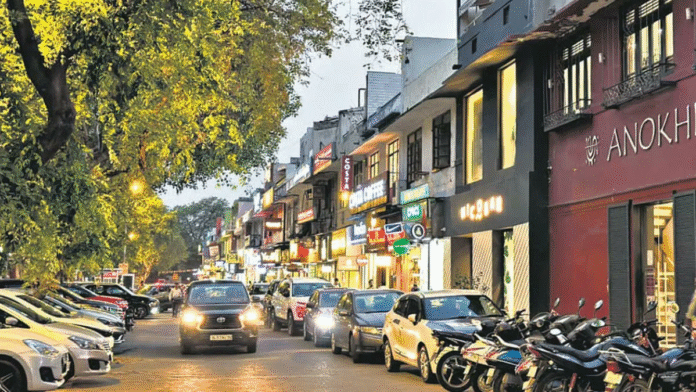
India’s luxury retail story is quietly rewriting the global map as Delhi situated Khan Market has turned up as world’s priciest streets. Wa

Khan Market: India’s Costliest Address for Retail


Delhi’s iconic Khan Market has once again been crowned India’s most expensive high street, with rents rising 3% YoY to $223 per sq ft per year, according to Cushman & Wakefield’s latest Main Streets Across the World report.
Despite this growth, its global position slipped slightly from 23rd to 24th reflecting the fierce competition among the world’s luxury retail corridors.

The Global Titans of Retail


The 2025 rankings are dominated by Europe and the US, with one major shift:
Top 3 Most Expensive Streets in the World

  • New Bond Street, London – $2,231 psf/yr
  • Via Montenapoleone, Milan – $2,179 psf/yr
  • Upper Fifth Avenue, New York – $2,000 psf/yr
    London’s New Bond Street surged to No. 1 for the first time, thanks to a 22% jump in rents.
    Hong Kong’s Tsim Sha Tsui, Paris’s Champs-Élysées, Tokyo’s Ginza, and Vienna’s Kohlmarkt rounded out the top ten, cementing their status as global luxury magnets.

India Is Quietly Outperforming the World
While global rental growth is moderate, India’s retail sector is booming, clocking a 6% YoY growth, outshining both global and Asia-Pacific averages.

Highest Rent Growth in India (YoY)

  • Gurgaon’s Galleria Market – 25%
  • Connaught Place, Delhi – 14%
  • Kemps Corner, Mumbai – 10%
    Limited supply + rising affluence = soaring demand for high-street retail spaces.
    “India’s high streets are becoming strategic hubs for brands,” says Gautam Saraf of C&W, noting that over 50% of retail leasing this year happened on high streets rather than malls.

APAC’s Most Affordable High Street? Also in India
In an interesting contrast, the report lists Anna Nagar 2nd Avenue in Chennai as APAC’s most affordable high street, with rents at just $25 per sq ft per year.

The Big Picture
From premiumisation to “phygital” retail experiences, India is emerging as one of Asia-Pacific’s most dynamic retail markets. And at the center of this evolution stands Khan Market a small, pricey, and globally significant square of India’s retail power.

Bhitiharwa Ashram: What Did Mahatma Gandhi Do at the Place Where Prashant Kishor Will Observe a Silent Fast?

0

Prashant Kishor has taken full responsibility for his party Jan Suraj’s poor performance in the Bihar Assembly elections, saying that despite sincere efforts, he was unable to win the trust of the people. “The responsibility for this defeat lies entirely with me,” he said. As atonement, Kishor has announced a 24-hour silent fast at Bhitiharwa Ashram — a symbolic return to the ideals of Mahatma Gandhi, whose concept of Swaraj originally inspired the Jan Suraj movement. After the setback, he appears to be once again turning towards the path shown by Gandhi.

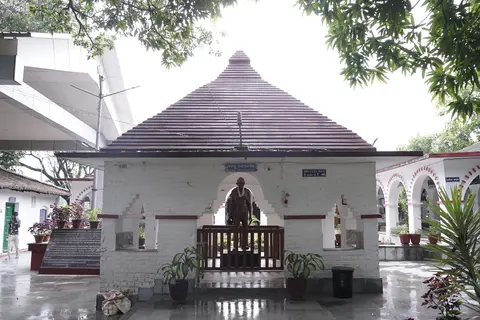
The Bhitiharwa Ashram, where Kishor will observe his fast, is located in Bhitiharwa, West Champaran. Mahatma Gandhi spent part of his Bihar stay here during the historic Champaran Satyagraha. Various symbols of Gandhi’s life are preserved within the premises, making it a significant site in Bihar’s tourism map. Many places visited by Gandhi have been recognized as historical landmarks, and Bhitiharwa Gandhi Ashram is often regarded as a temple of inspiration for Gandhians. According to the Bihar Tourism Department, it was from this ashram that Gandhi launched the Satyagraha movement in West Champaran.

A Hub of Gandhian Work

Gandhi established India’s first basic school here to promote self-reliance and skill-based education. The ashram houses several memorabilia associated with him, carefully preserved by the Bihar government. This historic site gained prominence during Gandhi’s 1917 stay, when he was deeply involved in the Champaran Satyagraha.

Prashant Kishor’s Statement:
“The people did not trust us. We collectively lost. I apologize for failing to meet the expectations of Bihar’s people. As penance, I will observe a 24-hour silent fast at the Bhitiharwa Gandhi Ashram.”

What Did Mahatma Gandhi Do Here?

Mahatma Gandhi arrived in Champaran in April 1917 after persistent requests from local farmer Raj Kumar Shukla. The British were forcing farmers to cultivate indigo and exploiting them through the oppressive teen-kathiya system. Gandhi stayed at Bhitiharwa Ashram, where he laid the foundation of the Satyagraha movement.

People at the ashram recount several stories of freedom struggle linked to his stay. A simple shelter was built for Gandhi using bricks and mud. Kasturba Gandhi also lived here and taught children in the schools established by Gandhi. Items such as Gandhi’s spinning wheel, table, bell, and personal belongings are still preserved, and his room remains intact. Visitors often come to meditate, reflect, and study his teachings.

Why Did Gandhi Come Here?

Moved by the plight of Champaran farmers, Gandhi launched a mass movement for Swaraj from this region. He mobilized villagers, formulated the structure of the movement, and worked tirelessly for social reform. Schools were set up, hygiene practices were promoted, and a new awakening spread across villages. Bhitiharwa thus became a cradle of India’s first civil disobedience movement.

How to Reach Bhitiharwa Ashram?

Bhitiharwa Ashram is accessible from both Bihar and Uttar Pradesh. Trains run from Gorakhpur (UP) to Narkatiaganj, from where the ashram is approximately 16 km away and reachable by auto or taxi. Some trains also stop at Bhitiharwa Ashram Railway Station. Visitors can also travel from Bettiah by taxi. Entry to the ashram is free.

Radioactive Horns: The Bold Experiment That Could Finally Stop Rhino Poaching

0

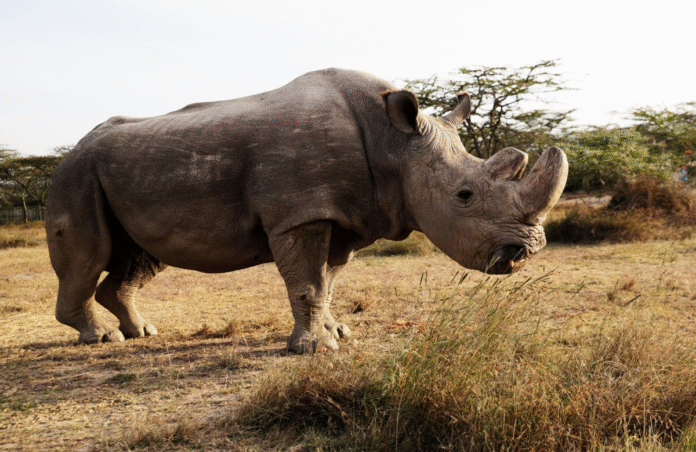
South Africa just changed the rules of the game and the world is watching. In a radical, world-first move, South African scientists have turned to nuclear science to protect one of Earth’s most threatened giants: the rhino.
The Rhisotope Project, developed by researchers at Wits University in collaboration with the International Atomic Energy Agency (IAEA), is injecting tiny amounts of radioactive isotopes into rhino horns a daring innovation that promises to expose smugglers and save lives.

For years, South Africa home to the world’s largest rhino population has battled relentless poaching. Over 400 rhinos have been killed annually since 2021, feeding a billion-dollar black market stretching from African savannas to Asian trade networks. Traditional methods failed. Poachers evolved. A new idea was needed.

Enter nuclear science.


Why This Breakthrough Matters

  • Makes horns detectable by radiation scanners at airports, ports, and borders
  • Completely safe for rhinos, proven through a pilot involving 20 animals
  • A proactive approach, shifting from chasing poachers to blocking trade routes
  • Provides real data to map illegal trafficking channels
  • Low-cost, scalable, and compatible with existing global scanning systems
  • Professor James Larkin calls it a game-changer: “At least one animal a day is still being poached. This gives us a significant tool to reduce those numbers.” Conservationist Jamie Joseph echoes the urgency: “It’s not the endgame, but it will disrupt the flow of horns leaving the country.”

A Fusion of Science & Survival


The Rhisotope Project, represents a powerful blend of innovation and necessity. By making smuggled horns instantly detectable even inside massive shipping containers it threatens the very foundation of the illegal rhino trade.

Of course, technology alone can’t save the species. Stronger laws, harder enforcement, and political will remain essential.
But for the first time in years, the odds are shifting.

Science just handed rhinos a fighting chance and the poachers a radioactive nightmare.

World Children’s Day 2025: History, Significance, Wishes and Quotes to Celebrate the Day

0

World Children’s Day is celebrated every year on November 20. The day marks the UN General Assembly’s adoption of the Declaration of the Rights of the Child (1959) and the Convention on the Rights of the Child (UNCRC) (1989). The day highlights global efforts to protect every child’s rights—without discrimination. UNICEF leads worldwide campaigns urging nations to ensure safety, education, equality, and dignity for every child.

On the eve of World Children’s Day, UN Secretary-General António Guterres shared his message for children:
“This World Children’s Day, let us listen to children. And let us amplify their voices as they stand up for their rights.”

Around the world, World Children’s Day 2025 is celebrated through various activities including dance, drama, music, and quiz competitions.

Children’s Day Wishes

  • Happy Children’s Day! May your laughter light up the world.
  • Wishing you a day full of joy, fun and sweet surprises.
  • May you always dream big and chase the stars. Happy Children’s Day!
  • Your smile is the purest magic. Happy Children’s Day!
  • May today bring you endless happiness and warm memories.
  • Stay curious, stay kind. Happy Children’s Day!
  • You are special, you are loved — today and always.
  • Celebrating the joy you bring into our lives. Happy Children’s Day!
  • Childhood is a blessing — wishing you the happiest Children’s Day!
  • Shine bright, little star. Happy Children’s Day!

Children’s Day Quotes in English

World Children’s Day 2025: History, Significance, Wishes and Quotes to Celebrate the Day
  • “Every child is a different kind of flower, and together they make this world a beautiful garden.”
  • “Children carry the hopes for a brighter tomorrow.”
  • “The soul is healed by being with children.” — Fyodor Dostoevsky
  • “Every child comes with the message that God is not yet discouraged of man.” — Rabindranath Tagore
  • “Children are the world’s most valuable resource.” — John F. Kennedy
  • “A child’s smile is the heartbeat of a home.”
  • “Children learn more from what you are than what you teach.” — W.E.B. Du Bois
  • “Let children be little, because they’re only little once.”
  • “A child sees magic because it looks for it.”
  • “If you nurture a child’s mind, you shape the future.”