Home Blog Page 128

Centre’s Sanchar Saathi Mandate: Why Pre-Loading the Cybersecurity App on All Smartphones Has Triggered a Major Debate

0

The Union government’s order directing all smartphone manufacturers — including Apple, Samsung and Xiaomi — to pre-install the Sanchar Saathi cybersecurity app on every device has sparked intense political, legal and industry backlash. While the government positions it as a necessary move to combat cybercrime and recover stolen devices, critics argue the mandate raises concerns around privacy, constitutional rights and competition — especially since the app cannot be uninstalled.

What the New Order Mandates

The Department of Telecommunications (DoT) has instructed manufacturers to:

  • Pre-install Sanchar Saathi on all smartphones sold or imported within 90 days.
  • Release software updates to install the app on devices already in use.
  • Ensure the app cannot be disabled or removed.
  • Display its features during the initial device setup.

The advisory issued without consultation also warns of enforcement action for non-compliance, heightening unease among manufacturers.

What the Sanchar Saathi App Does

Developed by the DoT, Sanchar Saathi is a national platform aimed at reducing cyber fraud, identity theft and mobile misuse. Its key features include:

  • Chakshu reporting: Flagging suspicious calls, messages and phishing attempts.
  • Spam/UCC complaint system.
  • Alerts for malicious links and unsafe apps.
  • Verification of mobile numbers linked to a user’s identity.
  • IMEI blocking and unlocking of lost or stolen phones.
  • Verification of device authenticity.
  • Reporting spoofed international calls.
  • Directory of verified customer-care numbers.

Government data claims the system has already helped block 42 lakh stolen phones and recover over 7 lakh devices, reinforcing calls for wider adoption.

Why the Government Says It’s Needed

Officials argue that with 1.2 billion mobile users, India is increasingly vulnerable to phishing, impersonation fraud and handset theft. A mandatory, non-removable app, they say, ensures universal access and faster reporting — especially for users who may not install cybersecurity tools voluntarily.

Why Manufacturers Are Concerned

The directive challenges long-standing software and device policies. Apple, for instance, does not allow third-party undeletable apps. Android manufacturers fear this could set a precedent for future forced government app rollouts.

Industry worries also include:

  • Compliance costs
  • Software redesign requirements
  • Conflicts with international privacy standards
  • Lack of prior consultation

Political and Privacy Criticism

Opposition leaders have labelled the mandate an overreach and warned it may violate the right to privacy, affirmed by the Supreme Court as part of Article 21. Congress leader KC Venugopal called the move “beyond unconstitutional”, while Shiv Sena (UBT)’s Priyanka Chaturvedi criticised it as the government entering personal devices “through the backdoor”. Privacy experts argue that even if not intended for surveillance, a compulsory state app creates an architecture that could enable it.

The Larger Policy Debate

The controversy is less about the app’s utility and more about larger governance questions:

  • Should cybersecurity tools be voluntary or imposed by mandate?
  • Can the state require undeletable apps without violating informational autonomy?
  • Should such tools undergo independent auditing under the Digital Personal Data Protection Act?
  • Where is the line between public safety and intrusive governance?

These questions are critical as India expands its digital-public infrastructure and finalises new technology laws.

What Happens Next

With the 90-day compliance window running, manufacturers are likely to seek clarifications or request changes — such as making the app optional or uninstallable. Privacy groups are expected to demand independent audits of the app’s data practices.

The outcome will set an important precedent: How far can the government go in embedding digital-public systems into private consumer devices? The answer may influence India’s broader technology governance model in the years ahead.

Top Winter Wedding Fashion Trends 2025: Cozy & Glam Outfit Ideas for Brides, Bridesmaids & Guests

0

Winter weddings in India = Heaven meets Hypothermia. Imagine if you’re wrapped like a burrito in your blanket, and suddenly Shaadi ka card aa gaya! That instant dread of leaving your warm cocoon hits so hard. But then it’s your best friend’s or cousin’s wedding and the excitement pumps in like adrenaline. You want to look like a star just not a shivering one.
Because let’s be honest, bacteria and cold winds love girls who believe beauty is pain. Time to break that toxic trend and rewrite the rulebook: Warmth + Style = REAL Fashion Winner.

For the queens who refuse to freeze: Winter weddings offer the perfect excuse for opulence. Think plush fabrics, royal layering, and glam that doesn’t compromise health. From velvet lehengas and embellished gowns to shararas, the richness of velvet does half the job. Add a matching velvet shawl with zardozi or sequin detailing, comfort but make it couture.

Woolen Shrugs with an Upgrade: Drop the boring cardigans. Choose embroidered or pearl-detailed woolen shrugs that perfectly complement your attire. It’s warm yet wedding-ready.

Cape the Cold Away: Cape-style jackets over sarees create a dreamy Indo-Western aesthetic. Fur borders, sheer fabrics layered with wool, or metallic studded capes, all allow drama without the shivers.

Pochus are Back: Designer woolen pochus with intricate weaving aren’t just cozy, they photograph beautifully. Perfect for open-air weddings.

Layer Like a Pro: Thermal innerwear, woolen stockings under gowns or lehenga skirts, high-neck blouses with full sleeves, smart layers that stay invisible but keep you toasty.

Faux Fur & Statement Gloves: If you’re feeling bold, add a fur stole or elegant gloves, they scream winter runway vibes.

For the gentlemen bringing the heat: Men have it easier but choosing the right winter ensemble can still elevate the entire look.

Velvet bandhgalas/sherwanis – classy, festive & climate-friendly
Layered Nehru jackets – this is where warmth meets tradition
Turtleneck + blazer – a trending combo for modern weddings
Woolen kurtas – stylish without sacrificing comfort
Suede or leather footwear – warmer alternative to open juttis
Add a tasteful stole or shawl and boom, effortless elegance.

Bonus Styling Hacks


For ladies, closed hairstyles like low buns keep your neck warm. Hot patches inside shoes is a lifesaver during late-night barat, even women are wearing coordinated shoes with lehengas or gowns so this is a life savior especially at Cold nights.

This season, let’s normalise fashion that doesn’t freeze you into a statue. Winter weddings should be about dancing your heart out not sneezing through pheras. So bundle up, sparkle on, and let your style say:
I’m warm, I’m wow, and I own this winter wedding

International Gita Festival: Devotees Take Spiritual Sojourn in Jaipur at Gupt Vrindavan Dham

0

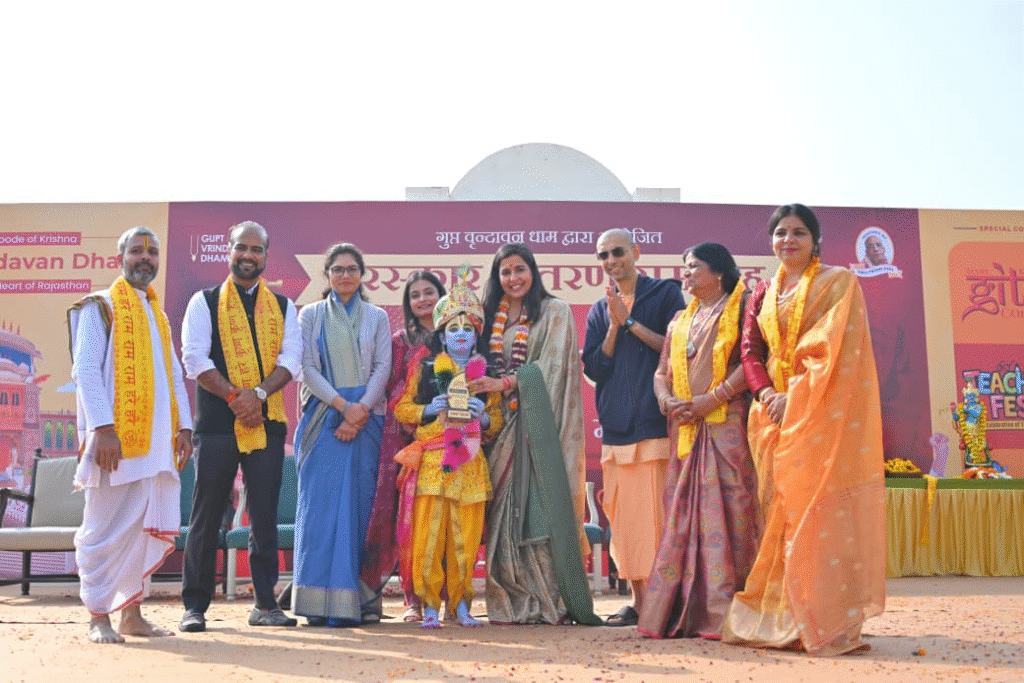
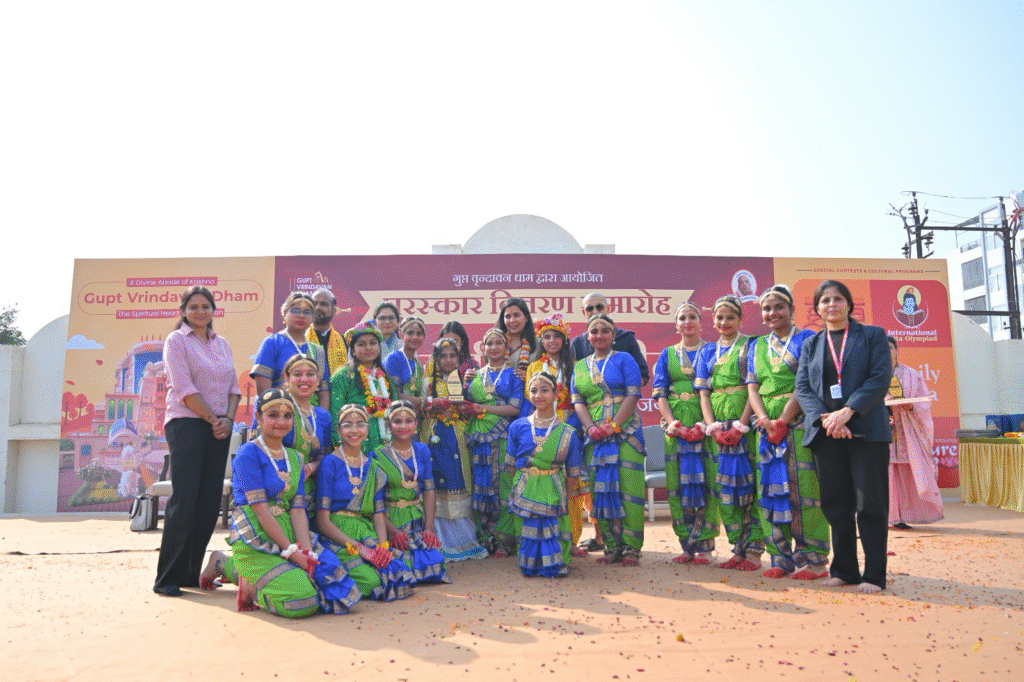
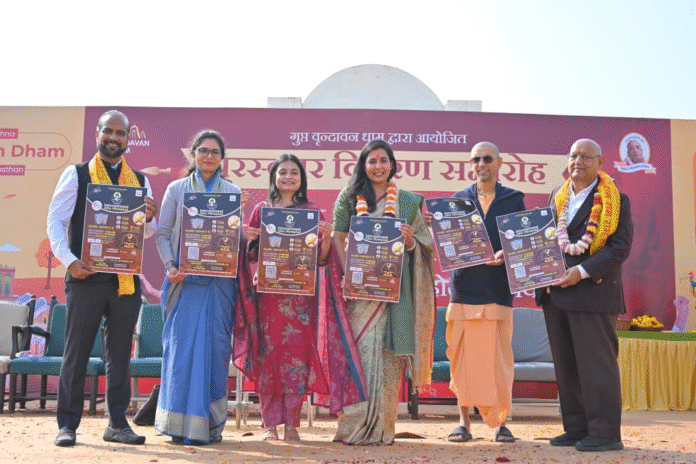
The Bhagavad Gita is not merely a religious text but a divine guide that dispels the darkness of human life. In celebration of Gita Jayanti, a grand International Gita Festival was held on December 1 at Gupt Vrindavan Dham, Jaipur, featuring a series of spiritual and cultural events.

The chief guest, Dr. Soumya Gurjar, former Mayor of Jaipur Municipal Corporation (Greater), felicitated and encouraged the winners with special awards. Other distinguished guests—including RJ Shivangi (FM Tadka), Manju Meena (Doordarshan), OP Modi (OK Plus Group), and Nirmal Dargad (ECMS)—also praised the children for their remarkable performances.

International Gita Festival: Devotees Take Spiritual Sojourn in Jaipur at Gupt Vrindavan Dham

More than 500 students from 30 reputed schools of Jaipur participated in the festival, showcasing their talents in group competitions such as Gita Shloka recitation, Vedic costume presentation, classical dance-drama, and various artistic presentations.

On the sacred day of Gita Jayanti (Ekadashi), the Dham hosted Gita Parayan, Gita Yagna, Gita Daan, and special Kirtan throughout the day. The event also marked the inauguration of the International Gita Olympiad.

International Gita Festival: Devotees Take Spiritual Sojourn in Jaipur at Gupt Vrindavan Dham

Amitasana Das, President of Gupt Vrindavan Dham, stated that the International Gita Mahotsav will inspire and promote Gita-based education and cultural values in Jaipur, Rajasthan, and across the world.

International Gita Festival: Devotees Take Spiritual Sojourn in Jaipur at Gupt Vrindavan Dham

The Trend That’s Melting Our Winters: Hot Chocolate as the New Comfort Ritual

0

When the air gets crisp and the sweaters come out, there’s one indulgence that rises back to the throne, hot chocolate. No, not the quick stir-and-sip powdered drink we grew up with. We’re talking rich, velvety, artisanal hot chocolate the kind that feels like a warm hug sliding down your throat. This winter, the trend is officially back… and it’s hotter (and thicker!) than ever.

A mug full of bliss


There’s something irresistible about the moment melted chocolate meets warm milk, the aroma alone can trigger a legit foodgasm. The slow whisking, the glossy texture, the steam carrying chocolaty notes into the air, the process of making it is already dessert for the senses.

Hot chocolate doesn’t demand rush it’s a ritual. And for everyone who doesn’t vibe with chai or coffee, this is the beverage of the season. It’s soothing, luxurious, and the warmth feels like relaxation flowing right through your food pipe.

Why it’s becoming a major trend


From Instagram reels to café menus, everyone’s experimenting. Think toasted marshmallow toppings, hazelnut drizzles, peppermint infusions, even spicy Mexican-style hot chocolate. Viral Christmas aesthetics, holiday coziness, and winter weddings have only added fuel to the fire.
Winters + a perfectly thick hot chocolate = deadly combo.
The comeback is also driven by nostalgia, a childhood favorite reborn with a gourmet twist. Suddenly, hot chocolate isn’t a kid’s drink anymore.

Quick homemade hot chocolate recipes
Classic Creamy Hot Chocolate

  1. Milk (or almond milk), pure cocoa, chopped dark chocolate, sugar, vanilla essence
  2. Simmer milk – whisk in cocoa + chocolate – add sugar + vanilla – serve thick and glossy

Peppermint Holiday Special
Make classic base – add crushed candy canes + mint essence – top with whipped cream
Spicy Mexican Style
Dark chocolate + cinnamon + a tiny hint of chili – comfort with a warm kick!

Where to learn & sip virtually
If you want to level up your chocolate game these YouTube creators are worth following:

  • Tasty – trending seasonal recipes
  • Preppy Kitchen – cozy, creamy winter drinks
  • Joshua Weissman – gourmet homemade take
  • Shivesh Bhatia – Indian-friendly dessert and beverage versions

This winter, hot chocolate isn’t just a drink.
It’s a mood, a moment, a comfort ritual we all deserve. So go ahead wrap your hands around that warm mug and let the magic melt you into a sweeter season.

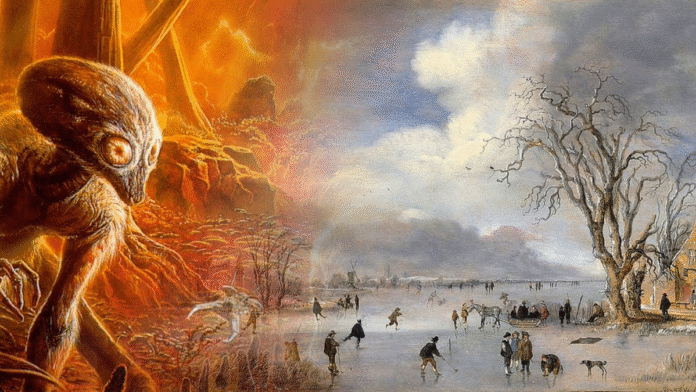
The Kardashev Scale and the Future of Human Civilisation

0

When Tesla CEO Elon Musk appeared on Nikhil Kamath’s podcast People by WTF, one idea stood out among discussions of AI, cryptocurrency, and the future of humanity: the Kardashev Scale. The episode, now surpassing three million views, has sparked fresh curiosity about how we measure the progress of civilisations — not through wealth, territory, or technological milestones, but through energy.

A Scale Born from the Space Age

The Kardashev Scale was proposed in 1964 by Soviet astrophysicist Nikolai Kardashev, during an era when humanity was beginning to explore space. Instead of categorising societies by political systems or cultural achievements, Kardashev suggested that energy consumption is the most meaningful indicator of progress — because energy powers knowledge, technology, and survival.

Musk called the scale “a rational way of thinking about civilisation’s evolution,” offering a framework to imagine not only where humanity stands today, but what it may become.

Three Steps to Cosmic Maturity

The Kardashev Scale consists of three types of civilisations:

  • Type I – Planetary Civilisation
    Harnesses all available energy on its home planet, including wind, geothermal, oceans, and sunlight.
  • Type II – Stellar Civilisation
    Controls energy at the level of its star. Theoretical megastructures like a Dyson sphere could make this possible.
  • Type III – Galactic Civilisation
    Utilises energy from an entire galaxy — billions of stars — and could traverse interstellar distances with ease.

These categories are less science fiction and more strategic roadmap — a way to understand how far civilisation must travel to thrive beyond Earth.

Where Does Humanity Stand?

Despite satellites, supercomputers, and billionaires launching rockets into space, Musk estimates that humanity sits at only 0.73 on the scale — not yet a Type I civilisation.

Our progress remains limited by fossil fuels, energy inefficiency, and technological constraints. Musk emphasised that “energy is the real currency”, and the ability to generate it sustainably will define the next chapter of civilisation.

Why It Matters

Beyond theory, the Kardashev Scale raises a powerful question: What future do we choose?

Advancing on the scale requires breakthroughs in:

  • Clean and renewable energy
  • Nuclear fusion
  • Space-based solar systems
  • Interplanetary infrastructure

Such advancements could shift human society from a resource-consuming civilisation to a planetary and eventually interstellar one — capable of surviving cosmic threats, expanding into space, and harnessing energies beyond imagination.

Facts

  • Proposed by Nikolai Kardashev in 1964
  • Measures civilisation advancement based on energy utilisation
  • Humanity is currently around 0.73, below Type I
  • Type III civilisation can harness energy at a galactic scale

The Kardashev Scale remains less a ranking system and more a vision — a reminder that the future of civilisation hinges on one question: can humanity master energy before energy limits humanity?

National Pollution Control Day 2025: CPCB Lists India’s Top 10 Cleanest Cities

0

National Pollution Control Day is observed annually on December 2 to honour the memory of those who lost their lives in the Bhopal gas tragedy of 1984. The day serves as a reminder of the urgent need to reduce pollution levels and protect environmental and public health.

Marking the occasion this year, the Central Pollution Control Board (CPCB) released its latest nationwide air quality assessment. While several regions continue to struggle with rising pollution levels, the report highlights a group of cities that have successfully maintained clean air throughout the year.

Why Clean Air Matters

Clean air plays a crucial role in preserving public health. Poor air quality is linked to respiratory illnesses, cardiovascular diseases, persistent cough, and lifelong health complications. Children, the elderly and individuals with pre-existing medical conditions are particularly vulnerable.

Conversely, clean air improves lung function, strengthens immunity and enhances overall quality of life. Beyond human health, clean air also supports healthier soil, water systems and ecological balance.

Top 10 Cleanest Cities in India (2025 — CPCB Data)

According to CPCB’s latest findings, the following cities recorded the lowest pollution levels in the country:

  1. Aizawl, Mizoram
    Known for lush greenery, low traffic, and strong community discipline.
  2. Kohima, Nagaland
    Maintains low pollution due to controlled construction and preserved natural spaces.
  3. Shillong, Meghalaya
    Dense forests and minimal vehicular pressure help keep air quality high.
  4. Imphal, Manipur
    Improved transport systems and emission control contribute to cleaner air.
  5. Gangtok, Sikkim
    Strict waste management and plastic bans play a key role.
  6. Champhai, Mizoram
    Limited industrial activity helps maintain natural air purity.
  7. Lunglei, Mizoram
    Protected landscapes and low commercial pollution ensure clean conditions.
  8. Mandi, Himachal Pradesh
    Waste management systems and favourable climate support good air quality.
  9. Kottayam, Kerala
    Surrounded by green cover and public environmental awareness.
  10. Alappuzha, Kerala
    The coastal ecosystem and community-driven cleanliness efforts keep the region pollution-free.

How CPCB Measures Air Quality

CPCB monitors air quality through continuous monitoring stations across the country. These stations record concentrations of pollutants such as PM2.5, PM10, nitrogen dioxide and sulfur dioxide. Cities with lower Air Quality Index (AQI) scores reflect cleaner, safer air.

A Call to Action

National Pollution Control Day serves as an important reminder that collective action — from governments, institutions and citizens — can create meaningful environmental change. The success of these cities demonstrates that clean air is achievable through sustainable urban planning, responsible lifestyles and effective emission control.

Who is Tessy Thomas Honoured With Dr Paulos Mar Gregorios Award 2025

0

Tessy Thomas, popularly known as India’s “Missile Woman”, has been awarded the prestigious Dr Paulos Mar Gregorios Award 2025 in recognition of her exceptional contributions to defence science and missile technology. The honour celebrates her decades-long role in shaping India’s strategic capabilities and advancing indigenous defence systems.

From Curious Child to Defence Pioneer

Born and raised in Alappuzha, Kerala, Thomas displayed a deep curiosity about science from an early age. Her fascination with the Moon, aircraft trails and space exploration laid the foundation for her academic journey in engineering and aerospace science. These early sparks of interest eventually evolved into a groundbreaking career in missile development.

A Breakthrough Leader in Indian Defence

Thomas’s rise in India’s defence sector marked a milestone in the nation’s technological progress. Selected for advanced missile training early in her career, she worked under the guidance of former President and renowned scientist Dr APJ Abdul Kalam, whose mentorship proved formative. She later became the first woman in India to lead a missile project, taking charge of the Agni programme during a crucial period of innovation and development.

Global Recognition and Esteem

Through her leadership in indigenous missile research and development, Thomas significantly strengthened India’s defence preparedness and strategic independence. Her achievements have been recognised worldwide, including her induction into the Aeronautical Society’s Space Pioneer Hall of Fame. The Dr Paulos Mar Gregorios Award now adds another distinguished honour to her legacy.

Highlights

  • First woman to head an Indian missile project.
  • Recipient of the Dr Paulos Mar Gregorios Award, conferred biennially by the Sophia Society.
  • Mentored by Dr APJ Abdul Kalam during early missile research training.
  • Key contributor to the advancement of the Agni missile series.

Inspiring Generations

Tessy Thomas’s journey is a testament to how curiosity, perseverance, and vision can transform into national service. Her accomplishments continue to inspire young scientists—especially women—to pursue careers in defence technology, aerospace and research leadership.

Sewa Paramo Dharmaḥ: NYSA Highlights Yoga and Volunteerism at The Hague Job Fair

0

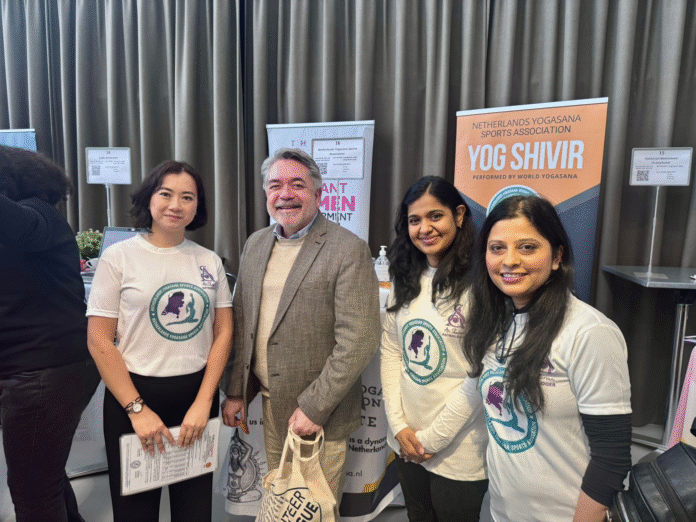
The Netherlands Yogasana Sports Association (NYSA) made a strong impact at the Volunteer The Hague Autumn Mix & Match Volunteer Job Fair held at The Social Hub on Saturday. The organisation promoted Yogasana not only as a recognized sport but also as a pathway to holistic health, community service, and cultural connection.

Guided by the motto “सेवा परमो धर्मः” (Sewa Paramo Dharmaḥ) — Service is the highest duty, NYSA representatives interacted with hundreds of visitors, introducing them to the benefits of Yogasana and inviting them to join volunteer-driven wellness initiatives across The Hague.

Public Figures and Institutional Support

The NYSA stall drew significant attention from dignitaries and institutional leaders. Among the visitors was Mr. Andrew (M.A.) van Esch, D66 Council Member of The Hague responsible for international relations, culture, and economy.

Sewa Paramo Dharmaḥ: NYSA Highlights Yoga and Volunteerism at The Hague Job Fair

NYSA also acknowledged the support of Mr. Gert-Jan Aleman, Director of PEP Den Haag, and Ms. Tetyana Benzeroual, Project Manager of Volunteer The Hague, whose efforts ensured NYSA’s successful participation in the fair.

Acknowledgment of Global Yogasana Leadership

NYSA credited its participation and mission to the guidance of respected Yogasana leaders.

Sewa Paramo Dharmaḥ: NYSA Highlights Yoga and Volunteerism at The Hague Job Fair


The association expressed deep gratitude to Yog Guru Swami Ramdev Baba for spiritual guidance, and to Dr. Jaideep Arya, Secretary General of Yogasana Bharat and World Yogasana, for strategic mentorship.

The organisation also thanked Mr. Vijay Ganesh, TGC Yoga Teacher representing The Embassy of India and The Gandhi Centre, for collaborating to promote yoga throughout the event.

Sewa Paramo Dharmaḥ: NYSA Highlights Yoga and Volunteerism at The Hague Job Fair

Team Effort Drives Awareness

NYSA leadership and volunteers played a key role in engaging with attendees and spreading awareness about yoga as a volunteer-led discipline. The team included:

  • Adv. Pranita Deshpande (President)
  • Dr. Manasi Sagdeo (Secretary General)
  • Mr. Mayur Muley (PRO and Director)
  • Coaches: Ms. Laura Dostanbayeva, Ms. Lakshmi Menon, and Ms. Gayatri Mohabir
Sewa Paramo Dharmaḥ: NYSA Highlights Yoga and Volunteerism at The Hague Job Fair

The successful participation strengthened NYSA’s vision of promoting Yogasana as a sport while inspiring community members to serve society through wellness-focused volunteerism aligned with the timeless value of Sewa.

Aadhaar for Age Check to Watch Online Content – Is India About to Plug the Adult-Content Leak Online?

0

What’s changed: Supreme Court floats Aadhaar age-gate for obscene content


In a landmark development on November 27, the Supreme Court suggested that access to what it terms obscene or adult-rated content online should only be granted after verified age confirmation possibly via Aadhaar (or a comparable identity-verification tool). The bench, headed by Surya Kant and Joymalya Bagchi, made the comments during hearings on multiple petitions related to offensive digital content.
The court pointed out that existing measures like a quick 18+ pop-up are often ineffective. As Justice Bagchi noted: By the time a viewer decides not to watch, it has already started.

Why this matters, beyond warnings real age checks for minors


Most platforms today rely on self-declaration or a brief disclaimer before streaming adult content. However, the Court argued such mechanisms are easy to bypass, especially for minors. Verified identity-based gating offers a more robust filter potentially preventing unintended exposure to harmful material.
In its remarks, the bench also emphasized the need for an independent, impartial regulatory body not mere “self-styled” industry associations to oversee digital content.

What’s being proposed: age verification + new oversight + clear rules


Platforms might first display a warning, then prompt for Aadhaar or PAN verification before content plays. Only after verifying age will the content begin. The court asked the government to consider broader reforms including a regulatory structure, clearer definitions of obscenity, and stronger laws against content that ridicules or demeans vulnerable groups e.g. persons with disabilities or marginalized communities. Any changes including this age-gate pilot must respect free speech, under constitutional safeguards. The court flagged that these are illustrative suggestions, leaving room for debate.

What could change for viewers, creators, platforms


For viewers, simple one-tap streaming might soon require identity-based verification especially for adult-rated content.
For platforms & creators, self-regulation may no longer suffice. They might see stricter compliance norms, content ratings, and mandatory age-checks.
For minors & parents, the measure could add a safety net but also trigger privacy debates, especially around Aadhaar use and data security.

The bigger debate: Privacy vs Protection vs Freedom

While age verification could shield minors, critics will likely raise valid concerns about data privacy, digital surveillance, and freedom of expression. Balancing these three: protection, privacy, and creative freedom will be key.
But make no mistake, this move signals a shift. The internet in India might soon come with identity gates and oversight, as regulators try to keep pace with rapidly evolving digital content

Jaipur Wax Museum Begins Work on Life-Sized Wax Statue of Indian Women’s Cricket Captain Harmanpreet Kaur

0

Jaipur Wax Museum: Harmanpreet Kaur Becomes the First Woman Cricketer in the World to Receive a Wax Figure

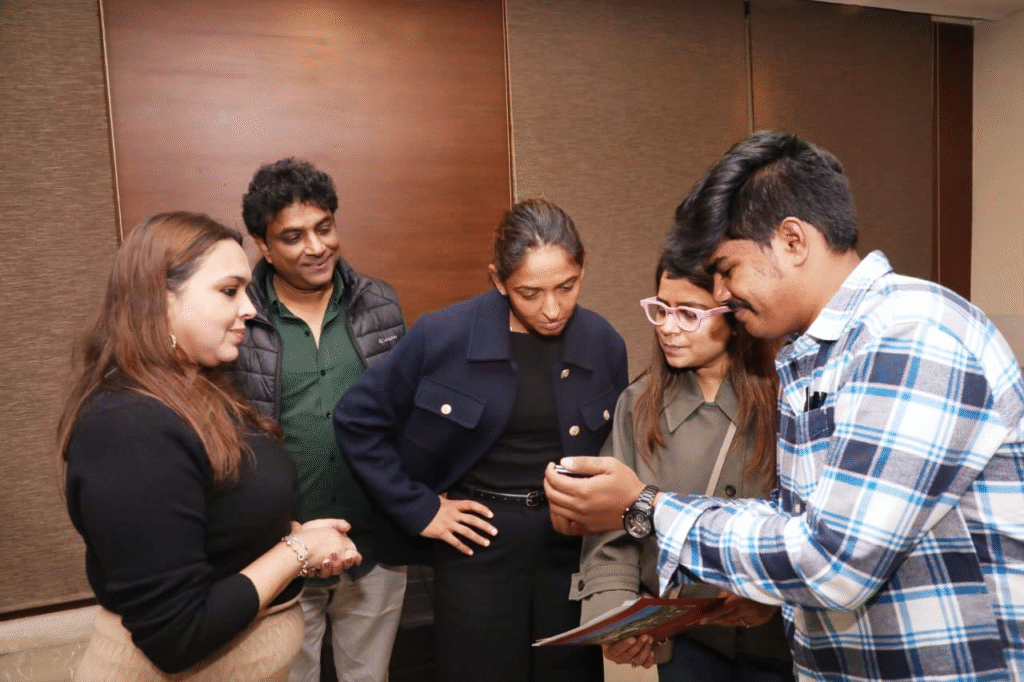
The Jaipur Wax Museum has begun crafting a life-sized wax statue of Indian Women’s Cricket Team Captain Harmanpreet Kaur, marking a historic moment as she becomes the first woman cricketer globally to be honoured with a wax figure.

A team from the museum recently met Harmanpreet to take detailed body measurements and record photographs and videos essential for the sculpting process. According to the museum, she remained humble, cooperative, and attentive throughout the session.

Jaipur Wax Museum Begins Work on Life-Sized Wax Statue of Indian Women’s Cricket Captain Harmanpreet Kaur

Museum Curator and Founder Anoop Srivastava said Harmanpreet showed “immense enthusiasm” about the upcoming statue and expressed gratitude to the Jaipur Wax Museum for choosing her. She also conveyed her intention to attend the unveiling ceremony with her family and showed keen interest in understanding how wax figures are created. During her visit, she also praised the grandeur of the museum’s iconic Sheesh Mahal.

Jaipur Wax Museum Begins Work on Life-Sized Wax Statue of Indian Women’s Cricket Captain Harmanpreet Kaur

Srivastava added that the museum focuses on creating wax statues of “inspiring icons” rather than Bollywood celebrities. He said Harmanpreet Kaur’s achievements and personality will motivate young girls across the country. The museum already features wax figures of several celebrated sportspersons, including Sachin Tendulkar, Virat Kohli, M.S. Dhoni, Saina Nehwal, and Sandeep Singh.

The Jaipur Wax Museum, located inside a 300-year-old heritage structure, continues to be a unique attraction for both wax art enthusiasts and history lovers.