The 56th International Film Festival of India (IFFI) marked a historic moment as it felicitated legendary actor \ Rajinikanth on completing 50 glorious years in Indian cinema. Beloved as Thalaivar, Rajinikanth has captivated audiences across eras with his unmatched charisma, magnetic screen presence, and iconic style.
“Even if I have 100 births, I want to be born as Rajinikanth,” says the superstar
The felicitation, held during the Closing Ceremony, celebrated his extraordinary contribution not only to Tamil cinema but also to Hindi, Telugu, and Kannada films. With a career spanning over 170 films, the superstar has become a cultural phenomenon. His accolades include the Padma Bhushan (2000), Padma Vibhushan (2016), and the Dadasaheb Phalke Award (2020).
Pramod Sawant, Chief Minister of Goa, honoured Rajinikanth by presenting him with a shawl and memento. Dr. L. Murugan, Minister of State for Information & Broadcasting and Parliamentary Affairs, Shri Sanjay Jaju, Secretary, Ministry of Information & Broadcasting, and actor Shri Ranveer Singh were also present on the occasion.
Receiving the honour, Rajinikanth expressed deep gratitude to the Government of India, saying that his 50-year journey felt like just a decade because of his love for cinema and acting. “Even if I have 100 births, I would like to be born as Rajinikanth,” he said, drawing applause from the audience.
With this celebration, IFFI 2025 pays tribute to a cinematic icon whose influence transcends language, region, and generations. Rajinikanth’s Golden Jubilee marks not only a personal landmark but also underscores the enduring power of cinema in shaping India’s cultural landscape.
Even before India gained independence, there was one remarkable institution that united the princely states, not diplomacy, borders, or political negotiations, but education. Long before the idea of a united India took shape, royals from across regions travelled to Rajasthan to enroll in what the British proudly called the “Eton of the East”, Mayo College, Ajmer.
From the early 1900s to the mid-20th century, heirs to royal thrones travelled from every corner of the subcontinent—sometimes even beyond its borders, not for diplomacy or leisure, but to study together. Princes who would later rule or shape regions with distinct cultures, languages, and histories, first shared the same classrooms, sports fields, and dining halls at Mayo.
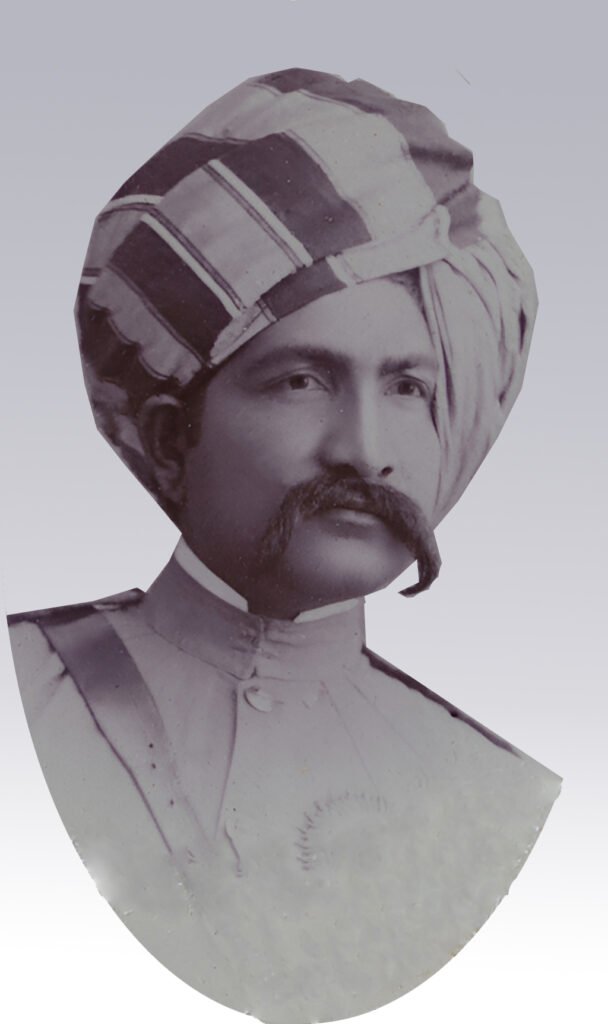
First student of Mayo College, HH Maharaja Mangal Singh from Alwar
A Training Ground for Future Monarchs
It is almost astonishing to imagine that Yuvaraja Sri Sir Kanteerava Narasimharaja Wadiyar of Mysore, from southern India, and princes as distant as Karan Singh of Jammu & Kashmir once walked the same campus hallways as classmates.
Among its most well-known alumni was Maharaja Hari Singh, the last ruling monarch of Jammu and Kashmir. He joined Mayo College in 1908 at age 13, just before the passing of his father in 1909. His years at the school profoundly shaped his administrative thinking, exposure to modern governance, and educational reform outlook.
Hari Singh remained steadily connected to the institution throughout his life. As a leading member of the school’s governing council, he played an active role in its development. In 1912, he funded the construction of the iconic Kashmir House, a historic boarding facility still in use today.
More than a century later, his family continues that legacy. In 2023, his grandson Vikramaditya Singh was nominated to the General Council of the college, reinforcing the royal family’s generational bond.
A Global Royal Connection: The Sultanate of Oman
Mayo’s influence extended beyond India’s borders. One of its most distinguished foreign alumni was Sultan Said bin Taimur, the 13th Sultan of Oman, who studied at Mayo College from 1922 to 1927. His time at the school marked the beginning of a deep and enduring cultural relationship between Oman and India.
The legacy continued when his nephew, Sayyid Fahr bin Taimur Al Said, also attended Mayo College. Years later, as the Deputy Prime Minister of Oman, he returned to the campus in 1985 as the chief guest for its prize-giving ceremony—symbolizing the continuity of royal ties.
This relationship was later commemorated through the construction of Oman House and the Oman Guest House on the Mayo campus, both bearing the name of the Sultanate and serving as architectural markers of a cross-cultural friendship. The educational legacy extended further when Sultan Qaboos bin Said Al Said, son of Sultan Said bin Taimur and one of the most influential monarchs of modern Oman, continued his education in India, completing part of his early schooling in Pune.
The Royal Network That Built Mayo
Much of Mayo College’s impressive campus and infrastructure was shaped through princely patronage. Some notable contributions include:
Ajmer House (₹60,635; mainly from imperial funds)
Colvin House (1913)—funded by rulers of Rajputana and other states
Donation by the Maharaja of Mysore (1903) for racquet court repairs
Expansion of Alwar Boarding House funded by H.H. the Maharaja of Alwar
₹20,000 donation from H.H. Scindia of Gwalior for science equipment in 1905
Bikaner Pavilion for cricket gifted by the Maharaja of Bikaner
₹37,000 donation for medical infrastructure by the Maharao of Kotah
₹1 lakh contribution from the Maharaja of Jodhpur (1911) for additional land
Donations from rulers of Tirwa, Tehri Garhwal, and Bhadawa
Maharaj Deb Shamsher Jang of Nepal contributed ₹20,000 to the Endowment Fund (1912)
The Mayo College Temple, built in 1936 by Maharaja Yagya Narayan Singh of Kishangarh
More Than a School, A Shared Heritage
Mayo College was not merely an educational institution; it was a transformative idea. It helped create a generation of rulers who, despite governing diverse territories, shared mutual respect, understanding, and a modern worldview. It served as one of the earliest spaces where the idea of a unified India began taking shape, not through political blueprints, but through friendships, shared learning, and lived experience.
In an era defined by princely autonomy, Mayo College became a bridge—linking kingdoms, cultures, and even nations.
A century later, its legacy continues, not just in its architecture or alumni records, but in the stories of those who were shaped within its sandstone walls.
Once regarded as one of South Asia’s most influential political figures, Sheikh Hasina Wazed, former Prime Minister of Bangladesh, now stands at the centre of one of the most dramatic political reversals in the region’s recent history. Her transformation—from a strong, long-serving leader to a fugitive facing multiple criminal convictions—reflects a complex mix of political legacy, governance style, state power, public dissent, and shifting geopolitical equations.
A Legacy Rooted in History
Sheikh Hasina’s political journey has always been intertwined with history and emotion. As the daughter of Bangabandhu Sheikh Mujibur Rahman, Bangladesh’s founding leader assassinated in 1975, she entered politics carrying the weight of a national legacy. Her return from exile in the 1980s marked the beginning of a long struggle against military rule and rival political forces, particularly the Bangladesh Nationalist Party (BNP).
Her eventual ascent to power in 1996 positioned her as the face of democratic stability. Over the next two decades—across multiple terms—Hasina guided Bangladesh through major economic expansion, record foreign investment, infrastructure modernisation, and improvements in social indicators such as literacy and women’s participation in the workforce.
The Turning Point: Power Consolidation and Authoritarian Shift
Despite economic success, criticism began to grow around governance and the concentration of power. Opposition parties accused Hasina’s government of:
Weakening judicial independence
Curbing media freedom
Misusing security forces against political rivals
Manipulating elections, especially the 2014 and 2018 polls, which opposition parties boycotted or denounced
Domestic dissent intensified as the government deployed digital surveillance, cracked down on protests, and used sweeping legal frameworks such as the Digital Security Act. Over time, her critics argued that Bangladesh was shifting from a democratic model to a controlled political system with shrinking civic space.
Unraveling: Protests, Collapse, and Exile
The student-led protests of 2024—triggered by allegations of corruption, systemic injustice, and economic stress—marked the beginning of Hasina’s political downfall. As public unrest escalated, her administration struggled to contain the anger. Violence, police action, and mass arrests fuelled global criticism.
By mid-2024, the situation spiralled beyond state control. Under mounting pressure, Hasina fled to India, ending her years in office abruptly.
Prosecution and the Battle for Narrative
The legal cases that followed—including the death sentence in a protest-crackdown case and 21-year imprisonment on corruption charges—have raised two competing viewpoints:
1. Accountability and Rule of Law
Supporters of her prosecution argue that:
No leader is above the law
Systematic corruption and misuse of state machinery require legal consequence
Bangladesh is undergoing political correction
2. Political Targeting and Judicial Weaponisation
Her supporters argue:
The trials are politically motivated
The process lacks neutrality
The interim government seeks to dismantle the Awami League and rewrite political history
International observers remain divided, and the issue is evolving into a broader debate on democracy, accountability, and political legitimacy.
What Comes Next?
Sheikh Hasina’s future now hinges on several variables: * India’s position on her extradition * Stability of Bangladesh’s interim administration * Public sentiment and electoral dynamics * International diplomatic pressure
Whether she becomes a symbol of political excess or a victim of political retribution will depend on how history—and the courts—ultimately define her legacy.
Conclusion
Sheikh Hasina’s journey from a political heiress to a powerful leader and now a convicted former prime minister reflects the volatility of South Asian politics. Her story raises urgent questions:
Where is the line between strong leadership and authoritarian rule? Can accountability exist without political bias? And will history remember her as a nation-builder or a ruler undone by power?
For now, Bangladesh waits—and watches—as one of its most defining political chapters continues to unfold.
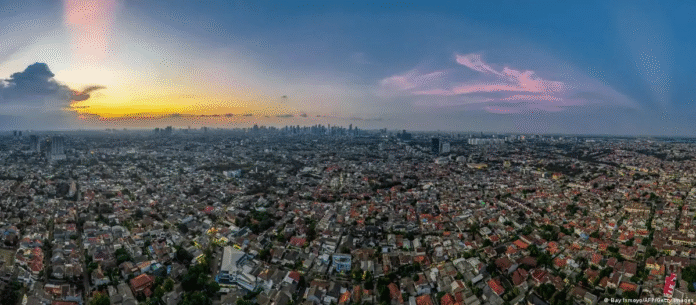
Jakarta has officially overtaken Tokyo to become the world’s most populous urban region, according to a new UN-backed demographic report. With an estimated 42 million residents, the Indonesian capital and its surrounding metro zone now represent the largest urban agglomeration on the planet — marking a significant shift in global population trends.
Asia Now Dominates the World’s Largest Megacities
The updated global ranking highlights a clear demographic reality: 9 of the world’s 10 largest cities are now in Asia.
The top positions are as follows:
Jakarta – 42 million
Dhaka – 37 million
Tokyo – 33 million
Other highly populated Asian megacities in the top tier include New Delhi, Shanghai, Guangzhou, Cairo, Manila, Kolkata and Seoul, reflecting the rapid pace of urban migration and rising economic concentration across South and Southeast Asia.
Why Asia’s Megacities Are Growing
Experts attribute the surge to:
Massive rural-to-urban migration
Expanding economic and industrial hubs
Natural population growth
Increasing access to education, services and employment
Indian cities, particularly New Delhi and Kolkata, continue to absorb millions seeking better opportunities, pushing infrastructure and services to their limits.
Jakarta’s Urban Challenges Intensify
Jakarta’s new milestone brings heightened focus to long-standing pressures:
Severe flooding
Groundwater depletion
Land subsidence
Traffic congestion
Housing shortages and sanitation gaps
These environmental and infrastructural strains were among the reasons behind Indonesia’s plan to shift administrative operations to its new capital, Nusantara, in Borneo.
Similar vulnerabilities affect other Asian megacities such as Dhaka, New Delhi, and Manila, where pollution, overcrowding and climate risks continue to escalate.
Key Points
Jakarta is now the world’s most populous city (42 million).
9 of the top 10 largest megacities globally are located in Asia.
Growth is driven by urban migration, economic opportunity and demographic momentum.
Major challenges include infrastructure deficits, pollution and climate vulnerability.
The Road Ahead: Planning for an Urban Future
The shift in global megacity rankings is a wake-up call for policymakers. Urban planners warn that without sustainable development, resilient infrastructure, and long-term climate strategies, the world’s largest cities may struggle to support rapid population growth.
Asia’s expanding megacities reflect not only economic momentum — but also a defining challenge of the 21st century: how to build cities that can sustain people, resources, and the planet.
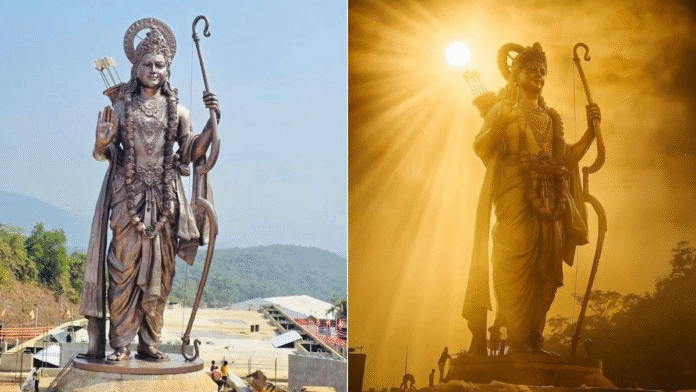
Prime Minister Narendra Modi is set to unveil a 77-feet-tall bronze statue of Lord Ram at Shree Samsthan Gokarn Jeevottam Mutt in South Goa district on Thursday, November 28, 2025. The historic event will be attended by prominent dignitaries, including Goa Governor Ashok Gajapathi Raju, Chief Minister Pramod Sawant, Union Minister Shripad Naik, and other state cabinet ministers.
1. Prime Minister’s Visit
PM Modi will arrive at the mutt premises at 3:45 pm.
He will first visit the temple located in the mutt before addressing a public gathering.
A special helipad has been constructed on the mutt premises to facilitate the PM’s arrival.
2. Sculptor Behind the Statue
The statue was created by Ram Sutar, the renowned sculptor who also designed the Statue of Unity in Gujarat.
This statue of Lord Ram is now the tallest in the world dedicated to the deity.
3. The Mutt and Its Legacy
The Shree Samsthan Gokarn Jeevottam Mutt was constructed nearly 370 years ago in Partagal village, Canacona, South Goa.
The mutt has served as a spiritual centre for generations, and its premises have recently been completely refurbished with a modern look.
4. Celebrating 550 Years of Tradition
Multiple programs are being held from November 27 to December 7 to mark the 550th anniversary of the mutt’s tradition.
The events are expected to attract 7,000 to 10,000 devotees every day.
5. Public Engagement and Festivities
Devotees and visitors can witness a series of cultural, spiritual, and religious programs during the celebrations.
The unveiling of the statue is the highlight of this historic event, symbolizing devotion, art, and architectural grandeur.
Every year on November 28th, space enthusiasts around the world celebrate Red Planet Day, commemorating the historic launch of Spacecraft Mariner 4, which became the first successful flyby of Mars, also known as the Red Planet.
History of Red Planet Day
After three prior unsuccessful attempts, Mariner 4 was launched on November 28, 1964. It successfully reached Mars on July 14, 1965, capturing 22 close-up images of the Martian surface — the very first photos ever taken from deep space. These groundbreaking images provided scientists with unprecedented insights into Mars and laid the foundation for future missions that continue to explore the red planet today.
Interesting Facts About Mars
Mars is a fascinating planet with many unique features:
The red color comes from iron oxide on its surface.
Mars is the fourth planet from the Sun.
It has two moons: Deimos and Phobos.
Surface temperatures range from -191°F to 81°F. The atmosphere is thin, composed mostly of carbon dioxide.
Mars is home to Olympus Mons, the tallest mountain in the solar system, nearly three times the height of Mount Everest.
One year on Mars lasts 687 Earth days.
In 2018, scientists discovered evidence of a lake beneath a polar ice cap on Mars.
Why We Celebrate Red Planet Day
Red Planet Day is not only a celebration of human achievement in space exploration but also an opportunity to learn more about Mars, its geography, moons, and atmosphere. From the historic Mariner 4 mission to modern rovers and satellites, each mission has brought us closer to understanding the mysteries of the red planet.
Prime Minister Shri Narendra Modi will visit Karnataka and Goa on 28th November. At around 11:30 AM, Prime Minister will visit Sri Krishna Matha in Udupi, Karnataka and participate in the Laksha Kantha Gita Parayana programme—a devotional gathering of 100,000 participants, including students, monks, scholars, and citizens from various walks of life, who will recite the Srimad Bhagavad Gita in unison.
Prime Minister will also inaugurate the Suvarna Teertha Mantapa, located in front of the Krishna sanctum, and dedicate the Kanaka Kavacha (golden cover) for the sacred Kanakana Kindi, a sacred window through which the saint Kanakadasa is believed to have had the divine darshan of Bhagwan Krishna. Sri Krishna Matha, Udupi, was established over 800 years ago by Sri Madhvacharya, the founder of the Dvaita philosophy of Vedanta. Let’s know more about the temple:
Nestled on the scenic coast of Karnataka, the Udupi Sri Krishna Temple is one of India’s most revered spiritual destinations. Founded in the 13th century by the great Vaishnavite saint Madhvacharya, this temple has captivated devotees for centuries with its unique worship practices, fascinating history, and legendary miracles.
History and Origins of Udupi Sri Krishna Temple
The temple was established by Madhvacharya, founder of the Dvaita Vedanta philosophy. Legend has it that the idol of Lord Krishna was discovered inside a block of sandalwood that washed ashore. Since then, it has been the spiritual heart of Udupi, drawing pilgrims from across the globe.
The Navagraha Kitiki: A Window to the Divine
One of the most remarkable aspects of the temple is the Navagraha Kitiki, a silver window with nine holes through which devotees view the idol. This unique setup ensures that worship remains focused and mystical, symbolizing the spiritual connection between the devotee and the divine.
The Ashta Mathas and Paryaya Festival
The temple is managed by eight monasteries, known as the Ashta Mathas:
Puthige
Palimaru
Admaru
Shirur
Pejavara
Sodhe
Kaniyuru
Krishnapura
Every two years, during the Paryaya Festival, administration rotates among these Mathas. This centuries-old system has preserved the temple’s rituals, traditions, and governance, ensuring uninterrupted spiritual practices.
Architectural Marvel and Sacred Features
Built in the Dravidian architectural style, the temple is adorned with intricately carved wooden pillars, sculpted ceilings, and sacred pathways. The complex includes a holy pond and a Goshala (cow sanctuary), reflecting Krishna’s pastoral symbolism and promoting religious and cultural heritage.
Miracles, Faith, and Timeless Devotion
For over 700 years, devotees have reported miraculous experiences at Udupi Sri Krishna Temple. Every ritual, from daily prayers to festivals like Krishna Janmashtami, is performed with precision and devotion, preserving Madhvacharya’s original guidelines.
Visiting Udupi Sri Krishna Temple
A pilgrimage to Udupi Sri Krishna Temple is more than sightseeing—it is a spiritual journey into devotion, mysticism, and centuries of living tradition. Whether seeking blessings, spiritual guidance, or a glimpse of divine miracles, the temple continues to inspire faith and reverence worldwide.
Shree Samsthan Gokarn Partagali Jeevottam Math: Prime Minister Narendra Modi will unveil a towering 77-foot bronze statue of Lord Ram at the historic Shree Samsthan Gokarn Partagali Jeevottam Math in South Goa on Friday. Crafted by acclaimed sculptor Ram Sutar, the creator of the Statue of Unity, the installation is set to become the world’s tallest statue of Lord Ram—marking a monumental moment in India’s cultural and spiritual landscape.
Set along the serene banks of the Kushavati River in Partagal village, the Math stands as a 370-year-old centre of Vaishnavite tradition and Gowd Saraswat Brahmin heritage. Recently restored and modernized, the sacred site now blends contemporary infrastructure with its deep-rooted spiritual and historical legacy.
🪔 Festival
🏷️ Purpose
📅 When
Ram Navami
Birth of Lord Rama
March–April
Janmashtami
Birth of Lord Krishna
Aug–Sept
Diwali / Deepavali
Victory of Light & Dharma
Oct–Nov
Tulasi Vivah
Divine wedding of Tulasi & Vishnu
Kartik Shukla Dwadashi
Vittala Jayanti
Celebration of Lord Veera Vittala
Jan–Feb
Top 10 Facts About Shree Samsthan Gokarn Partagali Jeevottam Math
Oldest Gowd Saraswat Brahmin Vaishnava Math Shree Samsthan Gokarn Partagali Jeevottam Math is recognised as the first Vaishnava Math of the Gowd Saraswat Brahmin (GSB) community, making it one of the oldest spiritual institutions in their history.
Follows the Dvaita Tradition of Madhvacharya The Math adheres to the Dvaita philosophy, established by Jagadguru Madhvacharya in the 13th century. Its teachings emphasize dualism — the distinction between the soul and the Supreme Being.
Named After Partagali and Jeevottam Swamiji While originally associated with Gokarna, it is popularly called Partagali Jeevottam Math, honoring its headquarters in Partagali, Goa, and the revered third Guru, Shreemad Jeevottam Teerth Swamiji.
Situated on the Banks of Kushavati River The Math’s headquarters is located in Partagali, South Goa, in a serene natural setting beside the river Kushavati, symbolizing peace and spiritual purity.
Once Impacted by Portuguese Rule During Portuguese missionary dominance in Goa, the Math was forced to relocate temporarily to Bhatkal and Karwar in Karnataka, due to pressures to convert and suppression of Hindu institutions.
Home to Charaprathishta Idols The Math worships sacred movable idols (Charaprathishta) of Lord Veera Vittala and Lord Rama, which travel during important ceremonies and religious tours.
Guru–Shishya Succession System The Math follows a strict lineage system where the Mathadipathi appoints a young, unmarried disciple (Shishya) who is trained for years before succeeding as Guru.
Spiritual and Administrative Authority The Mathadipathi is not only the spiritual leader but also oversees the Math’s properties, temples, cultural activities, and religious reforms within the GSB community.
A Community-Specific Institution Historically, the Math has served primarily the Gowd Saraswat Brahmin community, and traditionally, the Mathadipathi interacts largely within this group to preserve its customs and heritage.
Current Mathadipathi: Shri Vidyadheesh Teerth Swamiji As of November 2025, the Math is led by Shrimad Vidyadheesh Teerth Swamiji, ordained in 2021. Born on 10 October 1995, he continues the Math’s ancient lineage of spiritual leadership.
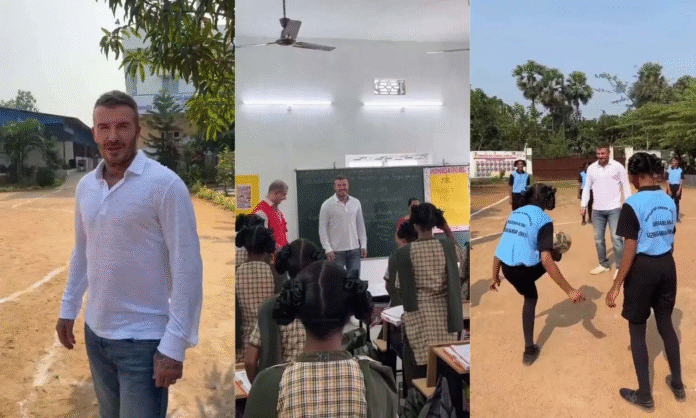
Bekham: It wasn’t the roar of stadiums or the flash of cameras that made headlines in Visakhapatnam, this week it was the smiles of schoolgirls and the quiet inspiration of a legend in the making. David Beckham, football icon and UNICEF Goodwill Ambassador, traded cleats for classrooms as he walked into MJPAPBCWREIS, a girls’ residential school in Kothavalasa, Andhra Pradesh, and experienced firsthand the magic of hands-on learning.
Learning beyond textbooks Beckham witnessed a revolutionary approach known as Project-Based Learning (PBL), where classrooms transform into playgrounds of creativity and curiosity. Instead of long lectures, students were building science models, solving real-world math challenges, and presenting art and innovation projects. With over 18,000 students across 107 residential schools in Andhra Pradesh, Bihar, Odisha, and Nagaland embracing this method, PBL is proving that learning can be both practical and fun.
Celebrating creativity and confidence Walking through a lively student exhibition, Beckham was visibly impressed by the ingenuity and pride of the children. Handmade musical instruments, innovative science experiments, and colorful art projects lined the corridors. He didn’t just observe he interacted, laughed, asked questions, and cheered each student on. On Instagram, he summed it up perfectly: “Great day in India going back to school so much fun.”
Lessons in life and responsibility The day went beyond academics. Beckham joined the students in a tree-planting drive, with saplings tagged digitally to merge environmental awareness and technology. He also participated in a reading circle, listening to the girls share their favorite books and dreams, proving that education is about confidence, creativity, and life skills, not just grades.
From classrooms to playgrounds Of course, it wouldn’t be Beckham without a football session. On the playground, the legend led a spirited one-touch football drill, filling the air with energy and laughter. Students and staff alike soaked in the joy of a day that combined learning, play, and inspiration in equal measure.
A visit that will stay forever Beckham’s visit wasn’t just about a celebrity making an appearance. It was a gentle reminder that education can be vibrant, hands-on, and empowering. For the girls of MJPAPBCWREIS, this day will be remembered not for the fame, but for the encouragement, the smiles, and the belief that their dreams are valid and that someone from across the world believes in them too.
Sometimes, the most powerful goals aren’t scored on a football field they’re scored in classrooms, hearts, and the limitless possibilities of young minds.
Italy has taken a landmark step in protecting women by officially recognizing femicide the gender-based killing of women as a distinct crime punishable by life imprisonment. The law, passed by parliament with broad support, is both a legal and cultural milestone, aimed at combating gender-based violence and sending a strong message about accountability.
Rising outrage and the need for change The legislation comes after a series of tragic killings that shook the nation. In 2024 alone, over 100 femicides were reported, many committed by intimate partners or ex-partners. Public outrage over these incidents highlighted the urgent need for a law specifically targeting gender-motivated killings, rather than treating them as ordinary homicides.
More than just harsher punishments Beyond life sentences for perpetrators, the law also tightens penalties for stalking, harassment, and revenge porn, while expanding support for survivors. This includes funding for shelters, emergency services, and resources aimed at protecting women from further violence. Awareness campaigns are also planned to challenge deep-rooted patriarchal attitudes.
A cultural and legal turning point Experts describe this law as a major cultural shift, acknowledging that femicide is not merely an individual tragedy but a systemic societal issue. Italy now joins other countries that treat gender-based killings as a distinct crime, emphasizing the importance of prevention, awareness, and justice.
Beyond legislation: Hope for the future While critics note that laws alone cannot end violence, this legislation is a powerful step forward. Combined with education, economic empowerment, and broader societal change, it promises greater protection for women. For women in Italy and beyond, this law represents hope, a commitment that their lives are valued, their voices heard, and justice will be enforced.