Home Blog Page 115

Who is Tessy Thomas Honoured With Dr Paulos Mar Gregorios Award 2025

0

Tessy Thomas, popularly known as India’s “Missile Woman”, has been awarded the prestigious Dr Paulos Mar Gregorios Award 2025 in recognition of her exceptional contributions to defence science and missile technology. The honour celebrates her decades-long role in shaping India’s strategic capabilities and advancing indigenous defence systems.

From Curious Child to Defence Pioneer

Born and raised in Alappuzha, Kerala, Thomas displayed a deep curiosity about science from an early age. Her fascination with the Moon, aircraft trails and space exploration laid the foundation for her academic journey in engineering and aerospace science. These early sparks of interest eventually evolved into a groundbreaking career in missile development.

A Breakthrough Leader in Indian Defence

Thomas’s rise in India’s defence sector marked a milestone in the nation’s technological progress. Selected for advanced missile training early in her career, she worked under the guidance of former President and renowned scientist Dr APJ Abdul Kalam, whose mentorship proved formative. She later became the first woman in India to lead a missile project, taking charge of the Agni programme during a crucial period of innovation and development.

Global Recognition and Esteem

Through her leadership in indigenous missile research and development, Thomas significantly strengthened India’s defence preparedness and strategic independence. Her achievements have been recognised worldwide, including her induction into the Aeronautical Society’s Space Pioneer Hall of Fame. The Dr Paulos Mar Gregorios Award now adds another distinguished honour to her legacy.

Highlights

  • First woman to head an Indian missile project.
  • Recipient of the Dr Paulos Mar Gregorios Award, conferred biennially by the Sophia Society.
  • Mentored by Dr APJ Abdul Kalam during early missile research training.
  • Key contributor to the advancement of the Agni missile series.

Inspiring Generations

Tessy Thomas’s journey is a testament to how curiosity, perseverance, and vision can transform into national service. Her accomplishments continue to inspire young scientists—especially women—to pursue careers in defence technology, aerospace and research leadership.
Sewa Paramo Dharmaḥ: NYSA Highlights Yoga and Volunteerism at The Hague Job Fair

0

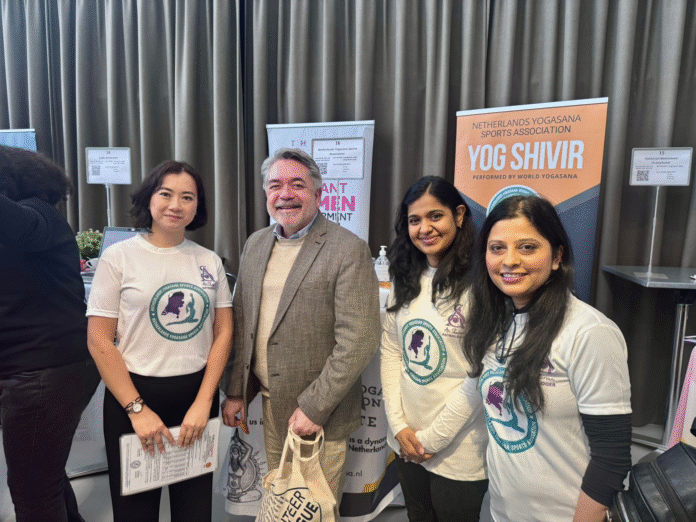
The Netherlands Yogasana Sports Association (NYSA) made a strong impact at the Volunteer The Hague Autumn Mix & Match Volunteer Job Fair held at The Social Hub on Saturday. The organisation promoted Yogasana not only as a recognized sport but also as a pathway to holistic health, community service, and cultural connection.

Guided by the motto “सेवा परमो धर्मः” (Sewa Paramo Dharmaḥ) — Service is the highest duty, NYSA representatives interacted with hundreds of visitors, introducing them to the benefits of Yogasana and inviting them to join volunteer-driven wellness initiatives across The Hague.

Public Figures and Institutional Support

The NYSA stall drew significant attention from dignitaries and institutional leaders. Among the visitors was Mr. Andrew (M.A.) van Esch, D66 Council Member of The Hague responsible for international relations, culture, and economy.

Sewa Paramo Dharmaḥ: NYSA Highlights Yoga and Volunteerism at The Hague Job Fair

NYSA also acknowledged the support of Mr. Gert-Jan Aleman, Director of PEP Den Haag, and Ms. Tetyana Benzeroual, Project Manager of Volunteer The Hague, whose efforts ensured NYSA’s successful participation in the fair.

Acknowledgment of Global Yogasana Leadership

NYSA credited its participation and mission to the guidance of respected Yogasana leaders.

Sewa Paramo Dharmaḥ: NYSA Highlights Yoga and Volunteerism at The Hague Job Fair


The association expressed deep gratitude to Yog Guru Swami Ramdev Baba for spiritual guidance, and to Dr. Jaideep Arya, Secretary General of Yogasana Bharat and World Yogasana, for strategic mentorship.

The organisation also thanked Mr. Vijay Ganesh, TGC Yoga Teacher representing The Embassy of India and The Gandhi Centre, for collaborating to promote yoga throughout the event.

Sewa Paramo Dharmaḥ: NYSA Highlights Yoga and Volunteerism at The Hague Job Fair

Team Effort Drives Awareness

NYSA leadership and volunteers played a key role in engaging with attendees and spreading awareness about yoga as a volunteer-led discipline. The team included:

  • Adv. Pranita Deshpande (President)
  • Dr. Manasi Sagdeo (Secretary General)
  • Mr. Mayur Muley (PRO and Director)
  • Coaches: Ms. Laura Dostanbayeva, Ms. Lakshmi Menon, and Ms. Gayatri Mohabir
Sewa Paramo Dharmaḥ: NYSA Highlights Yoga and Volunteerism at The Hague Job Fair

The successful participation strengthened NYSA’s vision of promoting Yogasana as a sport while inspiring community members to serve society through wellness-focused volunteerism aligned with the timeless value of Sewa.

Aadhaar for Age Check to Watch Online Content – Is India About to Plug the Adult-Content Leak Online?

0

What’s changed: Supreme Court floats Aadhaar age-gate for obscene content


In a landmark development on November 27, the Supreme Court suggested that access to what it terms obscene or adult-rated content online should only be granted after verified age confirmation possibly via Aadhaar (or a comparable identity-verification tool). The bench, headed by Surya Kant and Joymalya Bagchi, made the comments during hearings on multiple petitions related to offensive digital content.
The court pointed out that existing measures like a quick 18+ pop-up are often ineffective. As Justice Bagchi noted: By the time a viewer decides not to watch, it has already started.

Why this matters, beyond warnings real age checks for minors


Most platforms today rely on self-declaration or a brief disclaimer before streaming adult content. However, the Court argued such mechanisms are easy to bypass, especially for minors. Verified identity-based gating offers a more robust filter potentially preventing unintended exposure to harmful material.
In its remarks, the bench also emphasized the need for an independent, impartial regulatory body not mere “self-styled” industry associations to oversee digital content.

What’s being proposed: age verification + new oversight + clear rules


Platforms might first display a warning, then prompt for Aadhaar or PAN verification before content plays. Only after verifying age will the content begin. The court asked the government to consider broader reforms including a regulatory structure, clearer definitions of obscenity, and stronger laws against content that ridicules or demeans vulnerable groups e.g. persons with disabilities or marginalized communities. Any changes including this age-gate pilot must respect free speech, under constitutional safeguards. The court flagged that these are illustrative suggestions, leaving room for debate.

What could change for viewers, creators, platforms


For viewers, simple one-tap streaming might soon require identity-based verification especially for adult-rated content.
For platforms & creators, self-regulation may no longer suffice. They might see stricter compliance norms, content ratings, and mandatory age-checks.
For minors & parents, the measure could add a safety net but also trigger privacy debates, especially around Aadhaar use and data security.

The bigger debate: Privacy vs Protection vs Freedom

While age verification could shield minors, critics will likely raise valid concerns about data privacy, digital surveillance, and freedom of expression. Balancing these three: protection, privacy, and creative freedom will be key.
But make no mistake, this move signals a shift. The internet in India might soon come with identity gates and oversight, as regulators try to keep pace with rapidly evolving digital content

Jaipur Wax Museum Begins Work on Life-Sized Wax Statue of Indian Women’s Cricket Captain Harmanpreet Kaur

0

Jaipur Wax Museum: Harmanpreet Kaur Becomes the First Woman Cricketer in the World to Receive a Wax Figure

The Jaipur Wax Museum has begun crafting a life-sized wax statue of Indian Women’s Cricket Team Captain Harmanpreet Kaur, marking a historic moment as she becomes the first woman cricketer globally to be honoured with a wax figure.

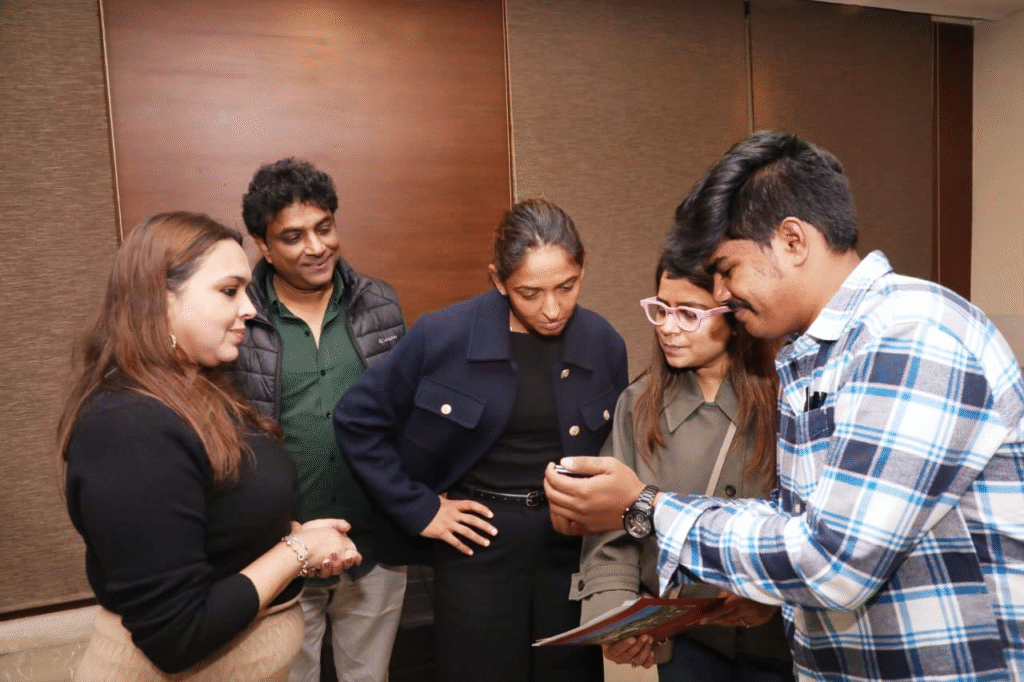
A team from the museum recently met Harmanpreet to take detailed body measurements and record photographs and videos essential for the sculpting process. According to the museum, she remained humble, cooperative, and attentive throughout the session.

Jaipur Wax Museum Begins Work on Life-Sized Wax Statue of Indian Women’s Cricket Captain Harmanpreet Kaur

Museum Curator and Founder Anoop Srivastava said Harmanpreet showed “immense enthusiasm” about the upcoming statue and expressed gratitude to the Jaipur Wax Museum for choosing her. She also conveyed her intention to attend the unveiling ceremony with her family and showed keen interest in understanding how wax figures are created. During her visit, she also praised the grandeur of the museum’s iconic Sheesh Mahal.

Jaipur Wax Museum Begins Work on Life-Sized Wax Statue of Indian Women’s Cricket Captain Harmanpreet Kaur

Srivastava added that the museum focuses on creating wax statues of “inspiring icons” rather than Bollywood celebrities. He said Harmanpreet Kaur’s achievements and personality will motivate young girls across the country. The museum already features wax figures of several celebrated sportspersons, including Sachin Tendulkar, Virat Kohli, M.S. Dhoni, Saina Nehwal, and Sandeep Singh.

The Jaipur Wax Museum, located inside a 300-year-old heritage structure, continues to be a unique attraction for both wax art enthusiasts and history lovers.

Union Government Is Set To Introduce Central Excise Amendment Bill 2025

0

The Union government is set to introduce two major tax bills that will reshape the fiscal framework for tobacco and pan masala. As the temporary GST compensation cess nears its end, the new legislation aims to maintain high tax incidence on demerit goods while creating a permanent revenue stream.

Purpose of the Central Excise Amendment Bill 2025

The amendment seeks to replace the outgoing GST compensation cess on cigarettes, chewing tobacco, hookah products and similar items. It empowers the Centre to revise excise duties to ensure that taxation levels remain broadly unchanged even after the cess lapses. This offers fiscal room for rate adjustments while protecting revenue.

Shift to a New GST Structure

With GST rationalisation underway, the 28% slab is being phased out. Ultra-luxury and sin goods, including tobacco, are set to fall under a proposed 40% GST bracket. Once the transition is completed, tobacco products will attract GST plus central excise duty rather than GST plus compensation cess.

New Cess on Pan Masala and Related Goods

A separate Health Security-cum-National Security Cess Bill proposes an additional levy on pan masala and other notified items. The cess will be imposed on manufacturers and will exist alongside GST. Authorities intend to direct the proceeds towards public health and security objectives, making the levy both fiscal and welfare-oriented.

Facts

  • GST compensation cess was originally set for five years from July 2017 but extended to March 2026.
  • The new 40% GST slab is designed for ultra-luxury and demerit goods.
  • Manufacturers must file self-declarations of machinery and production processes for cess assessment.
  • Tobacco products will shift from GST plus cess to GST plus central excise duty after cessation of compensation cess.

Implications for Prices and Revenue

The bills aim to keep the overall tax burden on tobacco and pan masala steady, reducing chances of sharp retail price fluctuations. They also replace a temporary levy with a long-term revenue mechanism, ensuring stable collections for the Centre once loan-related obligations under the compensation cess end.

Nagaland Day 2025: 7 Beautiful Cultural Traditions That Truly Set The State Apart

0

Nagaland Statehood Day is more than a historical landmark—it is a celebration of cultural identity, resilience, and pride. Home to 17 major tribes and multiple sub-tribes, Nagaland stands as one of India’s most culturally diverse regions. Its living traditions, ancestral practices, and strong community values have created a cultural tapestry that continues to evolve while honouring its timeless roots.

As Nagaland marks another year of statehood, here’s a look at seven defining cultural traditions that make the state truly extraordinary:

1. The Hornbill Festival

Often called the “Festival of Festivals,” the Hornbill Festival is one of India’s grandest cultural carnivals. Held every December, it brings all major Naga tribes together to showcase traditional dances, music, rituals, and folklore. From warrior chants to indigenous culinary experiences and handicraft showcases, the festival captures the essence of Nagaland’s cultural heartbeat.

2. Traditional Morungs

Morungs—traditional youth dormitories—remain one of the most fascinating elements of Naga heritage. Historically, they served as learning centres where boys were trained in moral values, warfare, craftsmanship, and tribal wisdom. Their architecture reflects tribal identity, decorated with symbolic carvings that represent bravery, prosperity, and community leadership.

3. Colourful Tribal Attire

Naga clothing is a striking visual expression of lineage, bravery, and social status. Handwoven shawls, elaborate beadwork, and headgear adorned with hornbill feathers, animal tusks, and handcrafted ornaments tell stories of victory, celebration, and belonging. These garments are worn with immense pride during festivals and ceremonies.

4. Log Drums

Log drums—massive instruments carved from single tree trunks—hold deep ceremonial importance. Historically used to alert villages or mark significant events, their booming rhythm now accompanies festivals, war dances, storytelling, and rituals. Each log drum is considered sacred and symbolizes unity and strength.

5. Indigenous Martial Arts & Warrior Spirit

Nagaland’s warrior history is preserved through traditional martial arts performed during cultural festivals. Spear drills, synchronized combat formations, and ceremonial war dances celebrate ancestral courage and community defence. The rituals honour Naga heritage while inspiring younger generations.

6. Distinctive Naga Cuisine

Bold, earthy, and rich with indigenous ingredients, Naga cuisine is unlike anything else in India. Signature elements include smoked pork, axone (fermented soybean), bamboo shoots, anishi (dried yam leaves), and millet-based beverages. Cooking methods—such as long-term meat smoking over kitchen hearths—reflect sustainable living and ancestral culinary wisdom.

7. Remarkable Handwoven Crafts

Craftsmanship sits at the heart of Naga culture. Handwoven shawls, bamboo baskets, cane craft, jewellery, pottery, and intricate wood carvings are expressions of identity and deep artistic legacy. Each piece—whether a bamboo artifact or embroidered shawl—carries symbolism, tribal stories, and generational knowledge.

From its warrior traditions and ceremonial drums to its cuisine, craftsmanship, and world-renowned festival culture, Nagaland stands as a living museum of heritage—timeless, resilient, and proudly unique.

Ancient 10000-Year-Old Pottery Unearthed in Japan’s Lake Biwa

0

A remarkable archaeological discovery beneath Japan’ Lake Biwa has unveiled one of the world’s oldest and most intact pottery vessels, dating back more than 10,000 years. The find, recovered from the Tsuzuraozaki underwater ruins, is providing unprecedented insight into the early Jomon period and reshaping understanding of prehistoric Japan’s ceramic craftsmanship.

The Ancient Vessel Unearthed from Lake Biwa

In October, Japanese archaeologists retrieved a perfectly preserved pottery vessel from 64 metres below the surface of Lake Biwa. Standing 25 centimetres tall, the artefact dates to the early Jomon period and represents a vital link to Japan’s earliest settled communities. Its exceptional preservation highlights the lake’s unique environment, which has shielded artefacts from decay for millennia. The Tsuzuraozaki site, first explored in the 1920s, has long intrigued researchers for its submerged remains of prehistoric activity.

Jomon Pottery and the Dawn of Ceramic Art

This vessel belongs to the Jomon pottery tradition—one of the earliest in human history. Emerging over 10,000 years ago, Jomon pottery marked humanity’s transition from nomadic lifestyles to settled societies. Experts believe this piece reflects either the Jinguji-style or Konami Upper-layer tradition, characterised by delicate engravings and refined forms. These early ceramics were not only utilitarian but also bore cultural and symbolic significance, reflecting a growing sense of aesthetic consciousness among Japan’s ancient inhabitants.

Technology Driving Underwater Archaeological Breakthroughs

The discovery was made possible through cutting-edge technology. Researchers used autonomous underwater vehicles (AUVs) and 3D sonar mapping systems to survey the lakebed in high resolution. These tools, originally developed for marine engineering, enabled the exploration of deep and previously inaccessible areas. Robotics, artificial intelligence, and sonar imaging have now become essential instruments in underwater archaeology, opening new pathways to study submerged heritage sites with precision and safety.

Facts

  • The pottery dates back over 10,000 years, belonging to Japan’s early Jomon period.
  • It was discovered 64 metres underwater in Lake Biwa’s Tsuzuraozaki ruins.
  • Autonomous underwater vehicles (AUVs) and 3D sonar scanning aided the discovery.
  • Lake Biwa is Japan’s largest freshwater lake and a key site for prehistoric research.

The Mysteries of Tsuzuraozaki and Ancient Japan

The Tsuzuraozaki underwater site continues to puzzle archaeologists. Since 1924, more than 200 pottery fragments have been found, yet the area’s purpose remains uncertain. Some scholars suggest it was once a lakeside settlement submerged by tectonic movements or rising waters. Others propose ritual significance, as the intact vessel’s upright position hints at ceremonial placement. Ongoing studies may soon reveal how early Jomon communities lived, worked, and worshipped along the shores of ancient Lake Biwa.

Gita Jayanti 2025: Significance, Date, Rituals & History

0

Gita Jayanti, also known as Bhagavad Gita Jayanti, marks the sacred day when Lord Krishna imparted the divine wisdom of the Bhagavad Gita to Arjuna on the battlefield of Kurukshetra. Celebrated every year on Shukla Ekadashi of the Margashirsha month, the day usually falls in November or December as per the Gregorian calendar. Devotees across the world observe this occasion by reading the Gita, performing rituals, and reflecting on its timeless teachings.

Why Gita Jayanti Is Celebrated

On this day in the Dwapara Yuga, Lord Krishna, the eighth avatar of Lord Vishnu, guided Arjuna with the philosophical teachings of the Bhagavad Gita, turning his confusion and grief into courage and clarity. Since then, the Bhagavad Gita has been revered as one of the most important spiritual scriptures in Hinduism, providing guidance on duty, devotion, karma, discipline, and truth.

Gita Jayanti 2025: Date & Timings

  • Gita Jayanti: Monday, December 1, 2025

Ekadashi Tithi:

  • Begins: November 30, 2025 at 09:29 PM
  • Ends: December 1, 2025 at 07:01 PM

How Gita Jayanti Is Celebrated

Devotees observe the day with devotion and discipline:

  • Recitation or parayan of the Bhagavad Gita
  • Fasting on Mokshada Ekadashi
  • Offering prayers to Lord Krishna, Srimad Bhagavad Gita, and Maharishi Ved Vyasa
  • Singing bhajans and performing aarti
  • Visiting temples, especially in Kurukshetra
  • Participating in satsang and discourses on Gita teachings

In many places, especially ISKCON temples, processions, group recitations, yajnas, and cultural programs are held to spread the message of Dharma.

Gita Jayanti Puja Vidhi

  1. On Dashami (a day before), eat only once and avoid grains or heavy food at night.
  2. On Ekadashi, wake up before sunrise and take a holy bath.
  3. Resolve to observe the fast with a pure mind and heart.
  4. Offer dhoop, diya, flowers, naivedya, tulsi leaves, and recite Gita Shlokas during worship.
  5. Stay awake in devotion and perform Jagran if possible.
  6. Break the fast (Parana) the next day during the auspicious Dwadashi Muhurat, after charity or serving the needy.

Rituals and Practices

  • Devotees refrain from consuming grains such as wheat, rice, and barley.
  • Many undertake a pilgrimage to Kurukshetra, considered the birthplace of the Gita.
  • Worship of a conch (Shankh) is considered auspicious, as its vibration purifies energy and invokes prosperity.
  • Families often begin or restart Gita Path together to resolve conflicts and bring harmony.

Spiritual Significance

Gita Jayanti is considered a powerful time to:

  • Reflect on one’s actions and duties (Dharma)
  • Seek clarity and inner strength
  • Imbibe virtues like discipline, truth, selflessness, and devotion
  • Apply Gita’s teachings to overcome life’s challenges

The observance of Mokshada Ekadashi, which falls on the same day, is believed to free ancestors and grant spiritual liberation or moksha.

Conclusion

Gita Jayanti is not just a festival—it is a reminder to revisit the eternal wisdom of the Bhagavad Gita and apply its teachings in daily life. The scripture continues to guide millions around the world toward peace, purpose, and self-realization.

As the Bhagavad Gita says:
“Change is the law of the universe. You can be a millionaire, or a pauper in an instant.”
— Shri Krishna

On this sacred day, may the teachings of the Gita inspire clarity, strength, and spiritual growth in every heart.

‘My Partner Is Half-Indian, Son’s Middle Name Is Sekhar’: Elon Musk

0

Tesla and SpaceX CEO Elon Musk has revealed that his partner Shivon Zilis has Indian roots. Speaking on Zerodha founder Nikhil Kamath’s podcast “WTF is?”, Musk also shared that one of their sons has the middle name “Sekhar,” inspired by Indian-American Nobel-winning physicist Subrahmanyan Chandrasekhar.

“I’m not sure if you know this, but my partner Shivon is half-Indian,” Musk said. “One of my sons with her, his middle name is Sekhar — after Chandrasekhar.”

Musk went on to share more about Zilis’s background when asked where she grew up.

“She grew up in Canada. She was given up for adoption when she was a baby. I think her father was an exchange student at a university or something like that,” he said, adding that he did not know all the details.

Zilis joined Musk’s neurotechnology company Neuralink in 2017 and currently serves as Director of Operations and Special Projects. She holds a Bachelor of Arts in Economics and Philosophy from Yale University.

Musk and Zilis share four children — twins Strider and Azure, daughter Arcadia, and son Seldon Lycurgus.

During the conversation, Musk also praised Indian contributions to the United States.

“America has been an immense beneficiary of talent from India, but that seems to be changing now,” he noted.

His remark comes amid rising concerns over tightening U.S. immigration policies, making the traditional “American dream” increasingly uncertain for many Indian professionals.

World AIDS Day 2025: Know Theme, Myths and Facts About HIV

0

World AIDS Day is observed every year on December 1 to raise awareness about HIV/AIDS and support individuals living with the virus. The day serves as a reminder to educate communities, encourage testing, promote treatment, and eliminate stigma surrounding HIV. Despite scientific advancements, misinformation and stigma remain major barriers to achieving the World Health Organization’s goal of ending AIDS as a public health threat by 2030.

This World AIDS Day 2025, it’s time to bust myths and highlight facts.

World AIDS Day 2025 Theme

The theme aims to break the cycle of stigma, shame, and misinformation associated with HIV. Stigma often stems from outdated beliefs about how HIV spreads and how it affects the body.

Myth vs Fact: Understanding HIV

Myth 1: HIV and AIDS are the same.

Fact:
They are not.

  • HIV (Human Immunodeficiency Virus) attacks the body’s immune system.
  • AIDS (Acquired Immunodeficiency Syndrome) is the most advanced stage of HIV, occurring only when HIV is left untreated for years.

With modern treatment, an HIV diagnosis does not automatically lead to AIDS. Many people live long, healthy lives with timely treatment and monitoring.

Some individuals may also have dormant HIV, meaning the virus exists in the body but does not actively replicate — a challenge medical science is still working to fully address.

Myth 2: HIV spreads through casual contact.

Fact:
HIV is not transmitted through casual interactions.
It does NOT spread through:

  • Shaking hands
  • Hugging
  • Sharing food or utensils
  • Using the same toilet
  • Sweat, saliva, or tears

HIV transmission requires specific body fluids (blood, semen, vaginal fluids, breast milk) entering another person’s bloodstream — commonly through unprotected sex or sharing infected needles. The virus cannot survive long outside the human body.

Myth 3: An HIV diagnosis ends your life.

Fact:
This belief stems from the early years of the epidemic. Today, with antiretroviral therapy (ART), HIV is a manageable chronic condition — similar to diabetes or hypertension. Many individuals with HIV lead normal life spans, build relationships, have children, and pursue careers.

Important Facts About HIV and AIDS

Undetectable = Untransmittable (U=U)

With consistent treatment, HIV viral load can become so low that it cannot be detected in lab tests. The National Library of Medicine (2019) confirms:
Individuals with an undetectable viral load cannot transmit HIV to sexual partners.

Prevention Medicines Are Highly Effective

Two preventive treatments are available:

  • PrEP (Pre-Exposure Prophylaxis): Taken by HIV-negative individuals to prevent infection before exposure.
  • PEP (Post-Exposure Prophylaxis): Taken within 72 hours after potential exposure for 28 days to prevent the virus from establishing infection.

The Road Ahead

Ending AIDS is now as much a social mission as a medical one. Breaking stigma, spreading awareness, promoting regular testing, and encouraging treatment are critical steps.

Get tested
Learn the facts
Share correct information
Support people living with HIV

Together, we can build a future free of fear, discrimination, and misinformation — and closer to ending HIV as a public health threat.