

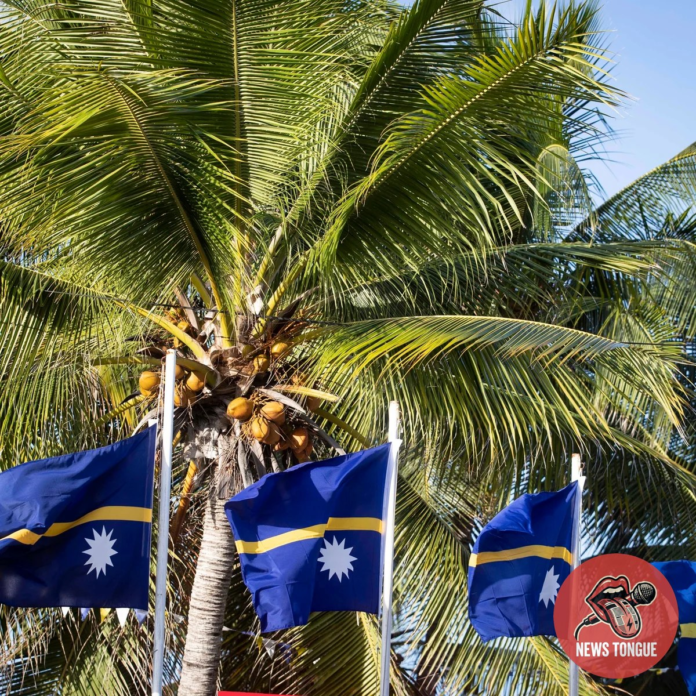
The world’s third-smallest country, Nauru, has officially changed its name to the Republic of Naoero, marking a historic step toward reclaiming its indigenous identity. The United Nations (UN) has updated its official records to reflect the country’s new name.
Home to around 12,000 people, the Pacific island nation says “Naoero” is its traditional and authentic name, while “Nauru” became widely used during the colonial era for the convenience of foreigners. By restoring its original name, the government says it aims to reaffirm the country’s cultural heritage and historical identity on the global stage.
With this move, Naoero becomes the eighth country in the 21st century to officially change its name. Most recently, Türkiye adopted its new international name in 2022, while Eswatini replaced Swaziland in 2018.
A Tiny Island with a Turbulent History
Before the arrival of European powers, the island was inhabited by 12 indigenous tribes whose livelihoods depended on fishing, coconut cultivation, and marine resources. There was no centralized government or military. European traders began arriving during the 1870s, introducing firearms and alcohol in exchange for local goods. Historians say these changes disrupted the island’s traditional social order.
In 1878, a dispute during a wedding ceremony reportedly escalated when a man shot and killed the son of a tribal chief. Under traditional customs, revenge was considered an obligation, triggering a cycle of retaliatory attacks that eventually involved all 12 tribes.
The conflict, later known as the Nauru Civil War, lasted nearly 10 years, devastating villages and affecting almost every family on the island. Germany intervened in 1888, annexed the island, confiscated weapons, and brought the conflict to an end.
From German Rule to Independence
During World War I, Australian forces occupied the island with little resistance. After Germany’s defeat, Nauru remained under foreign administration for several decades. The country finally gained independence on January 31, 1968, becoming the sovereign Republic of Nauru, now officially renamed the Republic of Naoero.
Phosphate Made the Country Rich and Then Broke Its Economy
Naoero’s fortunes changed dramatically in 1900, when Australian geologist Albert Fuller Ellis discovered vast phosphate deposits on the island. Commercial mining began six years later, and the country quickly emerged as one of the world’s leading phosphate exporters due to strong global demand for fertilizer.
Following independence, the government gradually took control of the phosphate industry. By the 1970s, phosphate revenues had transformed Naoero into one of the world’s wealthiest nations on a per-capita basis.
The government invested heavily in overseas properties while providing residents with free or heavily subsidized education, healthcare, and other public services. However, decades of intensive mining exhausted the country’s phosphate reserves. As mining revenues declined and overseas investments suffered losses, the island entered a prolonged economic crisis during the 1990s. Today, the country continues to deal with the long-term economic consequences of the depletion of its primary natural resource.
Climate Change Presents an Existential Challenge
Alongside economic difficulties, climate change has emerged as Naoero’s greatest long-term challenge.
Scientists warn that rising sea levels could render significant parts of the low-lying island uninhabitable in the coming decades. Since 1993, sea levels around the island have reportedly risen by approximately 5 millimetres annually, exceeding the global average. Current projections suggest sea levels could rise by another 20 to 57 centimetres by the end of the century.
The challenge is compounded by the fact that nearly 80% of the island’s interior has been left unsuitable for habitation after decades of phosphate mining, forcing most residents to live along vulnerable coastal areas.
To help finance climate adaptation, the government has launched an investment-linked citizenship programme. Officials say funds generated through the initiative will be used to relocate communities and critical infrastructure to higher ground while supporting climate resilience projects.
Part of a Global Trend
Naoero’s decision reflects a broader international trend of countries reclaiming indigenous names and cultural identities.
In recent years:
- Türkiye replaced the internationally used name “Turkey” in 2022.
- Eswatini officially replaced Swaziland in 2018.
By adopting the name Republic of Naoero, the Pacific island nation joins a growing list of countries choosing to present themselves to the world through names rooted in their own history, language, and identity.