

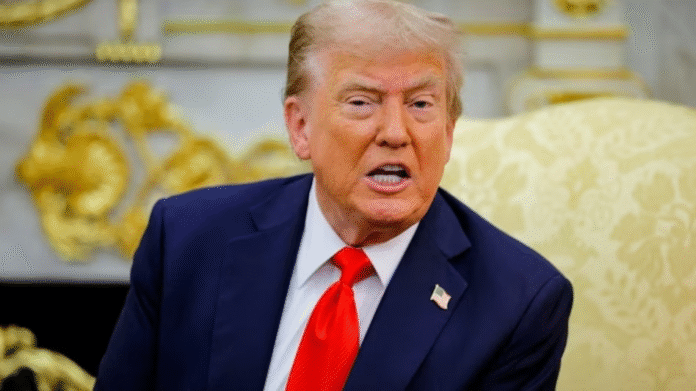
The United States has entered a government shutdown after former President Donald Trump failed to pass a critical funding bill in the Senate. The bill received only 55 votes in favor, falling short of the 60 votes required for approval.
This marks the first government shutdown since 2019, bringing non-essential government operations to a standstill and suspending salaries for hundreds of thousands of federal employees.
Senate Funding Bill Fails
The Senate vote took place late Tuesday night. The final tally was:
- 55 in favor
- 45 against
Despite having 53 Republican senators, Trump needed support from the opposition Democrats to reach the 60-vote threshold. However, Democrats voted unanimously against the bill.
Notably, both independent senators sided with the Republicans, but it wasn’t enough to secure passage.
What Is a Government Shutdown?
In the U.S., Congress must approve an annual budget to fund government operations. When lawmakers fail to pass a funding bill, non-essential government services lose their funding—this is known as a government shutdown.
During a shutdown:
- Non-essential services are suspended
- Federal employees may be furloughed or work without pay
- Essential services like defense, law enforcement, and emergency care continue
Heated Political Standoff
Tensions flared during Tuesday’s Senate session, with intense exchanges between Republican and Democratic lawmakers over the budget bill.
At the center of the dispute is funding for the Obama-era health care subsidy program. Democrats have demanded an increase in subsidies, while Republicans argue that expanding healthcare spending would strain the federal budget and disrupt other programs.
A meeting held Monday at the White House between Trump and key Democratic leaders Hakeem Jeffries and Chuck Schumer failed to break the deadlock.
Republican Response and Next Steps
Republican leaders have pledged to bring the funding bill for a vote daily until Democrats agree to support it. Trump has blamed Democrats for the shutdown, accusing them of obstruction and threatening federal employee layoffs.
Currently, up to 900,000 government workers face the prospect of being placed on leave without pay.
Trump’s Shutdown Strategy
Trump appears to be using the shutdown as a political tool to pressure Democrats and advance his agenda. The Office of Management and Budget (OMB) can designate services as essential or non-essential. This gives Trump the power to:
- Prioritize defense and immigration
- De-emphasize Democratic-backed programs like education, health, and environmental protections
So far, the Trump administration has cut 300,000 federal jobs as part of broader government downsizing efforts.
The White House has reportedly instructed agencies to blame Democrats for the shutdown—a move that may violate federal ethics laws.
Political Risks and Rewards
Trump believes the shutdown could rally his base, as seen during the 2018–2019 shutdown, which also lasted several weeks. A short-term shutdown may allow him to push his policy priorities, but a prolonged crisis risks:
- Economic disruption
- Political backlash
- Public frustration with stalled services
U.S. Fiscal Year and Budget Deadline
The U.S. fiscal year begins on October 1, the deadline by which a new federal budget must be approved. Without it, the government lacks legal authority to spend money—triggering a shutdown.
This period sets the agenda for federal investments, including in:
- Defense
- Healthcare
- Education
Failure to pass the budget before this date halts funding and affects public services nationwide.
Conclusion
The current government shutdown reveals deep divisions between Republicans and Democrats over spending priorities, particularly healthcare. As political negotiations continue, millions of Americans—and nearly a million federal workers—are left in uncertainty.