

PC( The Guardian, CNN)
After drifting across the Southern Ocean for nearly four decades, the colossal iceberg A23a – once bigger than many countries – is now in its final days. Shrinking dramatically in the warmer waters near South Georgia, this Antarctic giant is disintegrating before our eyes, releasing nutrients that could boost marine life even as it fades away.
A23a: The Giant Iceberg That’s Finally Melting After 40 Years at Sea
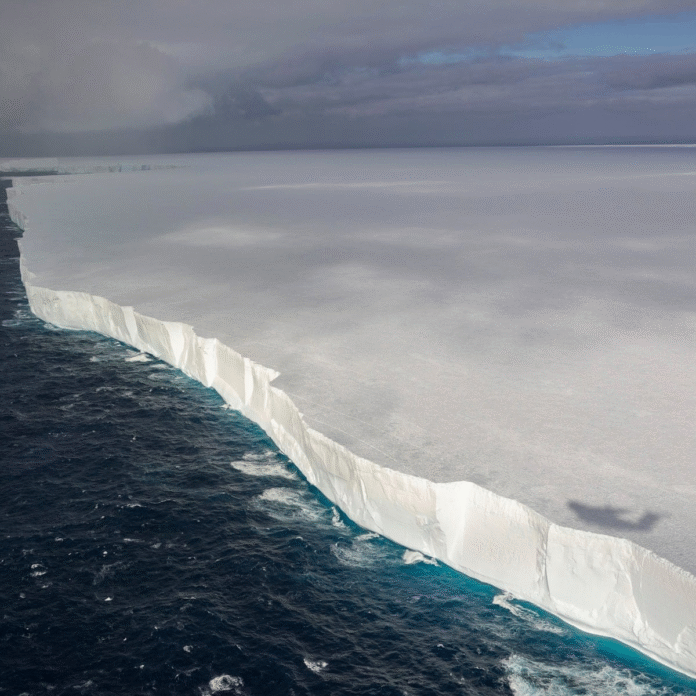
In 1986, during the era of Ronald Reagan and the original Top Gun, a massive slab of ice calved from Antarctica’s Filchner-Ronne Ice Shelf. Named A23a, it measured around 4,000 square kilometres roughly the size of Mallorca or twice the area of Greater London – and weighed nearly a trillion tonnes. It even carried away a Soviet research station, Druzhnaya 1, as it broke free.
For decades, A23a remained largely motionless, grounded on the seabed in the Weddell Sea. Then, in 2020, it began to move. By 2023-2024, it spun free, flipped upside down at one point (revealing barnacle-encrusted undersides), and raced nearly 1,000 km in just months, carried by ocean gyres. It briefly regained the title of the world’s largest iceberg before losing it in late 2025 to D15A (now around 3,100 sq km).
By early 2026, A23a had entered the warmer waters of the South Atlantic, northeast of South Georgia Island. As of March 2026, it has shrunk to roughly 180 square kilometres a tiny fraction of its original size – and is breaking apart rapidly. Scientists from the British Antarctic Survey (BAS) and NASA say it is in its “death throes” and could disappear entirely within weeks, once its area falls below the 70 sq km tracking threshold.
Why A23a Is Breaking Up So Dramatically
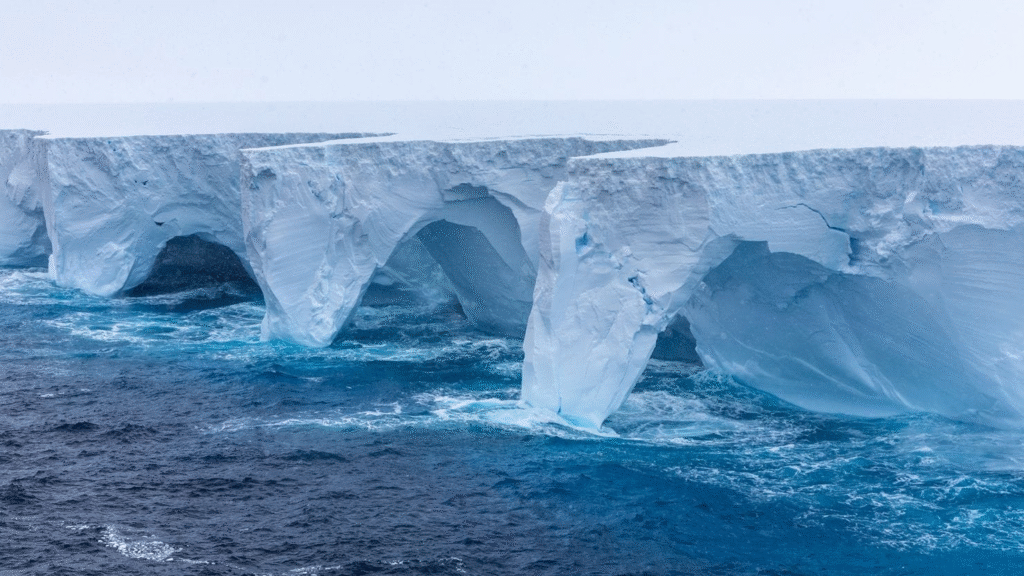
Satellite images show the iceberg heavily waterlogged, covered in brilliant blue meltwater pools. Warmer air and ocean currents (around 10°C) have triggered hydrofracturing: meltwater seeps into surface cracks, its weight forces them deeper, and the ice shatters from within.
Dr Andrew Meijers, an oceanographer at the British Antarctic Survey, explained: the South Atlantic waters are simply too warm for such a giant to survive. Waves, warmer temperatures, and constant erosion have turned the once-solid megaberg into a “blue mush” surrounded by smaller fragments and ice mélange.
Ecological Impacts: Threat and Opportunity for South Georgia
South Georgia, a remote sub-Antarctic island, is a vital breeding ground for millions of penguins, seals, and seabirds. Large icebergs in the past have acted as physical barriers, forcing animals to take longer routes to feeding grounds. This extra energy expenditure can lead to starvation of chicks and pups during the critical breeding season a tragedy seen in 2004 in the Ross Sea area. Fortunately, A23a began fragmenting before causing major disruption. Its smaller “bergy bits” are less likely to ground and block routes.