

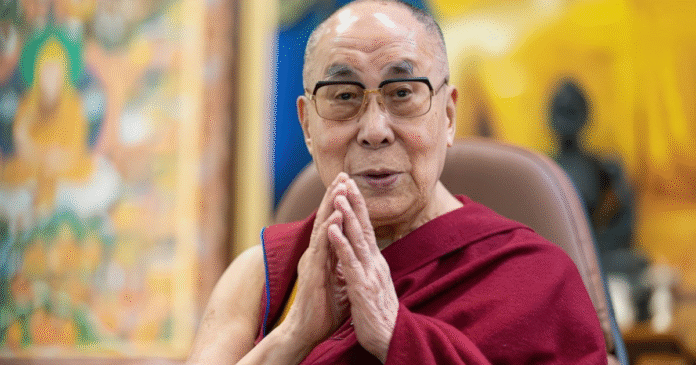
As the 14th Dalai Lama, Tenzin Gyatso, approaches his 90th birthday on July 6, 2025, he has made a landmark announcement concerning the future of one of Tibetan Buddhism’s most enduring institution. In a move that reverberates across spiritual and political lines, the Dalai Lama has emphatically affirmed that the Dalai Lama lineage will continue through reincarnation. Speaking at a religious gathering in Dharamshala ahead of his 90th birthday, he stated that only the Gaden Phodrang Trust, a foundation he established, will have the authority to identify the 15th Dalai Lama, consulting senior leaders from Tibetan Buddhist traditions.
This announcement ends years of speculation about whether he might choose to be the last Dalai Lama, reinforcing the centuries-old reincarnation system.
Succession Beyond China’s Grasp
By declaring that the next reincarnation will be born outside China, possibly in India or another free country, the Dalai Lama directly challenges Beijing’s claim to control the selection process – one that relies on state-sanctioned rituals like the “golden urn”.
This stance represents a significant defiance of China’s longstanding efforts to sinicize Tibetan Buddhism by embedding its authority into spiritual matters.
Consult Tradition, Break Norms
Following his stated 2011 framework, he outlined that a formal body – the Gaden Phodrang Trust – will lead the search, guided by traditional signs such as visions, astrological hints, and advice from Dharma Protectors and senior monks.
Notably, this reincarnation may break tradition in two meaningful ways:
- The successor can be female, a topic he first broached in 2007.
- The new Dalai Lama could be an adult, rather than the traditional child-based recognition.
Birthday & Beyond: The Next Chapter
The Dalai Lama’s 90th birthday is not just a personal milestone – it’s a turning point. Surrounded by his monastic peers, followers, and international supporters – including representatives from India’s government – the event served as a public moment to cement his legacy and clarify plans for the future.
In his humble manner, he expressed gratitude for global appeals to continue the lineage, acknowledging messages from exiled Tibetans and those within Tibet urging the preservation of this spiritual tradition.
Global Repercussions
- Beijing: Insists that any new Dalai Lama must be approved by Chinese authorities using their own state-sanctioned procedures.
- Tibetan Exile Administration: Strongly supports the Dalai Lama’s plan, emphasizing it as a shield against political manipulation.
- International Support: The U.S. has reaffirmed its stance backing Tibetan religious freedom and has sharply criticized China’s attempts to interfere.
What This Means
| Aspect | Significance |
|---|---|
| Spiritual Continuity | Ensures the Dalai Lama’s lineage lasts into the future. |
| Protection Against Politics | Places succession in independent religious hands. |
| Progressive Shift | May usher in a female or adult Dalai Lama. |
| Geopolitical Signal | Reinforces Tibet’s cultural resilience and autonomy aspirations. |
This announcement isn’t simply spiritual. It represents a carefully calibrated response to preserve Tibetan heritage in the face of political pressure, while also modernizing the institution in alignment with his lifelong advocacy for compassion, pluralism, and nonviolence.
Conclusion
On the eve of his 90th birthday, the Dalai Lama has offered a clear and courageous plan: the succession will proceed, guided by Tibetan tradition, housed in the free world, and shielded from political interference. This paves the way for the 15th Dalai Lama to emerge as a symbol of hope, continuity, and spiritual leadership. As celebrations commence, the world watches not just a birthday celebration – but a new chapter in Tibetan Buddhism.