

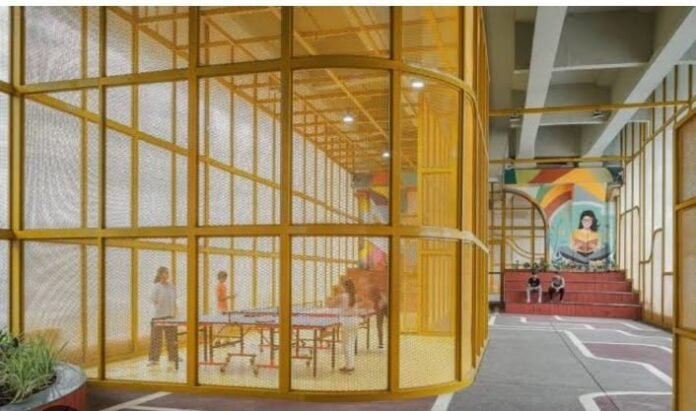
PC:(Desh Gujarat)
Reimagining Urban Spaces Surat, a bustling city in Gujarat, has set a remarkable precedent for urban innovation by transforming a neglected space beneath the Shaheed Veer Bhagat Singh Bridge at Parle Point Char Rasta into the city’s first indoor sports and recreation facility. Inaugurated by the Surat Municipal Corporation (SMC) at a cost of ₹2.5 crore, this project converts three spans of previously unused space under the flyover into a vibrant, multi-functional hub. This initiative not only revitalizes a once-idle area prone to encroachment but also serves as a model for repurposing under-flyover spaces across India.
A New Life for Under-Flyover Spaces
Located near the popular Jani Farsan landmark, the facility transforms a formerly neglected area into a dynamic community space. Offering indoor games like table tennis, chess, carrom, snakes and ladders, air hockey, bowling, and box cricket, the hub caters to diverse age groups. Additional amenities include a children’s play zone, seating for senior citizens, a reading room to promote literacy, a cafeteria for family gatherings, and a secure locker system, ensuring inclusivity and accessibility for all.
Benefits of Repurposing Under-Flyover Spaces
Transforming under-flyover areas offers significant advantages for densely populated Indian cities:
Expanding Public Spaces: With open land scarce in urban areas, under-flyover spaces provide opportunities for new plazas, parks, and community centers without requiring additional land acquisition.
Enhancing Safety: Neglected underpasses often attract illegal activities. Proper lighting, landscaping, and amenities deter encroachment and create safer environments for residents.
Environmental Improvements: Green spaces with pollution-resistant flora and aesthetic installations like murals enhance the urban landscape and help mitigate air pollution.
Fostering Community Bonds: These hubs bring together residents of all ages, promoting social interaction through play areas, seating, and family-friendly spaces.
Economic Opportunities: Redeveloped spaces can support local vendors, cafes, and small markets, boosting economic activity and livelihoods.
Challenges in Implementation
While the potential of such projects is immense, several challenges must be addressed:
Design and Safety Concerns: Under-flyover areas are often noisy, polluted, and lack sunlight. Designs must mitigate these issues while ensuring the structural integrity of the flyover. For instance, a 2023 proposal for a skating rink under a Bengaluru flyover was abandoned due to safety concerns.
Community Engagement: Successful projects require tailoring spaces to local needs through active resident involvement in the planning process to ensure relevance and usage.
Urban Planning Considerations: Creating community hubs under flyovers could increase foot traffic in already congested areas, necessitating careful planning to avoid disrupting traffic flow or pedestrian access.
Maintenance and Sustainability: Long-term success depends on robust maintenance protocols and sustained community involvement to prevent deterioration.
A Model for Urban Innovation
Surat’s under-flyover facility demonstrates how cities can rethink existing infrastructure to create valuable community assets. Instead of allowing such spaces to become dumping grounds or makeshift parking lots, urban planners advocate for their transformation into inclusive, functional hubs. The project’s thoughtful design, incorporating diverse amenities and addressing community needs, positions it as a blueprint for other cities to emulate.
Paving the Way for Smarter Cities
Surat’s pioneering initiative under the Shaheed Veer Bhagat Singh Bridge highlights the transformative potential of repurposing neglected urban spaces. By addressing challenges and prioritizing community needs, cities across India can replicate this model to create safer, greener, and more connected urban environments. As urban populations grow, such innovative solutions will be key to building sustainable and inclusive cities for the future.