

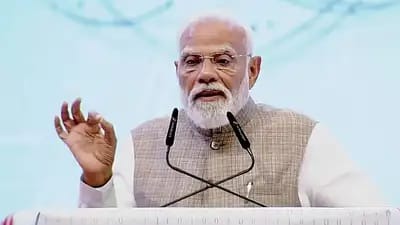
PC (The Times of India)
Prime Minister Narendra Modi held a series of high-level telephonic conversations with key world leaders, including Sultan Haitham bin Tariq of Oman, Malaysian Prime Minister Anwar Ibrahim, French President Emmanuel Macron, and Jordan’s King Abdullah II, to address the intensifying military conflict in West Asia. The discussions come against the backdrop of the ongoing war between the United States, Israel, and Iran, which erupted on February 28, 2026, following joint US-Israeli strikes that targeted Iranian military infrastructure and resulted in the death of Supreme Leader Ali Khamenei.
The conflict has seen sustained airstrikes, retaliatory missile and drone attacks by Iran on US bases, Israel, and Gulf allies, and growing threats to critical energy routes like the Strait of Hormuz. This narrow waterway, through which nearly a fifth of global oil trade passes (approximately 20 million barrels per day), faces heightened risks of disruption, raising global concerns over energy security, oil prices, and supply chains.
In his call with Sultan Haitham bin Tariq, PM Modi conveyed advance Eid greetings to the people of Oman and described the conversation as productive. He reiterated India’s strong condemnation of violations of Oman’s sovereignty and territorial integrity, particularly in light of Iranian strikes on Gulf nations, including Oman. The Prime Minister appreciated Oman’s efforts in facilitating the safe return of thousands of stranded individuals, including Indian nationals. Both leaders emphasized the need to prioritize dialogue and diplomacy for de-escalation and the restoration of peace and stability in the region.
PM Modi specifically highlighted the shared commitment of India and Oman to ensuring safe and free navigation through the Strait of Hormuz, underscoring its vital importance for global energy flows and maritime security.
During his discussion with Malaysian Prime Minister Anwar Ibrahim, PM Modi extended warm greetings on the upcoming Hari Raya Aidilfitri festival. The two leaders expressed deep concern over the West Asia situation and reaffirmed their joint commitment to de-escalation through dialogue and diplomacy to restore early peace and stability. In a separate conversation with French President Emmanuel Macron, PM Modi stressed the urgent need for de-escalation amid the fierce military confrontation involving the US, Israel, and Iran, which has targeted military and civilian infrastructure. Both sides agreed on close coordination to advance peace and stability in the region and beyond, with President Macron reciprocating that India and France are working together to keep diplomacy central to efforts for peace.
PM Modi also spoke with King Abdullah II of Jordan, conveying advance Eid wishes and expressing concern over the evolving situation. The leaders condemned attacks on energy infrastructure, which they noted could lead to avoidable escalation, and supported unhindered transit of goods and energy.
PM Modi appreciated Jordan’s role in facilitating the safe return of stranded Indians. This marks PM Modi’s second conversation with the Sultan of Oman since the conflict began, and he has maintained active engagement with multiple regional leaders, including those from Saudi Arabia, Bahrain, the UAE, Qatar, Kuwait, Israel, and Iran. India’s diplomatic outreach reflects its consistent stance on favoring dialogue over confrontation, protecting Indian nationals in the region, and safeguarding global energy security amid the intensifying hostilities. As the conflict enters its third week with reports of expanded strikes on energy targets and fears of broader regional involvement, PM Modi’s proactive diplomacy underscores India’s role as a voice for restraint and stability in one of the world’s most volatile regions.