

PC( Bernama, Instagram)
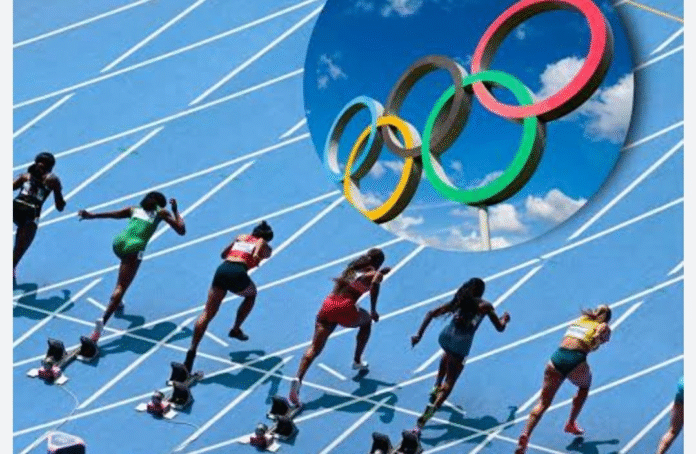
LAUSANNE – The International Olympic Committee (IOC) has announced a landmark policy that restricts eligibility for the women’s category in Olympic sports to biological females, effective from the 2028 Los Angeles Games onward. Approved by the IOC Executive Board on March 26, 2026, the new universal framework replaces the previous system in which individual international federations set their own eligibility rules. It applies to all female-category events at the Olympic Games and other IOC events, covering both individual and team sports.
Under the policy, eligibility will be determined by a mandatory “once-in-a-lifetime” genetic test screening for the SRY gene (Sex-determining Region Y gene). This gene, typically located on the Y chromosome, initiates male sex development. The test can be conducted non-intrusively through a saliva sample, cheek swab, or blood test. Athletes who test negative for the SRY gene will permanently qualify for the female category. Those who test positive will generally be ineligible, with a rare exception for athletes diagnosed with Complete Androgen Insensitivity Syndrome (CAIS) or certain other differences in sexual development (DSD) who do not derive performance advantages from testosterone associated with male puberty. The policy explicitly excludes transgender women and most DSD athletes who have undergone male puberty from competing in the female category.
IOC President Kirsty Coventry, a former Olympic swimmer, emphasized the science-based rationale behind the decision. “As a former athlete, I passionately believe in the rights of all Olympians to take part in fair competition,” Coventry said. “At the Olympic Games,
even the smallest margins can be the difference between victory and defeat. So, it is absolutely clear that it would not be fair for biological males to compete in the female category. In addition, in some sports it would simply not be safe.”
She added that every athlete must be treated with dignity and respect, and that the one-time screening ensures the process is minimally burdensome. The IOC stated that the policy was developed following an extensive review from September 2024 to March 2026, involving consultations with medical experts, international federations, and athletes. A working group established in September 2025 reviewed scientific, medical, and legal developments and concluded that male sex development provides significant performance advantages in sports relying on strength, power, and endurance.
An online survey of athletes (receiving over 1,100 responses) and in-depth interviews showed strong support for clear, science-based rules to protect the female category.
The IOC’s move follows a similar policy adopted by World Athletics in July 2025, which introduced a one-time SRY gene test for female-category eligibility at world ranking events. That policy took effect in September 2025 and was implemented at the World Athletics Championships in Tokyo. The new IOC framework encourages all International Federations and other sports bodies to adopt the same standards for IOC-sanctioned events. It does not apply to grassroots or recreational sports. The policy replaces previous IOC statements on gender identity and sex variations and is not retroactive.