

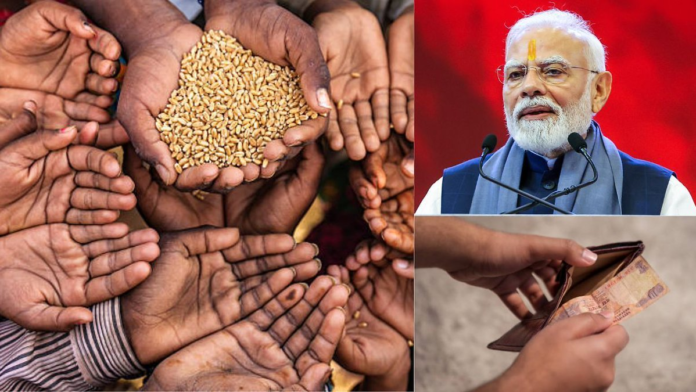
India’s extreme poverty rate declined sharply from 27.1% in 2011 to 2.6% in 2023, with an estimated 496 million people moving out of poverty, according to the World Bank’s October 2026 Poverty and Equity Brief. The report also highlighted a significant decline in poverty at the lower-middle-income threshold of USD 4.20 per day, measured in 2021 purchasing power parity (PPP). At this level, the poverty rate fell from 57.7% in 2011 to 16.1% in 2023.
The World Bank described the reduction as one of the fastest declines in poverty globally, reflecting improvements in both monetary and non-monetary indicators.
The World Bank attributed the decline primarily to growth in household consumption, increased employment opportunities—particularly for women—and expanded social protection measures, including food subsidies.
According to the report’s indicative microsimulation estimates, poverty at the USD 4.20-a-day threshold could decline further to 14.2% in 2026 and 12.1% by 2028. However, the projections may change as updated labour-market and economic data become available.
The Oxford Poverty and Human Development Initiative’s Multidimensional Poverty Index (MPI) also recorded a substantial improvement. India’s multidimensional poverty rate declined from 53.8% in 2005–06 to 16.4% in 2019–21. The World Bank’s own multidimensional poverty measure stood at 15.5% in 2022–23.
Despite the overall progress, poverty remains concentrated in certain regions. Around 57% of India’s poor population lives in a contiguous belt stretching from Uttar Pradesh to West Bengal.
Employment increased by approximately 134 million between 2017 and 2023, nearly twice the growth in the working-age population. A significant share of this increase came from rural women entering paid employment.
However, the report also highlighted continuing labour-market concerns. Youth unemployment rose from 14.6% in the first quarter of FY26 to 15.9% in the first quarter of FY27, particularly among rural young women. Real earnings remained broadly unchanged, as much of the employment growth was concentrated in low-productivity activities.
The World Bank cautioned that household consumption survey estimates may reflect improvements in measurement as well as actual gains in living standards.