

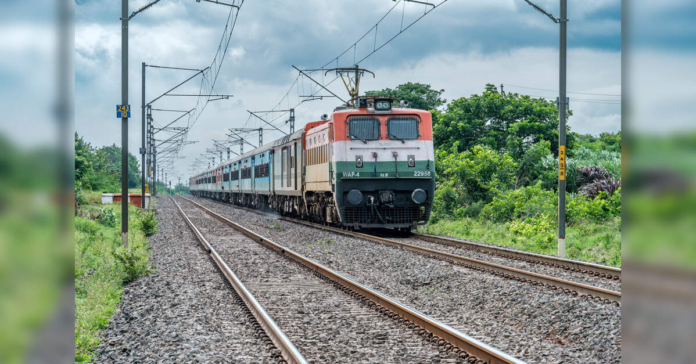
Indian Railways has achieved 99.6% electrification of its broad gauge network as of 22 July 2026, making it the world’s second-most electrified large railway system, after Switzerland, which has achieved 100% electrification.
Railway Electrification in India
Railway electrification involves operating trains using electric traction through overhead equipment or other electric power supply systems. Under a phased, network-wide programme, Indian Railways has expanded electrification across trunk routes, branch lines, and dedicated freight corridors.
Electrification Progress Since 2014
Between 2014 and 2026, Indian Railways electrified 48,072 route kilometres (RKM). In comparison, only 21,801 RKM were electrified during the six decades before 2014. This reflects a significant acceleration in the pace of electrification across the railway network.
Reduced Diesel Consumption
The transition to electric traction has substantially reduced diesel use. Diesel consumption for train operations declined from 293 crore litres in 2015–16 to 108 crore litres in 2024–25, a reduction of approximately 185 crore litres. This has lowered dependence on imported fuel and improved energy efficiency.
Renewable Energy Integration
By June 2026, Indian Railways had commissioned more than 1,260 MW of renewable energy capacity, comprising:
- 1,161 MW of solar power
- 103 MW of wind power
In addition, all newly sanctioned railway line and multi-tracking projects are being developed with integrated electrification infrastructure.
Key Facts for Competitive Exams
- 99.6% of the Indian Railways broad gauge network is electrified (as of 22 July 2026).
- Indian Railways is the world’s second-most electrified large railway network.
- Switzerland ranks first with 100% railway electrification.
- Electrification levels in other major countries:
- China: 82%
- Spain: 67%
- Japan: 64%
- France: 60%
- United Kingdom: 39%
- Rail transport emits approximately 89% less carbon dioxide per tonne-kilometre than road transport.
- Indian Railways had commissioned over 1,260 MW of renewable energy capacity by June 2026.
Parliamentary Context
Union Railway Minister Ashwini Vaishnaw presented the electrification data in the Lok Sabha on 22 July 2026. The Lok Sabha, the lower house of the Parliament of India, serves as the principal forum for ministerial statements on national infrastructure and transport.