

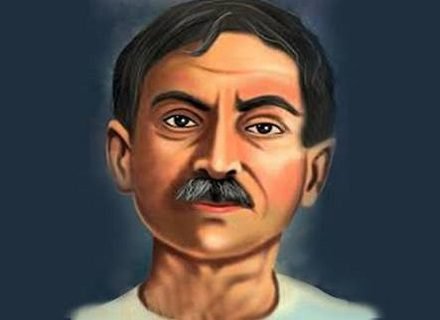
When Indian literature speaks of realism, social reform, and the struggles of ordinary people, one name stands above all, Munshi Premchand. Revered as the “Upanyas Samrat” (Emperor of Novels), Premchand transformed Hindi and Urdu literature by giving voice to farmers, labourers, women, and the marginalised. His stories continue to resonate because they reflect timeless human emotions and the realities of society.
Every year, 31 July is observed as Munshi Premchand Jayanti, commemorating the birth of one of India’s greatest literary figures. Born as Dhanpat Rai Srivastava on 31 July 1880 in Lamhi village near Varanasi, Premchand experienced poverty and hardship from an early age. These experiences deeply influenced his writing, enabling him to portray social inequalities with remarkable authenticity and compassion.
Premchand began his literary journey by writing in Urdu under the pen name Nawab Rai. However, after his patriotic short story collection Soz-e-Watan was banned by the British government for its nationalist sentiments, he adopted the name Premchand, under which he went on to create some of the finest works in Indian literature.
Unlike many writers of his time, Premchand did not focus on kings, heroes, or fantasy. Instead, he wrote about the everyday lives of ordinary Indians—the debt-ridden farmer, the struggling widow, the honest teacher, the exploited labourer, and the oppressed villager. His writings addressed pressing social issues such as caste discrimination, poverty, child marriage, dowry, corruption, gender inequality, and social injustice, making literature a powerful instrument for reform.
Among his most celebrated novels is Godaan, widely regarded as one of the greatest works in Hindi literature. It tells the moving story of Hori, a poor farmer trapped in a cycle of debt and exploitation, while reflecting the harsh realities of rural India. Other acclaimed novels include Gaban, Nirmala, Rangbhoomi, Karmabhoomi, Sevasadan, and Premashram, each exploring different dimensions of Indian society and human relationships.
Premchand was also a master of the short story. Classics such as Idgah, Poos Ki Raat, Kafan, Panch Parmeshwar, Namak Ka Daroga, Bade Ghar Ki Beti, and Do Bailon Ki Katha remain widely read and are part of school curricula across the country. Written in simple yet powerful language, these stories explore themes of honesty, sacrifice, justice, compassion, and the dignity of ordinary people.
Beyond fiction, Premchand was a teacher, editor, and journalist who believed literature should inspire social awakening. Deeply influenced by India’s freedom movement and Mahatma Gandhi’s ideals, he resigned from his government teaching job during the Non-Cooperation Movement in 1921 and devoted himself entirely to writing and journalism. Through his novels, essays, and editorials, he encouraged readers to question injustice and work towards a more equitable society.
Munshi Premchand passed away on 8 October 1936, but his literary legacy remains stronger than ever. His works have been translated into numerous Indian and foreign languages and continue to be adapted into films, television serials, theatre productions, and radio plays, introducing new generations to his timeless storytelling.
More than a century after his birth, Munshi Premchand continues to be celebrated not merely as a writer but as the conscience of Indian literature. His stories remind us that literature is not only meant to entertain, it is meant to awaken empathy, challenge social evils, and inspire meaningful change. On his birth anniversary, India pays tribute to a literary giant whose words continue to illuminate minds and touch hearts across generations.