

PC: ( Edition.cnn.com, Space.com )
8 Fascinating Facts About Earth: Our One-of-a-Kind Home Planet
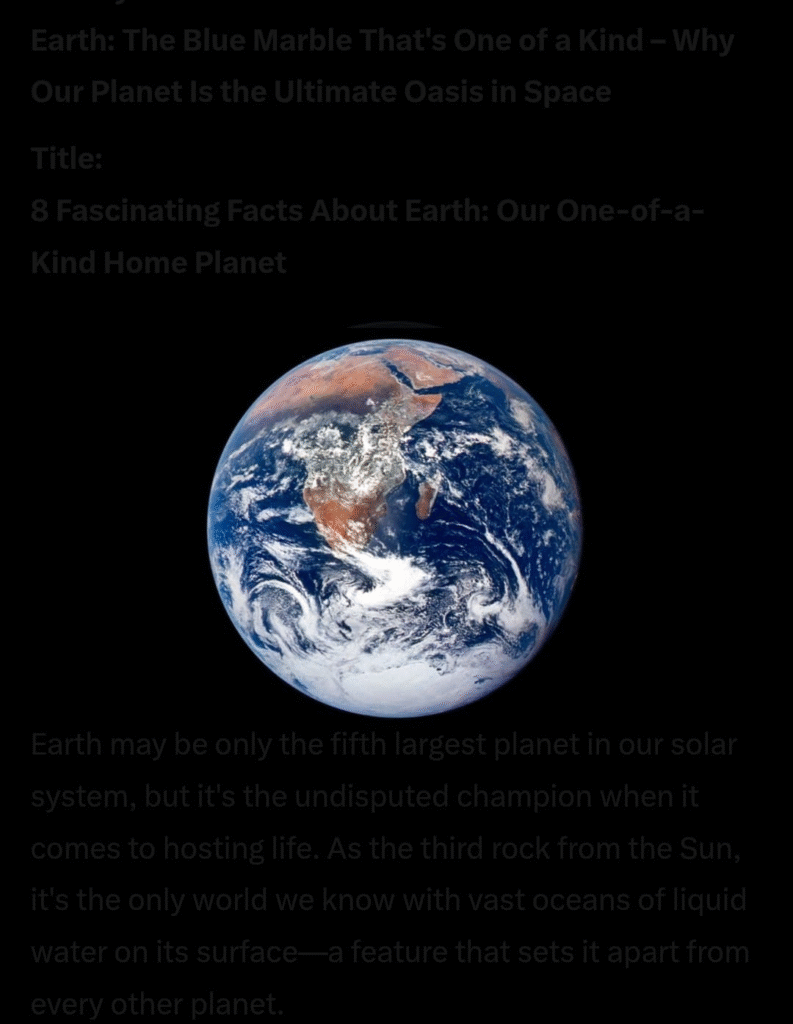
Earth may be only the fifth largest planet in our solar system, but it’s the undisputed champion when it comes to hosting life. As the third rock from the Sun, it’s the only world we know with vast oceans of liquid water on its surface-a feature that sets it apart from every other planet.
Just slightly larger than its scorching neighbor Venus, Earth reigns as the biggest of the four rocky, metallic inner planets (Mercury, Venus, Earth, and Mars). Yet what truly makes it extraordinary isn’t size-it’s the perfect conditions for abundance.
A Name Unlike Any Other
Unlike every other planet, whose English names derive from Greek or Roman gods (Jupiter, Mars, Venus, etc.), Earth’s name comes from Old English and Germanic roots. It simply means “the ground” or “the soil” a straightforward, down-to-earth label that’s about 1,000 years old.
The Cradle of Life
Earth boasts a hospitable temperature range and chemical mix that have nurtured life for billions of years. Liquid water has covered most of the planet for extended periods, providing the perfect starting point for life around 3.8 billion years ago in its ancient oceans. But these life-sustaining features are shifting due to ongoing climate change, reminding us how precious-and fragile—our world is.
Size, Distance, and Orbit
Earth’s equatorial diameter measures 7,926 miles (12,756 km), making it the largest terrestrial planet and fifth largest overall. It orbits the Sun at an average distance of 93 million miles (150 million km)-defining the “astronomical unit” (AU) used to measure distances across the solar system. Sunlight takes about eight minutes to reach us.
Our planet spins once every 23.9 hours and completes an orbit in 365.25 days, which is why we have leap years to sync calendars with reality. The 23.4-degree axial tilt creates our seasons: when one hemisphere tilts toward the Sun, it enjoys summer while the other experiences winter.
Our Loyal Moon
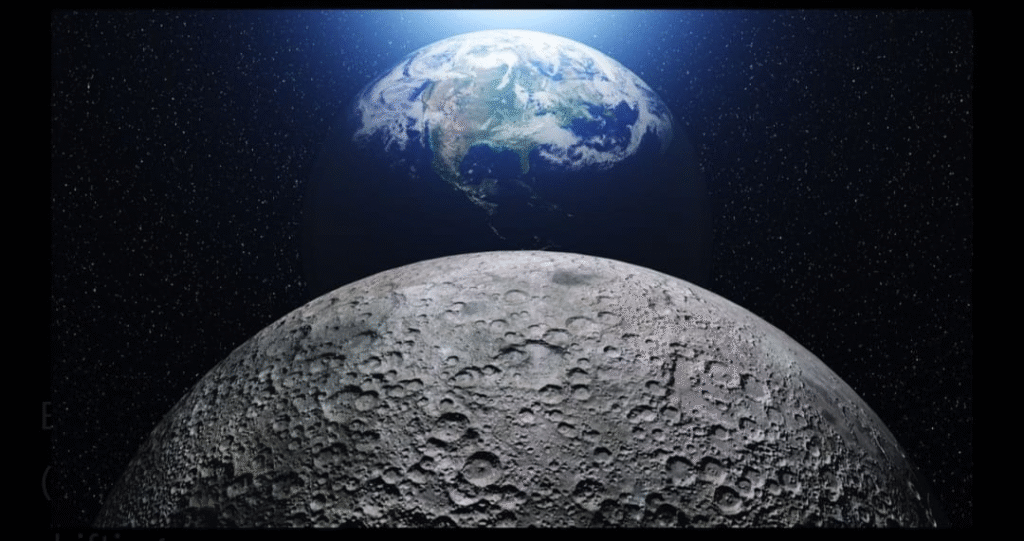
Earth is the only planet with a single natural moon-our familiar companion that brightens the night sky. The Moon stabilizes Earth’s tilt, helping keep climates relatively steady over millennia. It’s likely born from a massive ancient collision that blasted material from young Earth, which coalesced into our satellite.
With a radius of 1,080 miles (1,738 km), the Moon is the fifth largest moon in the solar system. On average, it’s 238,855 miles (384,400 km) away-enough space to fit about 30 Earths lined up between us.
Earth occasionally captures temporary “mini-moons” (asteroids) that orbit for months or years before drifting away.
No Rings, Just Reality
Unlike the gas giants, Earth has no rings.
How Earth Formed and What It’s Made Of
About 4.5 billion years ago, gravity gathered swirling gas and dust to form Earth as the third planet from the Sun. Like other terrestrial worlds, it has a dense core, rocky mantle, and crust.
The structure includes:
A solid inner core of iron and nickel (radius ~759 miles / 1,221 km, scorching at up to 9,800°F /5,400°C).A fluid outer core (~1,400 miles / 2,300 km thick).A thick, caramel-like mantle (~1,800 miles /2,900 km).A thin crust (averaging 19 miles / 30 km on land, just 3 miles / 5 km under oceans).
Dynamic Surface and Vast Oceans
Earth’s surface features volcanoes, mountains, valleys, and more, shaped by shifting tectonic plates that move at fingernail-growth speed-causing earthquakes, mountain-building, and more. Oceans cover ~71% of the surface, averaging 2.3 miles (3.6 km) deep and holding 97% of our water. Hidden underwater are most volcanoes and the planet’s longest mountain range.
Protective Atmosphere and Magnetic Shield
Our air is 78% nitrogen, 21% oxygen, and 1% other gases-ideal for life. It moderates climate, blocks harmful radiation, and vaporizes most incoming meteoroids (creating shooting stars).
The molten core and rapid spin generate a magnetic field that deflects solar wind into a teardrop shape, trapping particles that create dazzling auroras at the poles. The field flips polarity irregularly (about every 300,000 years on average), but these reversals pose no known threat to life.
8 Need-to-Know Things About Our Home Planet
- Measuring Up If the Sun were a front door, Earth would be a nickel.
- We’re On It – A rocky world with dynamic mountains, canyons, and mostly water-covered surface.
- Breathe Easy Perfect 78% nitrogen / 21% oxygen mix for life.
- Our Cosmic Companion – One stabilizing Moon.
- Ringless No rings here.
- Orbital Science – Spacecraft constantly study Earth as a whole system.
- Home, Sweet Home – The only known place with life as we know it.
- Protective Shield — Atmosphere burns up most meteoroids.
Earth isn’t just a planet—it’s the only home we’ve got. Its unique blend of water, air, stability, and life makes it truly irreplaceable.