

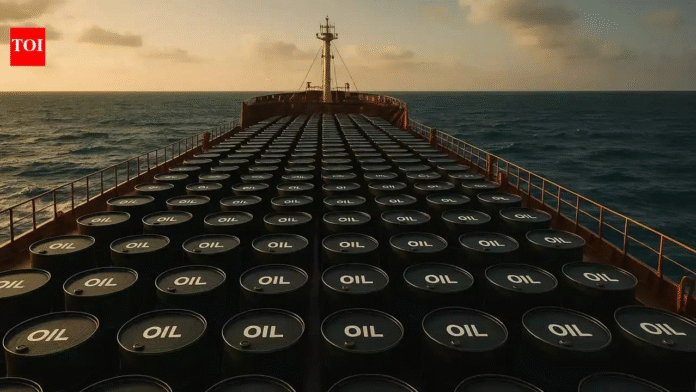
PC (The Times of India)
G7 Opts for Measured Response Amid Soaring Oil Prices Triggered by Middle East Conflict
G7 energy ministers, representing major economies including the United States, France, the United Kingdom, and others, have decided against an immediate release of strategic oil reserves. Instead, during their meeting on Tuesday, they requested the International Energy Agency (IEA) to conduct a comprehensive assessment of the current oil market situation and supply security before any coordinated action is taken. This cautious approach comes in the wake of extreme volatility in global energy markets, driven primarily by the ongoing conflict in the Middle East involving the US, Israel, and Iran. Oil prices surged to nearly four-year highs earlier in the week, briefly approaching or exceeding levels last seen in 2022, before dropping sharply by around 11% on Tuesday following
optimistic comments from U.S. President Donald Trump about a potential swift resolution to the war.
IEA to Convene Extraordinary Meeting for In-Depth Review
The IEA, which coordinates emergency oil stockpiles among its member countries (holding over 1.2 billion barrels in public reserves plus additional industry stocks), has responded by calling an extraordinary meeting of its member governments. This session aims to evaluate market conditions and determine whether releasing emergency stocks is necessary to address any critical supply shortages.
France’s Finance Minister Roland Lescure, whose country currently holds the G7 presidency, emphasized that while no release has been ordered yet, all G7 members-including the United States-stand ready to act decisively if the IEA’s findings indicate a severe disruption. He described the decision as a commitment to a coordinated, data-driven strategy rather than a hasty reaction.
U.S. Considers Measures to Secure Key Oil Transit Routes
Adding to efforts to stabilize supplies, the United States is exploring options such as providing naval escorts for commercial vessels transiting the Strait of Hormuz-a critical chokepoint through which roughly one-fifth of global oil flows and potentially backstopping war risk insurance for tankers. These steps are intended to reassure shippers, encourage the resumption of normal traffic, and prevent prolonged disruptions amid heightened regional tensions.
Why the Decision Matters: Preserving the Emergency Safety Net
Strategic oil reserves are designed as a last-resort tool for major supply crises, not routine price fluctuations. By deferring action and prioritizing the IEA’s expert analysis, the G7 signals a preference for evidence-based intervention to calm markets without prematurely depleting these vital buffers. This measured stance reflects broader concerns over inflation risks and economic stability, especially as the conflict has already strained global energy flows and forced some producers to curtail output due to export constraints.