

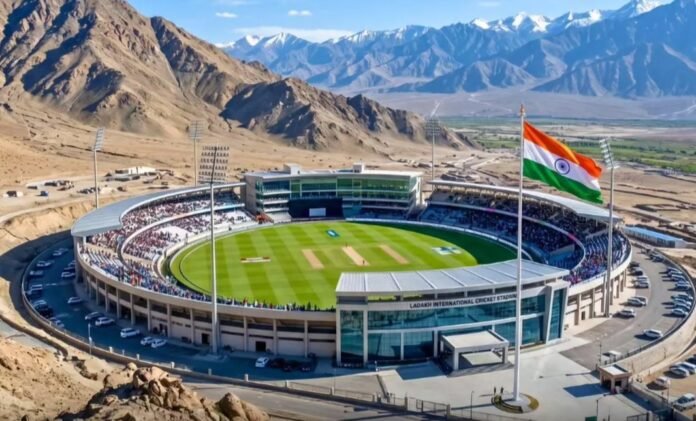
India is planning a landmark cricket stadium in Thiksey, near Leh in Ladakh, at an altitude of approximately 11,800 feet (3,600 metres) above sea level. If completed as proposed, the venue could become the world’s highest cricket stadium, putting Ladakh on the international sporting map and creating a new destination for sports tourism.
The project, tentatively referred to as the Ranbirpur Cricket Stadium, is currently at the planning stage. The estimated cost has been reported at around ₹100 crore to ₹116 crore, while concept designs have explored a venue with a capacity of up to 40,000 spectators. A Detailed Project Report (DPR) is being prepared as part of the planning process.
The proposed stadium is expected to serve more than just as a cricket venue. One of its major objectives is to promote sports tourism in Ladakh, a region already known for its dramatic landscapes, high-altitude adventure activities and unique cultural heritage. A major international-standard cricket facility could attract cricket enthusiasts, sporting events and visitors from different parts of India and abroad.
The project could also provide opportunities for local sporting talent. Young cricketers from Ladakh currently face geographical and climatic challenges in accessing professional-level facilities. A modern stadium and associated training infrastructure could provide them with better opportunities to practise, compete and potentially pursue cricket as a career.
However, building a large stadium at such an extreme altitude presents considerable challenges. At around 3,600 metres above sea level, the air contains significantly less oxygen than at sea level. Players and spectators unfamiliar with high-altitude conditions could experience fatigue, breathlessness or altitude sickness. Proper acclimatisation, medical facilities and carefully designed infrastructure would therefore be essential for the safe operation of the venue.
The region’s climate adds another layer of complexity. Ladakh experiences long, harsh winters, freezing temperatures and difficult weather conditions. Construction would require specialised engineering, while maintaining the stadium and its facilities could involve considerably higher costs than a conventional venue at lower altitudes. Water availability, transport, heating, drainage and other essential services would also need careful planning.
The proposed project has also generated discussion about development priorities in the region. While supporters see the stadium as an opportunity to boost tourism, employment and sports infrastructure, questions have been raised about whether public investment should first address basic infrastructure needs such as roads, water supply and local connectivity. Balancing large-scale development with the everyday requirements of local communities will be an important consideration.
Environmental concerns are equally significant in a fragile high-altitude ecosystem like Ladakh. Any large construction project would need to account for the region’s limited water resources, sensitive landscape and ecological conditions. Sustainable construction and responsible management would be crucial if the stadium is to become a long-term asset rather than an additional burden on the local environment.
If realised, the project would represent an unusual meeting point between sport, tourism, architecture and high-altitude development. A cricket match surrounded by the mountains of Ladakh could offer a sporting experience unlike any other, while potentially creating new opportunities for local athletes and businesses.
For now, the stadium remains a proposal in its planning and DPR stage, and details such as its final design, capacity, construction timeline and eventual name may change. But the very idea of taking cricket to nearly 12,000 feet has already captured attention.
Should the project move ahead, Ladakh could add another distinction to its long list of high-altitude achievements: becoming home to one of the most extraordinary cricket grounds in the world.