

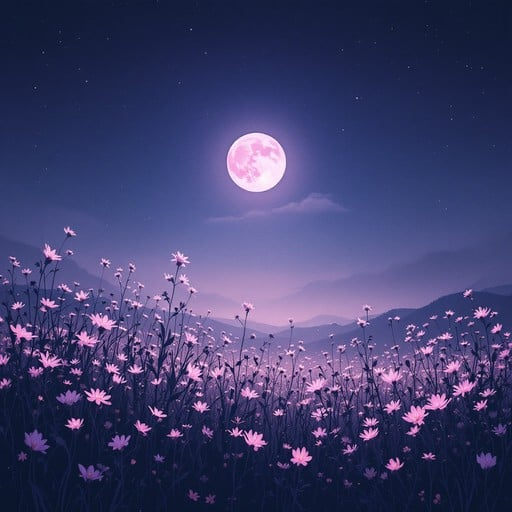
PC(Stockcake)
Step outside on Wednesday, April 1, 2026 – ! The first full moon of spring, known as the Pink Moon, will rise and reach its peak at 10:12 p.m. EDT (around 3:12 a.m. BST on April 2). While it won’t actually glow pink, this luminous event marks renewal, growth, and the vibrant awakening of nature after winter. The name “Pink Moon” comes from the early blooming of pink moss phlox (also called creeping phlox), a wildflower that signals the arrival of spring. It is also the Paschal Moon in 2026, which helps determine the date of Easter (falling on Sunday, April 5 this year).
When and How to Watch the Pink Moon. The moon will appear full, bright, and impressively large on the nights surrounding April 1 – from Tuesday evening through Thursday morning. For the best view head to an open area away from city lights. Look toward the eastern horizon just after sunset. As it rises, the Moon illusion will make it look extra large and often take on a beautiful golden or orange hue. It will stay bright and striking throughout the night, offering perfect photo opportunities. Other Traditional Names for April’s Full Moon. Different cultures have their own poetic names for this moon, reflecting the season’s changes Breaking Ice Moon (Algonquin), Budding Moon of Plants and Shrubs (Tlingit), Moon of the Red Grass Appearing (Oglala) Other names include Seed Moon, Awakening Moon, and Budding Moon.
These names celebrate the thawing of rivers, sprouting plants, and the return of life to the landscape.
April Moon Phases at a Glance Full Moon (Pink Moon): April 1 at 10:12 p.m. EDT. Last Quarter Moon: April 10 at 12:51 a.m.
New Moon: April 17 at 7:52 a.m. First Quarter Moon: April 23 at 10:32 p.m.
Celestial Bonus: The Lyrids Meteor Shower. April doesn’t stop at the full moon! Later in the month, the Lyrids meteor shower will light up the skies. This is one of the oldest known meteor showers, observed for over 2,700 years. It is caused by debris from Comet Thatcher, which orbits the Sun every 415 years. Active period: April 15 to 29, 2026 Peak Night of April 22 into the early morning of April 23 Best viewing After midnight until dawn, under dark skies (the moon will be favorable this year, with only a slim crescent interfering).
Expect 10-15 meteors per hour under ideal conditions, sometimes with bright fireballs and persistent glowing trails. Some years bring surprise surges of up to 100 meteors per hour. No telescope or binoculars needed – just a comfortable blanket, a dark location, and patience while looking toward the constellation Lyra. The Lyrids are visible worldwide, though observers in the Northern Hemisphere will see more activity. Looking Ahead: May’s Flower Moon. The next full moon in May 2026 will be the Flower Moon on May 1, symbolizing the burst of blooms across the landscape. It is also known as the Milk Moon, Mothers’ Moon, Hare Moon, and Planting Moon in various traditions.
April 2026 is shaping up to be a fantastic month for skywatchers – starting with a bright Pink Moon on April Fools’ Day and ending with a classic meteor shower. Whether you’re a casual stargazer or a dedicated astronomer, grab a blanket, head outdoors, and enjoy the wonders of spring in the night sky.