

PC( Instagram, Facebook)
As the sun sets over New Zealand’s ancient rainforests, something magical happens – the forest floor and decaying logs begin to shimmer with an ethereal blue-green light, turning the woods into a starry galaxy right beneath your feet. This breathtaking phenomenon is created by tiny bioluminescent organisms: the famous glowworms and rare glowing “ghost mushrooms.”
Stepping into a Living Galaxy: New Zealand’s Bioluminescent Forests
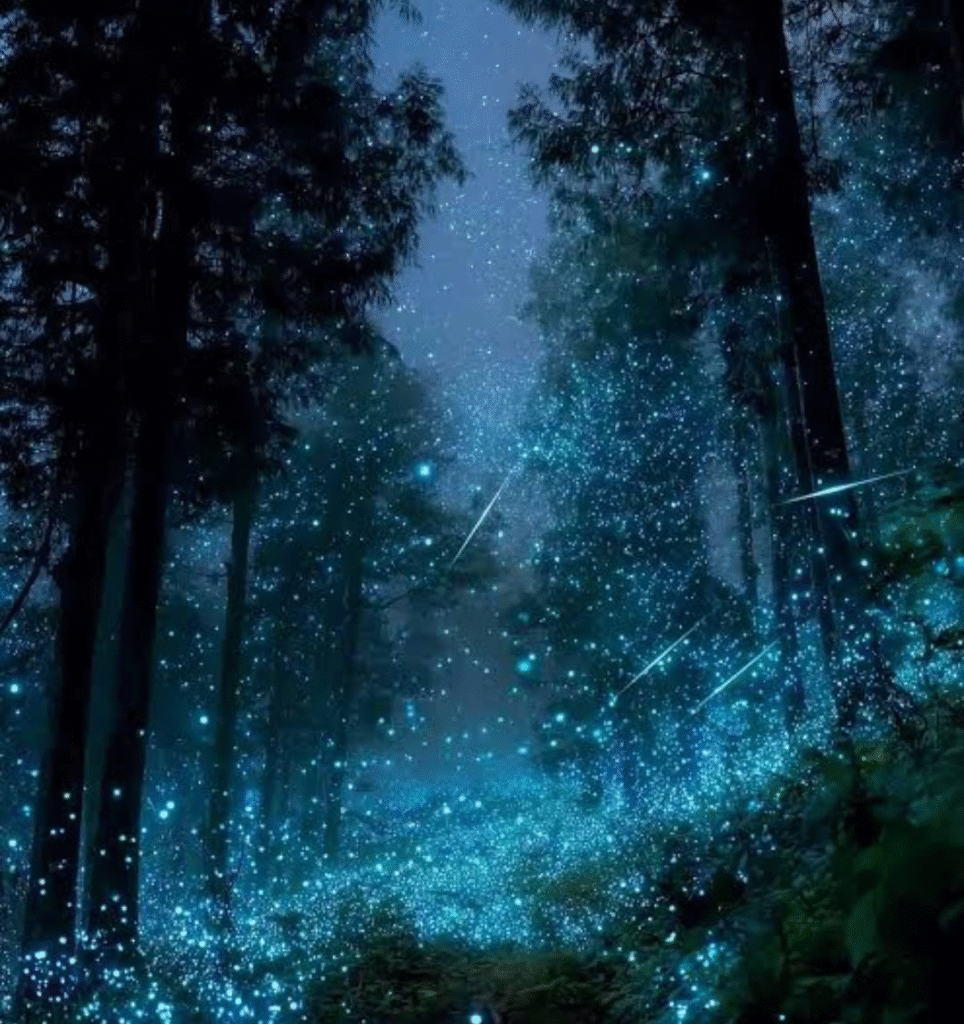
When darkness falls in New Zealand’s damp native forests, a surreal transformation occurs. What looks like an ordinary woodland by day reveals a hidden universe of soft, glowing lights. Thousands of tiny blue-green specks illuminate the ground, tree roots, and fallen logs, making it feel as if you’ve stepped into a real-life galaxy or a fairytale scene from Avatar.
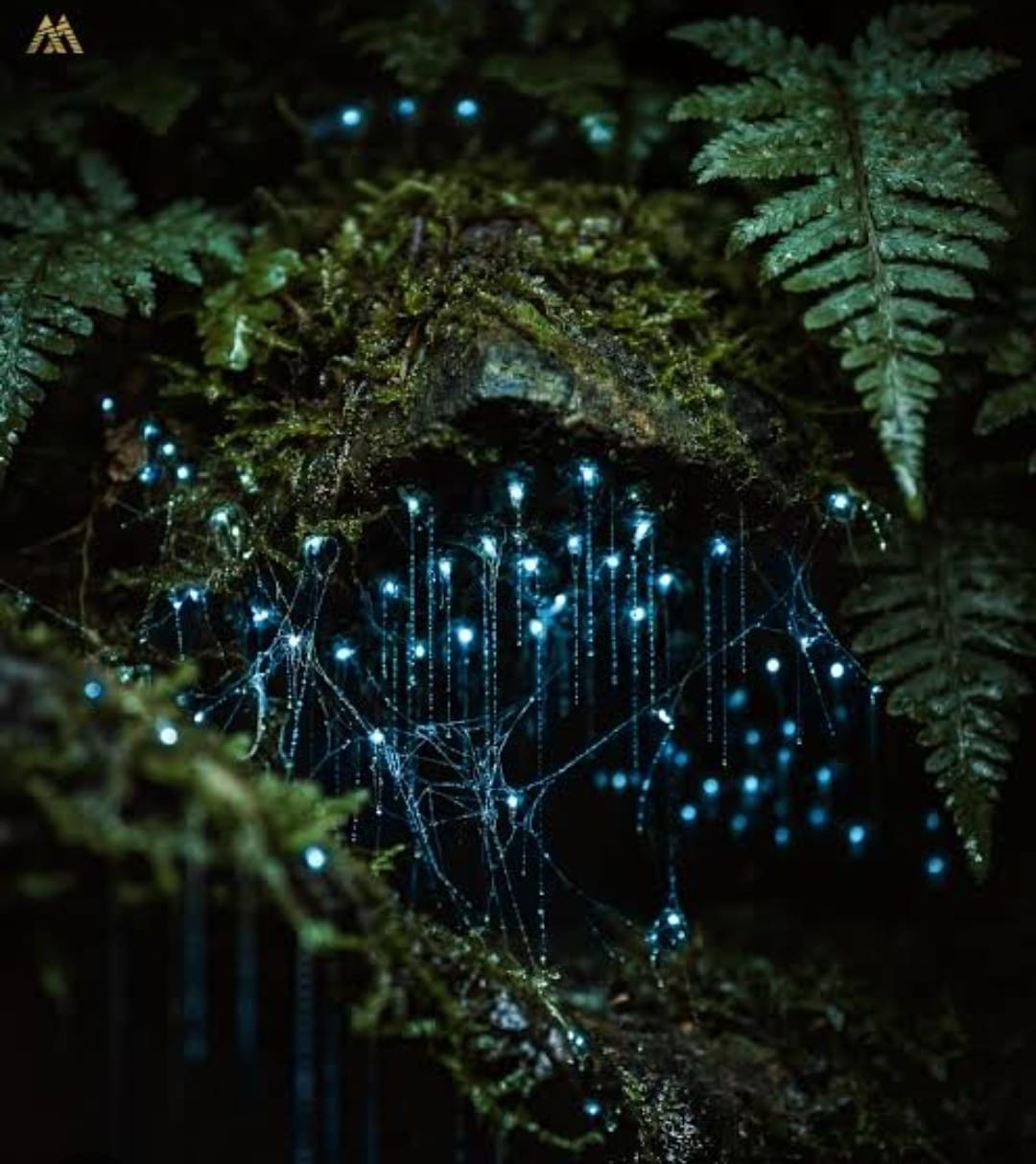
This enchanting display comes from two remarkable sources of natural light: Glowworms – Nature’s Predatory Lanterns New Zealand’s iconic glowworms (Arachnocampa luminosa) are not worms at all – they are the larvae of a fungus gnat unique to New Zealand (and parts of Australia). These carnivorous larvae cling to cave ceilings, mossy banks, and damp forest overhangs. They produce a steady blue-green glow from their tails through a chemical reaction involving luciferin and luciferase. The light serves a deadly purpose: it acts as a lure. Hanging sticky silk threads below them like fishing lines, the glowworms attract flying insects, which become trapped and eaten. In dense colonies, the combined glow creates the famous “starry sky” effect seen in caves and some forest gullies. Outdoor glowworms typically begin shining shortly after sunset and continue through the night, especially in humid conditions after rain.
- Ghost Mushrooms – Faint but Magical Forest Lights
Another contributor to the forest glow is bioluminescent fungi, often called “ghost mushrooms.” Species such as Mycena roseoflava, other Mycena varieties, and Armillaria novae-zelandiae (honey mushroom) emit a soft green or blue-green light from their stems, veils, or mycelium. These fungi thrive on decaying wood in moist rainforests. Their glow is usually fainter than that of glowworms and is best appreciated with the naked eye in complete darkness or captured dramatically with long-exposure photography. Scientists believe the light may help attract insects that then spread the fungi’s spores. New Zealand is home to several species of these glowing fungi, with discoveries continuing in places like Stewart Island and damp forests on both the North and South Islands. The glow is most visible after rain, when the fungi are actively fruiting.
Why New Zealand Glows
Bioluminescence on land is rare compared to the ocean, but New Zealand’s unique combination of ancient forests, high humidity, and isolated evolution has created perfect conditions for these light-producing organisms. While glowworms are famous in famous caves like Waitomo, the same magic can appear in open forests, gorges, and mossy trails turning an evening walk into an unforgettable experience.
Where to Experience the Magic
Waitomo Glowworm Caves (North Island) The world-famous underground galaxy.
Ruakuri Bush Walk and other forest tracks near Free night walks with glowworms in Waitomo the wild. Damp native forests on the West Coast, Fiordland, or Stewart Island – Prime spots for both glowworms and bioluminescent fungi.
Mossy gullies and riverbanks – Look for faint glows on decaying logs and tree bases after dark. Tips for Visitors go on a moonless or cloudy night for the best contrast. Use a red-filtered torch (or cover your phone light) to preserve your night vision – white light spoils the glow. Never touch or disturb the organisms. Join a guided night walk for safety and expert insights.
Moments like these remind us how extraordinary the natural world remains. In New Zealand, when the sun disappears, the forest quietly begins to shine offering one of the planet’s most magical nocturnal spectacles.