

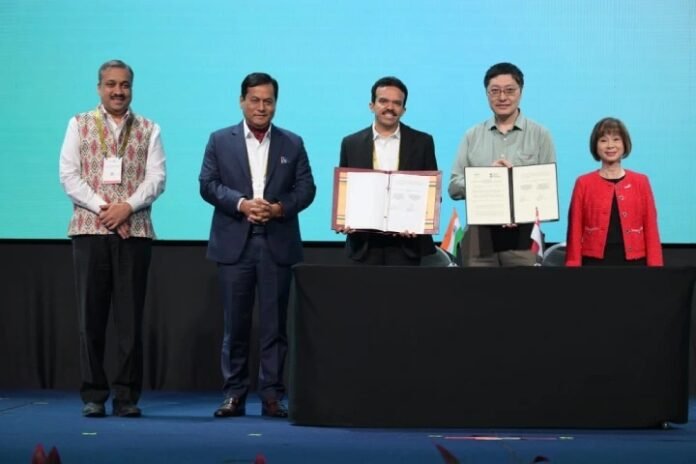
In a landmark move toward sustainable and technologically advanced maritime operations, India and Singapore signed a Letter of Intent (LoI) on March 25, 2025, to collaborate on the Green and Digital Shipping Corridor (GDSC). The signing took place during Singapore Maritime Week, an event that brings together global maritime leaders to discuss the future of the industry. This partnership aims to accelerate maritime digitalisation and decarbonisation, setting a new precedent for sustainability in global shipping.
Background: Addressing Environmental Challenges in Shipping
The GDSC initiative was introduced to tackle the growing environmental concerns in the shipping sector. With global trade heavily reliant on maritime transport, reducing greenhouse gas (GHG) emissions has become a priority. This corridor will facilitate the development and adoption of zero or near-zero emission technologies, making shipping more sustainable while maintaining efficiency.
Key Objectives of the India-Singapore Partnership
The primary goals of the GDSC collaboration include:
- Advancing maritime digitalisation – Implementing cutting-edge digital tools for streamlined shipping operations.
- Identifying key stakeholders – Encouraging cooperation among industry leaders, researchers, and policymakers.
- Accelerating the adoption of green technologies – Promoting the use of low-carbon and alternative fuels.
- Formalising long-term cooperation – Paving the way for a Memorandum of Understanding (MoU) to solidify commitments.
Significance of the Agreement
This partnership is strategically significant for both India and Singapore. India, with its expertise in information technology and green fuel production, brings innovative solutions to the table. Singapore, as a leading maritime hub, offers state-of-the-art port infrastructure and regulatory frameworks. By working together, both nations aim to set global benchmarks in maritime sustainability and operational efficiency.
Impact on the Global Maritime Industry
The GDSC initiative is expected to drive technological and environmental advancements in the maritime sector by:
- Enhancing digital integration – Facilitating seamless exchange of shipping data to optimise trade routes.
- Reducing carbon footprints – Encouraging the adoption of cleaner fuel alternatives and energy-efficient technologies.
- Strengthening maritime resilience – Building an ecosystem that is better prepared for climate-related challenges.
Expanding India’s Maritime Prospects
Beyond shipping sustainability, this agreement also unlocks new opportunities for India’s maritime sector. One key area of focus is cruise tourism. India is keen on adopting successful models from Singapore to enhance its cruise tourism industry. Potential locations for new cruise terminals include Goa, Mumbai, and Chennai, which could position India as a major player in the global cruise tourism market.
Singapore Maritime Week: A Platform for Global Collaboration
The signing of the LoI took place during Singapore Maritime Week, an internationally recognized event that attracts thousands of industry professionals. This forum showcases the latest developments in maritime technology, fostering dialogue and collaboration among policymakers, researchers, and business leaders.
Multi-Sectoral Participation and Stakeholders
The GDSC initiative is supported by over 28 stakeholders across diverse sectors, including maritime, energy, and finance. These stakeholders play a crucial role in ensuring the success of the collaboration by:
- Providing financial investments for green technology adoption
- Developing policies that support eco-friendly shipping practices
- Researching and implementing innovative digital shipping solutions
Conclusion: A Step Towards a Sustainable Maritime Future
The India-Singapore Green and Digital Shipping Corridor represents a transformational step in maritime history. By combining technological expertise, regulatory cooperation, and environmental consciousness, this initiative sets the stage for a more sustainable and digitally advanced maritime sector. As the collaboration progresses, it will serve as a blueprint for other nations seeking to modernize and decarbonize their shipping industries.