

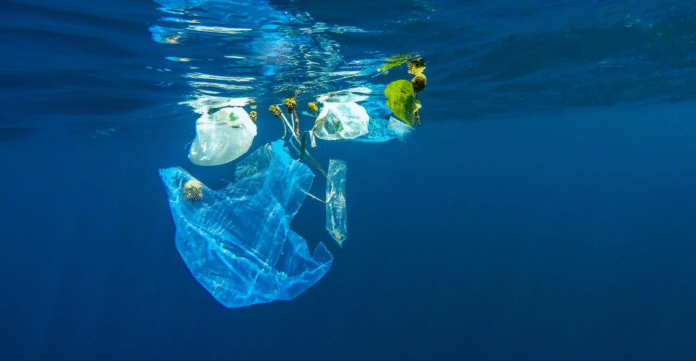
PC(Earth.com, DD India)
In a major breakthrough for tackling the global plastic pollution crisis, researchers from Japan’s RIKEN Center for Emergent Matter Science and the University of Tokyo have created a durable, plant-based “supramolecular” plastic that completely dissolves in seawater in just 2-3 hours – without leaving behind any harmful microplastics.
The innovative material, detailed in research published in 2025, is made from abundant plant-derived cellulose combined with safe, food-grade additives like choline chloride or similar ionic compounds held together by reversible “salt bridges.” When exposed to the electrolytes in saltwater, these bonds break apart rapidly, returning the plastic to its original harmless components, which can then be metabolized by natural bacteria.
Key Features of the New Material
Ultra-Fast Degradation: A small piece of the plastic vanishes in stirred saltwater within about an hour, with full dissolution typically occurring in 2-3 hours. In soil, where salt is also present, a 5 cm piece breaks down in over 200 hours (or around 10 days in some tests), enriching the soil with nitrogen and phosphorus nutrients. Zero Microplastics unlike conventional or even many biodegradable plastics, it leaves no persistent fragments that can harm marine life or enter the food chain.Strong and Versatile the material matches the strength and mechanical properties of traditional petroleum-based plastics. It can be made hard or flexible (stretchable to several times its length), transparent, and easily processed. It is also non-toxic, non-flammable, and produces no carbon dioxide emissions during use.
Recyclable and Sustainable the plastic supports closed-loop recycling, with components recoverable for reuse. It can be reshaped at moderate temperatures and is fully metabolizable under biological conditions.
Project leader Takuzo Aida, a materials scientist at RIKEN and Distinguished Professor at the University of Tokyo, demonstrated the material in a lab in Wako city near Tokyo. A thin sheet or bag placed in artificial seawater disappeared completely after gentle stirring, highlighting its potential to prevent ocean waste. “Children cannot choose the planet they will live on. It is our duty as scientists to ensure that we leave them with the best possible environment,” Aida said.
Addressing a Growing Crisis
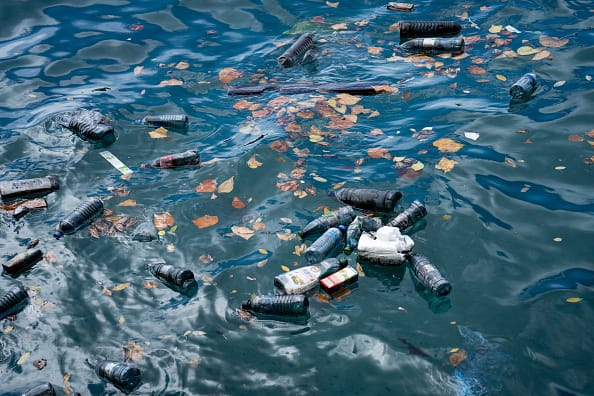
Plastic pollution is projected to triple by 2040, with the UN Environment Programme estimating that 23-37 million metric tons of plastic waste enter the world’s oceans each year. Traditional biodegradable plastics often break down too slowly, still contributing to microplastic accumulation that threatens wildlife and ecosystems. This new supramolecular approach uses non-covalent chemistry to create a stable plastic for everyday use that “unlocks” and disassembles only in the presence of salt – offering a smart, targeted solution for marine environments.
Potential Applications and Next Steps
The material shows strong promise for replacing conventional plastics in packaging, disposable items, and other single-use applications. While not yet commercialized, the research has already drawn significant interest from the packaging industry. The team is now focusing on optimizing coating methods to ensure the plastic performs like regular materials during its useful life, while retaining its rapid seawater-degradability. Early versions have also demonstrated flame retardancy and heat resistance in some formulations. This development represents a hopeful step toward sustainable materials that protect both oceans and land without compromising performance. As global awareness grows – highlighted by events like World Environment Day – innovations like this could play a key role in reducing humanity’s plastic footprint.