

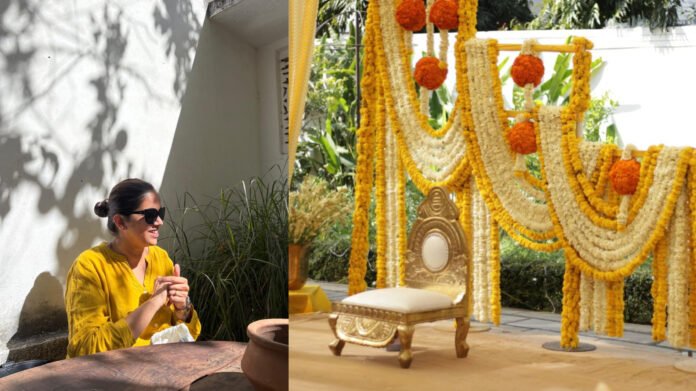
In Conversation with Wedding Planner Vidushi Kothari
Indian weddings have always been more than celebrations. They are emotion, ritual, theatre, memory, family, and identity woven into days of colour and chaos. Yet over the last decade, the landscape of Indian weddings has transformed dramatically. Marigold-draped mandaps now stand beside pastel floral tunnels inspired by Pinterest boards. Sacred rituals coexist with drone shots and cinematic reels. Couples today are balancing heritage with individuality, tradition with global aesthetics, and emotion with performance.
To understand this fascinating evolution, we spoke with wedding planner Vidushi Kothari, who has spent years navigating the beautiful contradictions of modern Indian weddings. From conversations about social media pressure and destination wedding culture to the enduring magic of Rajnigandha and marigolds, she reflects on how weddings are changing, and what still remains timeless.
“Pastels feel curated, but traditional colours carried meaning.”
One of the most visible shifts in Indian weddings today is the move from vibrant reds, yellows, and oranges towards muted pastel palettes and minimalist décor. According to Vidushi, this transformation is deeply tied to global exposure.
“Couples today are consuming global content constantly,” she explains. “They’re looking at European weddings, Bali aesthetics, editorial shoots, and naturally those visuals influence their taste.”
Yet she believes something meaningful is sometimes lost in this transition. Traditional Indian wedding colours were never merely decorative, they carried symbolism and spiritual significance. Marigold orange, turmeric yellow, and bridal red were deeply connected to celebration, prosperity, fertility, and devotion.
“Pastels are beautiful,” she says, “but often they’re chosen for how they’ll look in photographs rather than what they represent.”
Still, she doesn’t see the shift entirely negatively. Some of the most striking weddings, she notes, are the ones that successfully blend contemporary aesthetics with traditional elements rather than replacing one with the other.
Are weddings becoming more about Instagram than emotion?
Social media has undeniably changed the way weddings are imagined and experienced. Pinterest boards, Instagram saves, cinematic reels, and celebrity weddings have become reference points for couples planning their big day.
Vidushi admits that for many weddings today, visuals play a dominant role.
“I’ve had couples discussing camera angles during pheras,” she says with a laugh. “Sometimes the reel becomes more important than the ritual.”
However, she is careful not to dismiss modern couples entirely. Many are deeply emotional and intentional about preserving traditions. Some want family recipes included in ceremonies, ancestral jewellery incorporated into bridal looks, or rituals explained in depth before the wedding begins.
“The weddings I cherish most,” she says, “are the ones where couples tell me, make it beautiful for us, not for the grid.”
Ironically, she observes, those emotionally authentic weddings often produce the most memorable photographs as well.
Pinterest inspiration versus practical reality
According to Vidushi, almost every client meeting today begins with a Pinterest board or saved Instagram folder.
“These platforms have expanded people’s imagination,” she says. “Couples arrive with a visual vocabulary they didn’t have earlier.”
But the challenge lies in the gap between aspiration and practicality. Pinterest rarely reveals budgets, logistics, or scale. Couples often fall in love with extravagant floral installations or celebrity-style décor without realising the enormous cost behind them.
“A floral ceiling from a luxury destination wedding may cost as much as an entire middle-class wedding,” she explains.
This is where her role extends beyond décor planning.
“I become part designer, part translator, part dream editor,” she says. “The goal is to recreate the feeling, not necessarily the exact image.”
Are Indian weddings becoming westernised?
The growing popularity of cocktail parties, white floral aesthetics, candlelit receptions, and sit-down dinners often raises concerns about Indian weddings becoming increasingly westernised. But Vidushi believes the reality is more nuanced.
“Yes and no,” she says thoughtfully.
While international aesthetics certainly influence presentation, she sees a simultaneous revival of pride in Indian heritage. Many couples today actively seek regional crafts, temple-inspired décor, handloom textiles, and community-specific rituals.
“What’s really happening,” she explains, “is not westernisation but globalisation of production values.”
Couples want the sophistication and seamless execution associated with international events, while still preserving the emotional and cultural soul of Indian ceremonies.
And when that balance works, she believes the results are extraordinary.
The fading significance of traditional elements
Marigolds, Rajnigandha, Madhubani art, Warli motifs, and classic mandaps continue appearing in weddings, but often in transformed forms.
Vidushi believes traditional Indian elements have not disappeared, but have frequently been reduced to aesthetics detached from their deeper meaning.
“Marigolds become trendy because a celebrity wedding used them,” she says, “not because people understand their sacred significance.”
Similarly, regional art is often printed as decorative backdrops rather than commissioned from artisans who have preserved these traditions for generations.
She finds this bittersweet.
“These elements are surviving,” she says, “but sometimes without context.”
Her approach, therefore, is to educate clients about the stories and symbolism behind traditions. Once people understand their meaning, she observes, they usually become far more invested in preserving them authentically.
The biggest wedding battle: parents, trends, or budgets?
Wedding planning, she admits, is rarely just about flowers and venues. Behind every décor decision lies a complex web of family expectations, finances, and generational differences.
“If I had to choose one central conflict,” she says, “it’s parents versus the couple, and budget becomes the battlefield.”
Tradition versus trend is often only the visible layer. Beneath it lies a deeper question of control and ownership. Parents funding the wedding naturally carry expectations shaped by social perception and community norms, while couples want the wedding to reflect their own personalities and priorities.
“I often feel more like a diplomat than a decorator,” she jokes.
Her advice is practical: divide decision-making early, and give parents meaningful ownership of certain functions or rituals to maintain harmony throughout the process.
The pressure of celebrity weddings and destination culture
Lavish celebrity weddings and destination celebrations have fundamentally altered expectations across social classes. Families now compare themselves not only to relatives, but to highly curated internet fantasies backed by enormous budgets.
“The pressure is real,” Vidushi says.
Destination weddings, especially, have created a new hierarchy of status and extravagance. Families often feel compelled to match impossible standards, sometimes stretching themselves financially in unhealthy ways.
“I’ve seen people take loans for weddings that burden them for years,” she says.
For her, one truth remains important: “A beautiful wedding does not require beautiful debt.”
Personalisation over perfection
Despite the overwhelming influence of social media aesthetics, Vidushi believes couples eventually realise they crave meaning more than perfection.
“Most couples start by wanting the Pinterest wedding,” she says. “Then somewhere during planning, they discover they actually want something personal.”
That transformation, she believes, creates the most memorable weddings.
A grandmother’s jewellery, a handwritten letter, a meaningful song, a regional dish, or a reimagined family ritual often leaves a stronger emotional impact than extravagant centrepieces or elaborate sets.
“Guests never remember the centrepieces,” she says. “They remember the moment that felt true.”
Weddings designed for cameras or guests?
The rise of wedding photography and cinematic videography has undeniably altered event planning. Vidushi estimates that modern wedding design is now often “60% camera readiness and 40% guest experience.”
She recalls weddings where floral installations blocked entrances, buffet layouts were designed for drone shots rather than comfort, and dim lighting created stunning photographs but made navigation difficult for elderly guests.
For her, good wedding design must first prioritise human experience.
“If guests leave saying they felt looked after,” she says, “that matters far more than views online.”
The timeless beauty of marigold and Rajnigandha
When asked about one Indian wedding aesthetic that should never disappear, Vidushi answers instantly: marigold and Rajnigandha.
Not as fleeting trends, she insists, but in their truest ceremonial form.
“The marigold is humble and magnificent at once,” she says. “And Rajnigandha has a fragrance that stays in your memory forever.”
For her, these flowers represent continuity, generations of love, prayer, and celebration woven into Indian weddings over centuries.
“They smell like every Indian wedding that has ever happened,” she says softly.
The post-pandemic shift towards intimate luxury
The pandemic years changed the wedding industry profoundly. Forced restrictions on guest lists unexpectedly introduced people to a different idea of luxury~ intimacy.
“People rediscovered the beauty of smaller weddings,” Vidushi says.
Without hundreds of obligatory guests, couples found themselves spending more quality time with loved ones and investing more thoughtfully in food, music, hospitality, and detail.
Luxury shifted from scale to experience.
“A wedding where the bride knows every person in the room,” she says, “feels deeply special.”
So where are Indian weddings headed?
Vidushi believes the future lies not in choosing between tradition and modernity, but in embracing both confidently.
Many couples who married during the pandemic now say they would not change a thing.
The future of Indian weddings
Today’s couples are globally exposed yet increasingly curious about their own roots. They are researching rituals, rediscovering regional crafts, and appreciating traditional art forms while simultaneously embracing international aesthetics and contemporary design.
“The future Indian wedding,” she says, “will be deeply rooted and fearlessly modern.”
A Carnatic musician at the mehendi. A jazz quartet at the reception. Indigenous craftsmanship paired with cutting-edge lighting. Temple-inspired architecture alongside contemporary styling.
“That,” she believes, “is sophistication.”
And perhaps that is what modern Indian weddings truly are today, not a rejection of tradition, but an ongoing conversation between centuries and scrolls, rituals and reels, memory and modernity. Chaotic, extravagant, emotional, performative, sacred, and still, somehow, unmistakably full of love.