

PC:( Webduniya)
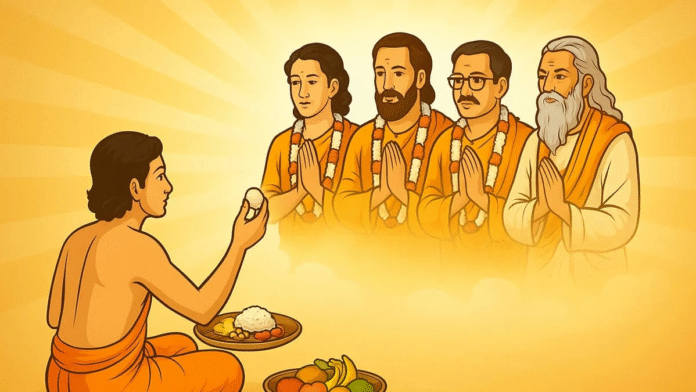
Shraddha, also known as Pitru Paksha, is a significant Hindu ritual dedicated to honoring and appeasing the souls of departed ancestors. Observed from the full moon day (Purnima) of the Bhadrapada month to the new moon day (Amavasya) of the Ashwin month, this 16-day period holds immense spiritual importance in Hindu tradition. During this time, families perform rituals to express gratitude, offer food, water, and other essentials, and seek blessings from their forefathers. The practice is rooted in the belief that ancestors visit the earthly realm during Pitru Paksha, accepting offerings and bestowing blessings on their descendants.
The Meaning and Purpose of Shraddha
The Sanskrit word Shraddha embodies the essence of faith, trust, or devotion, but in its ritualistic context, it refers to the formal act of paying homage to departed ancestors. This significant practice, observed in Hinduism, Buddhism, and Jainism, aims to honor forefathers, seek their blessings, and ensure the peaceful journey of their souls in the afterlife. Shraddha is a deeply spiritual tradition that reflects gratitude and reverence for those who have shaped one’s lineage, fostering a connection between the living and the departed.
Rituals of Pitru Paksha: Nourishing Ancestral Souls
During Pitru Paksha, a 16-day period dedicated to ancestors, Shraddha rituals involve offering food, water, and prayers to appease and nourish the souls of pitaras (ancestors), believed to reside in other realms after death. These rituals, performed with devotion, facilitate the ancestors’ journey toward higher realms or moksha (liberation) while expressing gratitude for their legacy. Practices like tarpan (offering water) and pindadan (offering rice balls) sustain the subtle forms of ancestors, ensuring their peaceful transition and fulfilling the sacred debt owed to those who came before. By seeking blessings for the family’s prosperity and well-being, Shraddha strengthens the eternal bond between generations
The Historical Roots of Shraddha
The tradition of Shraddha finds its origins in ancient texts, particularly the Mahabharata. According to the Anushasana Parva of the Mahabharata, the concept of Shraddha was established during this era. Sage Atri and Maharishi Nimi played pivotal roles in shaping this ritual. Legend has it that Maharishi Nimi, grieving the loss of his son, was the first to perform Shraddha under the guidance of Sage Atri. This act was aimed at invoking and honoring ancestors, ensuring their peace and blessings. The ritual underscores the importance of familial bonds and the sacred duty of descendants to honor their lineage.
The Legend of Karna: A Lesson in Ancestral Reverence
A popular tale associated with Pitru Paksha revolves around Karna, a prominent figure from the Mahabharata. After his death, when Karna’s soul reached heaven, he was offered gold and jewels instead of food. Perplexed, he questioned Lord Indra, who explained that while Karna had generously donated gold during his lifetime, he had never offered food to his ancestors. Unaware of his ancestral lineage, Karna had not performed Shraddha. To rectify this, Indra granted Karna 16 days to return to Earth, during which he performed Shraddha, offering food and water to his ancestors through tarpan (ritual offerings). This period came to be known as Pitru Paksha, symbolizing the importance of honoring one’s forefathers.
The Spiritual Essence of Pitru Paksha
Pitru Paksha is a deeply spiritual practice aimed at ensuring the peace and salvation of departed souls. Hindus believe that during these 16 days, ancestors descend to the earthly plane to receive offerings from their descendants. By performing Shraddha rituals, which include offering food, water, and donations, families express their devotion and gratitude. These acts are believed to satisfy the ancestors, who, in turn, bless their families with prosperity, health, and happiness. The ritual also reinforces the cultural value of filial duty, emphasizing the eternal bond between generations.
A Tradition of Gratitude and Blessings
Shraddha or Pitru Paksha is more than a religious observance; it is a heartfelt expression of respect and gratitude toward one’s ancestors. Through rituals rooted in ancient scriptures and enriched by stories like Karna’s, this tradition highlights the importance of remembering and honoring those who came before us. As families come together to perform these sacred rites, they not only seek the spiritual well-being of their ancestors but also strengthen the bonds of love and duty that connect the past, present, and future.