

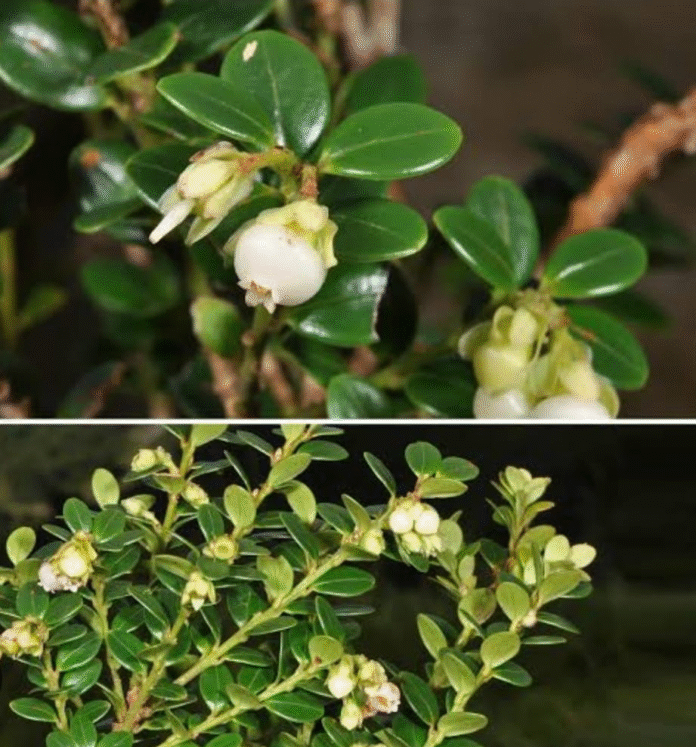
PC ( Facebook)
Scientists from Botanical Survey of India locate endemic herb in Lohit district, first recorded by William Griffith in 1836.Itanagar, March 2026: In a remarkable botanical breakthrough, a team from the Botanical Survey of India (BSI) has rediscovered the rare perennial herb Henckelia monophylla in Arunachal Pradesh’s Lohit district – nearly 189 years after it was last documented in the wild.
The species, endemic to the state and belonging to the Gesneriaceae family (the same family as African violets), was first collected in 1836-1837 by British botanist William Griffith in the Mishmi Hills. Since then, it had remained unrecorded, leading many to consider it possibly lost to science.
The plant features creeping or erect stems, simple leaves, and small white tubular or funnel-shaped flowers blooming in axillary inflorescences. It thrives in the humid, pristine forest environments typical of the Eastern Himalayas. Arunachal Pradesh Chief Minister Pema Khandu congratulated the BSI team, describing the discovery as a testament to the state’s immense and largely unexplored biodiversity.
“Delighted to learn about the remarkable rediscovery of Henckelia monophylla, a rare plant species endemic to Arunachal Pradesh, after nearly 189 years. My heartfelt congratulations to the team from the Botanical Survey of India for this significant scientific achievement,” the Chief Minister said. He added that the find from Lohit district highlights the extraordinary ecological treasures the region holds and reinforces the need for continued conservation efforts.
Biodiversity Indicator the plant’s survival confirms that Lohit district and surrounding areas still harbour the specific humid forest conditions required by such specialised species. Scientific Milestone new specimens will allow modern taxonomic studies, including molecular analysis, to better understand its genetics and relationships within the Gesneriaceae family. A specimen at the Kew Royal Botanic Gardens has been designated as a second-step lectotype for precise identification.Conservation Urgency: The long absence from records suggests the species is extremely rare. The discovery is expected to help update its conservation status (likely Endangered or Critically Endangered) and strengthen calls to protect fragile Himalayan ecosystems from habitat loss due to development.
This rediscovery adds a valuable chapter to the botanical history of the Eastern Himalayas and underscores the importance of sustained field surveys in one of India’s richest biodiversity hotspots. The BSI team’s efforts once again prove that even after nearly two centuries, nature continues to reveal its hidden treasures in Arunachal Pradesh.