

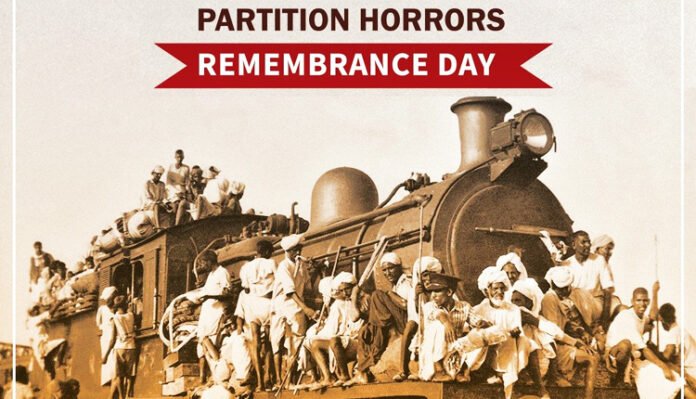
On the eve of Independence Day, when India prepares to celebrate freedom, August 14 carries a different memory, one of loss, displacement and separation.
Observed as Partition Horrors Remembrance Day (Vibhajan Vibhishika Smriti Diwas), August 14 is dedicated to remembering those who suffered and lost their lives during the Partition of India in 1947. Prime Minister Narendra Modi announced the observance in 2021, saying the day would remember the suffering and sacrifices of those affected by Partition.
The date is significant for another reason. August 14, 1947, was the day Pakistan came into existence as a separate dominion, while India became independent the following day. Behind these dates, however, was a human tragedy unfolding across a rapidly changing political map.
When a boundary divided lives
The Partition of British India resulted in the creation of India and Pakistan and triggered one of the largest and most traumatic episodes of mass migration in modern history.
Millions crossed newly created borders. Hindus and Sikhs largely moved towards India from areas that became Pakistan, while many Muslims moved in the opposite direction. But migration was rarely a peaceful journey.
Communal violence spread across Punjab, Bengal, Sindh, Delhi and other parts of the subcontinent. Families were separated, homes and businesses were abandoned, women were subjected to horrific violence, and countless people disappeared or were killed.
The exact number of deaths remains disputed among historians, with estimates varying widely. Similarly, estimates of those displaced generally run into the many millions. What is beyond dispute is the extraordinary scale of human suffering.
The tragedy was not confined to one community. Hindus, Muslims and Sikhs all suffered and lost lives, even though the nature and scale of violence varied from region to region.
Why August 14?
The choice of August 14 connects the remembrance directly to the moment when the political division became a reality.
On August 14, 1947, power was transferred to Pakistan; India formally became independent on August 15. The Indian Independence Act of 1947 provided for the creation of the two new dominions.
Decades later, in 2021, the Government of India designated August 14 as Partition Horrors Remembrance Day. The intention was to place the experiences of ordinary people, refugees, families, survivors and those who lost their lives, within the national memory of Independence.
It is therefore not an Independence Day celebration. It is a day of remembrance before the celebration of freedom.
Beyond numbers: the refugee story
The history of Partition is often told through political negotiations, the Mountbatten Plan, the Radcliffe Line and the creation of two nations.
But Partition was ultimately experienced at the level of the individual.
A house left behind.
A family member who never returned.
A train that arrived full of refugees.
A photograph carried across the border.
A language, recipe or tradition brought into an unfamiliar city.
For communities such as the Sindhis, Partition meant losing an entire ancestral homeland. With Sindh becoming part of Pakistan, large numbers of Sindhi Hindus were forced to leave their homes with little more than what they could carry. Yet they rebuilt their lives across India, contributing significantly to commerce, education, industry and public life.
Their story represents one of Partition’s most enduring paradoxes: people lost their homes, but refused to lose their future.
Why remember Partition today?
Remembering Partition is not about reopening old wounds or preserving hatred between communities.
Its deeper purpose is to ensure that the human cost of communal violence and political division is not reduced to a footnote.
The official observance today seeks to honour those who suffered while reminding future generations of the consequences of hatred, violence and social division. Across India, programmes are being organised to commemorate victims and preserve their memories.
This year’s observance has again brought stories of courage and resilience to the forefront. Prime Minister Narendra Modi remembered those affected by Partition, highlighting their suffering as well as their ability to rebuild their lives. Union Home Minister Amit Shah described August 14, 1947, as one of the most brutal chapters in history and paid tribute to those who lost their lives.
A memory before a celebration
Every August 15, India celebrates the freedom that emerged in 1947.
But the freedom story cannot be separated from the Partition story.
The tricolour was raised as millions were still searching for missing relatives, rebuilding homes and trying to begin again. Independence brought freedom from colonial rule; Partition brought a wound whose consequences continued for generations.
That is why August 14 asks a different question from August 15.
Not only “How did India become free?”
But also: “What did freedom cost, and who paid the price?”
To remember Partition is to remember the millions whose lives were altered by it, and to recognise the courage with which survivors transformed displacement into new beginnings.
Memory cannot undo history. But remembering it can help ensure that its darkest lessons are never forgotten.