

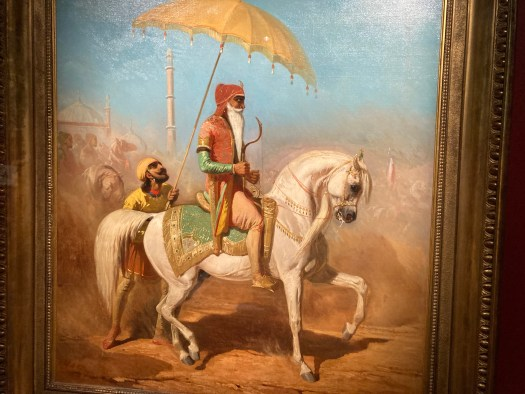
In the modern history of India, Maharaja Ranjit Singh remains one of the most successful and admired rulers. Known as the “Lion of Punjab,” he transformed Lahore (now in Pakistan) into the capital of a vast, prosperous empire that stretched from the Sutlej River to the Khyber Pass and from Ladakh to the Thar Desert. Born in 1780, he ascended the throne at just 19 and ruled for nearly four decades before his death on June 27, 1839, at the age of 58.
Despite ill health in his later years, Ranjit Singh remained vigilant against British expansion. His reign marked a rare era of stability and independence in North India—one that ended only seven years after his death, when the British finally entered Lahore.
Building a Kingdom Through Strategy and Strength
Ranjit Singh inherited the Sukerchakia misl from his father, Maha Singh, at the young age of 12. His political brilliance was evident early on—he strengthened his position through strategic marriages with the Kanhaiya and Nakai clans. His second wife, Datar Kaur (Mai Nakain), became the mother of his heir, Kharak Singh.
In 1799, at the age of 19, Ranjit Singh captured Lahore, which was then under Afghan control. By 1801, he had declared himself sovereign, establishing an independent Sikh Empire. His army—comprising Sikhs, Hindus, Muslims, and even European officers trained under Napoleonic veterans—was among the most advanced in Asia.
Modernisation, Merit, and the Dogra Connection
Ranjit Singh was a visionary administrator who rewarded merit and loyalty over lineage. Among his most trusted allies were the Dogra brothers—Gulab Singh, Dhyan Singh, and Suchet Singh—who helped expand and consolidate the empire. Gulab Singh, recognised for his valour, was anointed Raja of Jammu in 1822. The Dogra dynasty would later rule Jammu and Kashmir until India’s independence in 1947.
Legacy of the Sikh Empire
Interestingly, Maharaja Ranjit Singh never issued coins in his own name. The coins of his empire, called Nanakshahi, bore the names of Guru Nanak Dev and Guru Gobind Singh, symbolising his deep respect for the Sikh Gurus. During his rule, the Kohinoor diamond came under his possession—a prized jewel that now rests in the British Crown.
Maharaja Ranjit Singh’s disciplined leadership kept foreign invaders away from India’s north-western frontiers. The Afghans, long considered formidable warriors, were decisively subdued. His empire stood as a symbol of unity, strength, and religious tolerance—qualities that earned him a revered place in Indian history.
End of an Era
After Maharaja Ranjit Singh’s death, his successors failed to maintain the empire’s integrity. Internal rivalries and British interference led to the eventual annexation of Punjab in 1849. Yet, Ranjit Singh’s rule remains remembered as a golden chapter—an era when Punjab stood independent, proud, and unyielding to colonial power.