

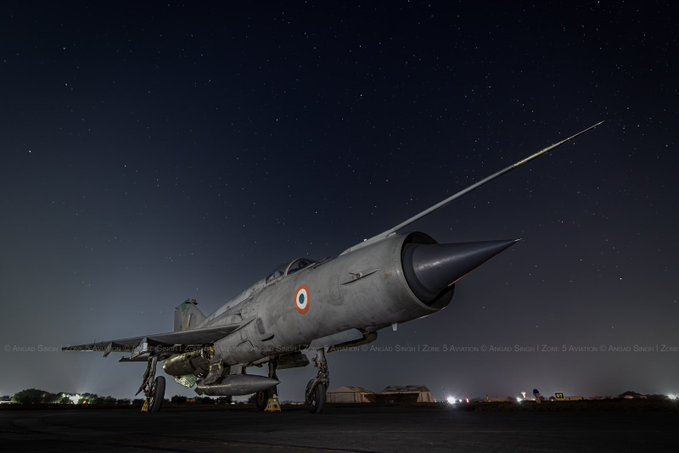
Tomorrow marks the end of an era in Indian aviation history as the Indian Air Force (IAF) officially retires its legendary MiG-21 fighter jets. The farewell ceremony will take place at Air Force Station, Chandigarh, closing a glorious six-decade-long chapter of service.
A Backbone of Indian Air Power
Inducted in 1963, the MiG-21 quickly became the backbone of India’s fighter fleet. Affordable yet powerful, it transformed the IAF into a modern air force and played a decisive role in the 1965 and 1971 wars with Pakistan, the Kargil conflict of 1999, and even the Balakot air strikes in 2019. With its supersonic speed, agility, and combat versatility, the aircraft remained relevant through some of India’s most critical military operations.
Evolution Through the Years
Over time, the MiG-21 underwent several upgrades to keep pace with newer technologies. The most advanced, the Bison variant, introduced upgraded radar, avionics, and weapon systems, ensuring the jet’s operational effectiveness well into the 21st century. At its peak, the IAF operated between 800 and 1,000 MiG-21s, one of the largest fleets of its kind. The aircraft not only served as a frontline fighter but also as a training platform, introducing generations of pilots to the world of supersonic flight.
Beyond Combat
The MiG-21 was more than just a warplane. It was a multipurpose platform that supported reconnaissance missions, air defence patrols, and tactical exercises, providing India with a credible deterrence capability for decades. Its endurance and adaptability earned it the paradoxical nickname “Flying Coffin”, a reflection of both the risks of flying ageing jets and the extraordinary bravery of the pilots who mastered them.
The Final Farewell
The last operational unit, No. 23 Squadron “Panthers”, will be decommissioned during the ceremony. The event will be attended by Defence Minister Rajnath Singh, Air Chief Marshal AP Singh, Chief of Defence Staff General Anil Chauhan, and other senior officials. Marking a symbolic moment, Squadron Leader Priya Sharma will pilot the final MiG-21 flight, representing both the aircraft’s enduring legacy and the rising role of women in the IAF.
A Lasting Legacy
While the MiG-21’s retirement makes way for modern, indigenous aircraft like the HAL Tejas alongside advanced platforms such as the Rafale, its contribution to India’s air dominance, operational readiness, and defence strategy remains unmatched. For countless pilots and defence experts, the MiG-21 is more than a machine—it is a symbol of resilience, courage, and innovation in Indian military aviation.
As the IAF bids farewell, the MiG-21 will forever be remembered as the jet that defined an era and safeguarded India’s skies for over six decades.