

Goa Revolution Day: Remembering the Heroes Who Ignited Goa’s Freedom Struggle
Every year on June 18, Goa observes Goa Revolution Day, commemorating a landmark moment in the state’s fight against Portuguese colonial rule. The day marks the beginning of a civil disobedience movement launched in Margao on June 18, 1946, by two remarkable figures—Dr Ram Manohar Lohia and Dr Julião Menezes.
Related homepage: https://soundforgepro.com/
What began as a protest against the authoritarian regime of Portuguese dictator António de Oliveira Salazar evolved into a mass movement that ultimately paved the way for Goa’s liberation on December 19, 1961.
While Goa Revolution Day is widely celebrated, many people know little about the two men whose courage ignited the struggle. Their story is one of friendship, sacrifice, and an unwavering commitment to freedom.
Who Was Dr Ram Manohar Lohia?
Ram Manohar Lohia was born on March 23, 1910, in Akbarpur, present-day Uttar Pradesh. Raised by his father after losing his mother at the age of two, Lohia displayed academic brilliance from an early age.
After completing his education in Bombay and Varanasi, he graduated from Vidyasagar College under the University of Calcutta in 1929. Instead of pursuing higher studies in Britain, Lohia chose Berlin’s Frederick William University, now known as Humboldt University of Berlin, reflecting his opposition to British colonial influence.
During his doctoral studies from 1929 to 1933, he specialized in economics and wrote his Ph.D. thesis on “Salt Taxation in India,” examining Mahatma Gandhi’s socio-economic ideas. He also mastered the German language during his stay in Germany.
Lohia later emerged as one of India’s foremost socialist leaders and freedom fighters. He played an active role in the Quit India Movement and was involved with the underground Congress Radio network. Arrested multiple times by the British, he endured imprisonment and torture, particularly in Lahore Fort. He was finally released in April 1946, just months before his historic intervention in Goa.
Who Was Dr Julião Menezes?
Julião Menezes was born on August 7, 1909, in Assolna, South Goa. After completing his early education in Goa, he travelled to Berlin, where he earned his medical degree.
It was in Berlin that Menezes met Ram Manohar Lohia, who was then serving as Secretary of the Indian Students’ Union. The friendship they forged would later alter the course of Goan history.
After returning to Goa, Menezes actively promoted rationalist thought and nationalist ideas through social and cultural organizations. Facing resistance from colonial authorities and conservative elements, he moved to Bombay in 1939.
There, he founded the Gomantak Praja Mandal and launched the bilingual weekly newspaper Gomantak, published in Konkani and English. Through journalism and activism, he became one of the leading voices advocating civil liberties and political reform in Goa.
How a Recuperation Visit Became a Revolution
Following his release from prison in April 1946, Lohia travelled to Bombay, where he met Dr Menezes. Concerned about Lohia’s deteriorating health after years of incarceration, Menezes invited him to rest at his ancestral home in Assolna.
Lohia arrived in Goa on June 10, 1946.
What was intended as a period of recovery soon transformed into a historic political movement.
News of Lohia’s arrival spread rapidly after being reported by the local newspaper O Heraldo. Intellectuals, activists, and ordinary citizens visited Assolna to discuss the severe restrictions imposed by Portuguese authorities, including bans on public meetings, free speech, and political activity.
June 15, 1946: The First Act of Defiance
On June 15, Dr Lohia and Dr Menezes organized a public meeting in Panjim.
At the time, public gatherings were prohibited under Portuguese rule, making the event a direct act of civil disobedience. Surprisingly, colonial authorities allowed the meeting to proceed.
The gathering generated immense enthusiasm and inspired people across Goa to demand greater freedoms.
June 18, 1946: The Day That Changed Goa Forever
Three days later, on June 18, 1946, history was made.
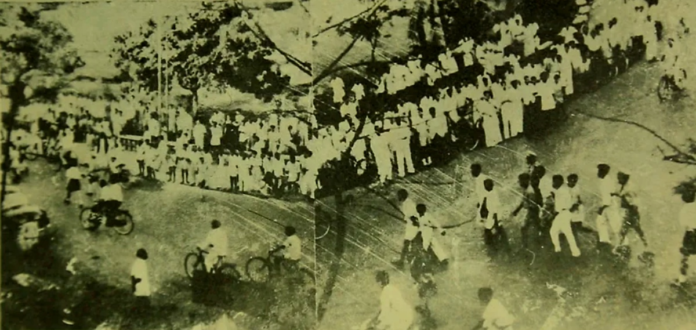
At approximately 4:15 pm, Dr Lohia and Dr Menezes arrived at Margao’s main square in a horse-drawn carriage. Thousands of supporters welcomed them with slogans celebrating both leaders.
This time, the Portuguese administration acted swiftly.
Both men were arrested and taken to Panjim Jail.
However, their arrest only intensified public anger. Large crowds refused to disperse and continued demanding the release of the two leaders. The movement had acquired a momentum that could no longer be suppressed.
Eventually, both were released. Lohia was expelled from Goa and released near Collem, while Menezes returned to Bombay and continued advocating for Goan freedom through journalism and political activism.
In 1947, he published the influential book “Goa’s Freedom Struggle,” documenting the movement and its aspirations.
Why Goa Revolution Day Matters
The events of June 18, 1946, marked a turning point in Goa’s history.
For the first time, large numbers of Goans openly challenged Portuguese rule and demanded civil liberties. The movement inspired confidence among ordinary citizens and demonstrated that colonial authority could be resisted.
The protests launched by Lohia and Menezes became the catalyst for the broader Goa Liberation Movement, culminating in Goa’s integration with India on December 19, 1961.
Today, Goa Revolution Day stands as a symbol of courage, resistance, and democratic rights.
The Forgotten Hero: Dr Julião Menezes
While Dr Ram Manohar Lohia remains a nationally recognized freedom fighter, the contributions of Dr Julião Menezes often receive less attention.
Yet it was Menezes who invited Lohia to Goa, connected him with local activists, and helped organize the meetings that triggered the mass movement. Many historians acknowledge that the first sparks of Goa’s liberation struggle were ignited from his residence in Assolna.
His role in shaping modern Goa deserves wider recognition.
Conclusion
Goa Revolution Day is more than a historical anniversary—it is a reminder of how ordinary citizens, inspired by visionary leaders, can challenge oppression and fight for freedom.
The courage of Dr Ram Manohar Lohia and Dr Julião Menezes transformed a small act of civil disobedience into a powerful movement that changed Goa’s destiny. As Goa commemorates June 18 each year, it also honours the enduring legacy of two friends whose determination helped bring freedom to an entire people.