

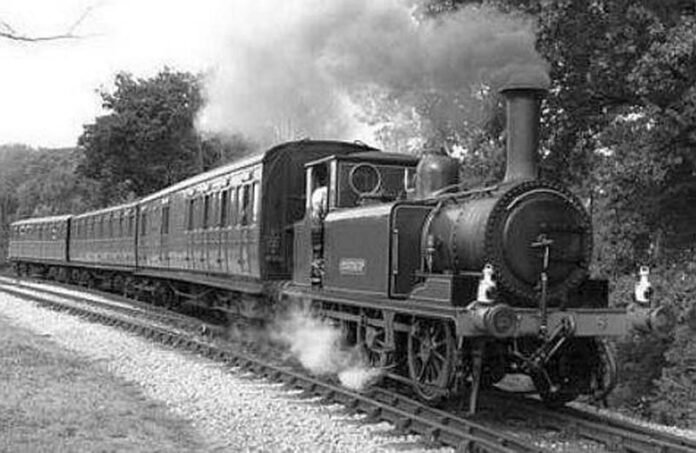
On April 16, 1853, India witnessed a historic turning point that would redefine mobility, commerce, and connectivity across the subcontinent. The country’s first passenger train, operated by the Great Indian Peninsula Railway, embarked on its maiden journey from Bori Bunder in Bombay (now Mumbai) to Thane, covering a distance of 34 kilometers. What seemed like a modest journey at the time would go on to lay the foundation of one of the largest and most complex railway networks in the world.
The train, comprising 14 carriages and carrying around 400 passengers, was hauled by three steam locomotives—Sahib, Sultan, and Sindh. As it set off at 3:35 PM, a 21-gun salute marked the ceremonial beginning of rail transport in India and across Asia. The journey took approximately 75 minutes, an impressive achievement in an era dominated by slow and unreliable modes of transport such as horse-drawn carriages and riverboats.
But beyond the spectacle and engineering marvel, this first train journey represented a deeper transformation. Introduced during British colonial rule, the railway system was initially designed to serve administrative and economic interests—facilitating the movement of raw materials and troops. However, it soon evolved into a powerful tool for integration, shrinking distances between regions, cultures, and communities in an immensely diverse country.
Over the next century and beyond, the railway network expanded rapidly, weaving together cities, towns, and remote villages. Today, Indian Railways stands as the lifeline of the nation, transporting millions of passengers daily and playing a critical role in freight movement, economic growth, and national unity.
The legacy of that first journey is not merely about tracks and trains—it is about transformation. Railways democratized travel, making long-distance journeys accessible to ordinary people, and played a significant role in shaping India’s social and economic landscape. They have also been silent witnesses to the country’s defining moments—from the freedom struggle to modern-day development.
As India marks 173 years of this monumental milestone, the journey from steam engines to electrified tracks and high-speed ambitions reflects the nation’s relentless progress. Yet, the spirit of April 16, 1853, lives on—in every whistle, every स्टेशन, and every journey that continues to connect India’s past with its future.