

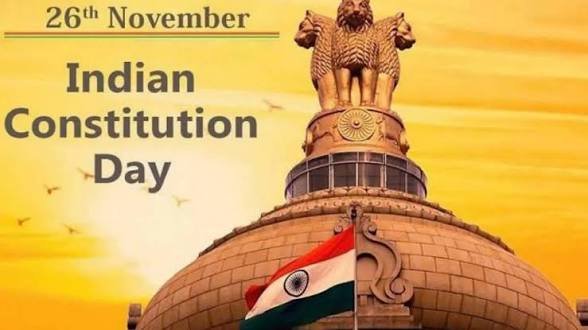
Observed on November 26, Samvidhan Divas commemorates the adoption of the Indian Constitution in 1949, honouring Dr. B.R. Ambedkar and the Constituent Assembly while reaffirming the principles of justice, liberty, equality and fraternity.
India will observe Constitution Day, also known as Samvidhan Divas, on November 26, marking the anniversary of the adoption of the Constitution of India by the Constituent Assembly in 1949. The occasion celebrates the foundation of the world’s largest democracy and recognises the vision, efforts and contributions of the members of the Constituent Assembly who shaped the country’s constitutional framework. The day also serves as a reminder of the fundamental values and democratic responsibilities that guide India’s governance and society.
The Constitution was adopted on November 26, 1949, after nearly three years of deliberations by the Constituent Assembly, and came into effect on January 26, 1950. Dr. B.R. Ambedkar, who chaired the Drafting Committee, played a central role in shaping the document and is widely recognised as the chief architect of the Indian Constitution. Constitution Day was officially designated as an annual national observance in 2015 to commemorate his 125th birth anniversary and encourage citizens to understand and appreciate the Constitution.
The theme of the 2026 observance is “The Constitution @76: Dr. B.R. Ambedkar’s Constitutional Vision and the Future of Indian Democracy.” It highlights the continuing relevance of Ambedkar’s ideas and the importance of constitutional principles in addressing contemporary democratic challenges. His vision emphasised social justice, equality, individual dignity, fraternity and the protection of fundamental rights, values that remain central to India’s constitutional democracy.
The Constitution of India establishes the framework of government, defines the powers and responsibilities of its institutions and guarantees fundamental rights to citizens. Its Preamble reflects four guiding ideals: Justice, Liberty, Equality and Fraternity. These principles form the foundation of India’s democratic system and underline the importance of unity, secularism, individual freedoms and equal opportunities. The Constitution also outlines the Fundamental Duties of citizens, encouraging responsible participation in national life and respect for the country’s democratic institutions.
As part of the celebrations, government departments, educational institutions and public organisations are expected to organise activities highlighting constitutional awareness. These include collective readings of the Preamble, discussions on the making of the Constitution, speeches, debates, essay-writing competitions and educational programmes. Schools and colleges are also encouraged to conduct special assemblies, poster-making activities and interactive sessions to familiarise students with the contributions of the Constituent Assembly and the significance of constitutional values. Digital participation initiatives through platforms such as MyGov further aim to involve citizens in the celebrations.
The occasion will also witness political and public programmes across the country, including initiatives focusing on constitutional awareness and the protection of democratic principles. Such observances provide an opportunity for citizens to reflect on the functioning of democratic institutions, the importance of constitutional safeguards and the role of public participation in strengthening democracy.
Beyond commemorating a historic date, Constitution Day is an opportunity to understand the Constitution as a living document that continues to guide India’s social, political and economic development. It reminds citizens that democracy is sustained not only through institutions and laws but also through awareness, participation and respect for one another’s rights. As India marks 76 years since the adoption of its Constitution, the occasion renews the commitment to uphold its founding ideals and build a society rooted in justice, equality, liberty and fraternity.