

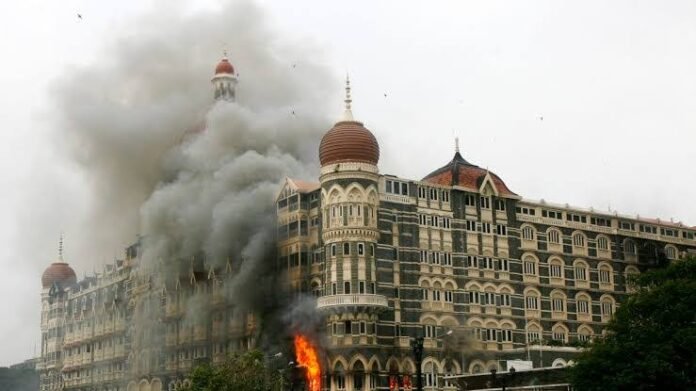
November 26 marks the 18th anniversary of the 2008 Mumbai terror attacks, a tragedy that claimed 166 lives and left an unforgettable mark on the nation’s history. The day honours the innocent victims, brave security personnel and ordinary citizens whose courage stood against one of India’s darkest chapters.
Eighteen years after the horrific terrorist attacks that shook Mumbai and the entire country, November 26 remains a day of remembrance, grief and national resolve. Commonly known as 26/11, the coordinated attacks began on the night of November 26, 2008, and continued until the morning of November 29. The 60-hour siege claimed 166 lives, including civilians, foreign nationals and 18 police and security personnel, while more than 300 people were injured. The attacks exposed serious vulnerabilities in India’s security system and became a defining moment in the country’s fight against terrorism.
The attacks were carried out by ten heavily armed terrorists belonging to the Pakistan-based Lashkar-e-Taiba (LeT), who entered Mumbai through the Arabian Sea. They targeted several prominent locations across the city, including Chhatrapati Shivaji Maharaj Terminus (CSMT), the Taj Mahal Palace Hotel, the Oberoi-Trident Hotel, Nariman House, Leopold Cafe and Cama and Albless Hospital. The locations were chosen to cause widespread destruction, create fear and attract international attention. The indiscriminate firing, explosions and hostage situations brought normal life in Mumbai to a standstill and drew global attention to the unfolding tragedy.
One of the most devastating scenes unfolded at Chhatrapati Shivaji Maharaj Terminus, where commuters and railway passengers became victims of indiscriminate gunfire. The Taj Mahal Palace and Oberoi-Trident hotels witnessed prolonged hostage situations, while Nariman House, a Jewish community centre, also became a major target. As the attacks continued, Mumbai Police, the Indian Army, Navy and National Security Guard (NSG) personnel launched operations to rescue hostages and neutralise the attackers.
The counter-terrorism operation, known as Operation Black Tornado, involved NSG commandos who were deployed to Mumbai to tackle the situation at multiple locations. Nine of the ten terrorists were killed during the security operations, while Ajmal Amir Kasab, the only attacker captured alive, was arrested. His capture was made possible in large part by the extraordinary courage of Assistant Sub-Inspector Tukaram Omble, who sacrificed his life while overpowering him at a police checkpoint.
The attacks also claimed the lives of several courageous officers and security personnel who confronted the terrorists. Among them were Maharashtra Anti-Terrorism Squad (ATS) chief Hemant Karkare, Additional Commissioner of Police Ashok Kamte, Senior Inspector Vijay Salaskar and NSG Major Sandeep Unnikrishnan. Their courage and sacrifice remain an enduring part of India’s history. Ajmal Kasab was subsequently convicted and sentenced to death. He was executed on November 21, 2012, at Yerawada Central Prison in Pune.
The tragedy brought significant changes to India’s internal security and counter-terrorism framework. It led to the strengthening of coastal surveillance, intelligence coordination, specialised counter-terrorism capabilities and security arrangements at major public places. The National Investigation Agency (NIA) was established in December 2008 to strengthen the country’s response to terrorism and investigate offences affecting national security. In February 2026, the Ministry of Home Affairs also unveiled PRAHAAR, India’s National Counter-Terrorism Policy and Strategy, outlining a coordinated approach to preventing and responding to terrorist threats.
On November 26, 2026, leaders, government officials, security personnel and citizens across the country paid tribute to those who lost their lives in the attacks. President Droupadi Murmu remembered the victims and saluted the courage of security personnel, reaffirming that terrorism cannot break the spirit of a nation united in courage and resilience. Maharashtra Chief Minister Devendra Fadnavis and Deputy Chief Minister Sunetra Pawar also joined the commemorative observances, paying tribute to the martyrs and remembering the sacrifices made by the police and security forces.
The anniversary serves as more than a remembrance of a tragic event. It is an occasion to honour the courage of those who risked their lives to protect others, acknowledge the resilience of survivors and stand in solidarity with families who continue to live with the loss. The memories of 26/11 remain deeply etched in the collective consciousness of the nation, reminding every generation of the devastating consequences of terrorism and the importance of vigilance, unity and preparedness.
Eighteen years later, Mumbai’s spirit remains a symbol of resilience. As India remembers November 26, the message is clear: the lives lost will never be forgotten, the sacrifices of the heroes will continue to inspire generations, and the country’s resolve against terrorism remains unwavering.