

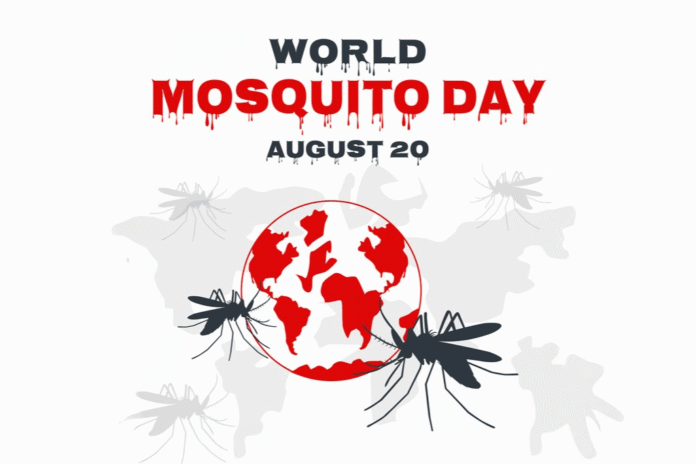
World Mosquito Day is observed annually on August 20 to commemorate a major discovery in the history of medicine and highlight the continuing global threat posed by mosquito-borne diseases. The day marks the discovery by British doctor Sir Ronald Ross in 1897 that female mosquitoes transmit malaria parasites between humans. His breakthrough helped establish the connection between mosquitoes and malaria transmission and transformed scientific understanding of the disease.
Ross made the discovery while working in India. Through his research, he found malaria parasites in the stomach of a mosquito that had fed on an infected person. His work provided crucial evidence that mosquitoes play a role in transmitting malaria. Ross was awarded the Nobel Prize in Physiology or Medicine in 1902 for his research on malaria.
Mosquitoes are among the world’s most important disease vectors. Different mosquito species can transmit diseases including malaria, dengue, chikungunya, yellow fever, Japanese encephalitis and Zika virus. Their impact is particularly significant in tropical and subtropical regions, where warm temperatures and suitable breeding conditions can support mosquito populations.
Malaria remains one of the most serious mosquito-borne diseases. It is caused by parasites of the Plasmodium genus and is transmitted primarily through the bites of infected female Anopheles mosquitoes. Symptoms can include fever, chills, headache and weakness, and severe cases can become life-threatening if not treated promptly.
Other mosquito-borne illnesses also pose significant public-health challenges. Dengue, for example, is transmitted mainly by Aedes mosquitoes and can cause high fever, severe headache, muscle and joint pain and, in some cases, serious complications. Chikungunya can cause fever and intense joint pain, while Japanese encephalitis can affect the nervous system.
Prevention remains an important part of controlling mosquito-borne diseases. Measures include eliminating stagnant water where mosquitoes can breed, keeping water containers covered, using mosquito nets and screens, wearing clothing that reduces exposed skin and using appropriate insect repellents. Community-level measures such as sanitation, waste management and mosquito-control programmes are equally important.
Climate and environmental conditions can also influence the spread of mosquito-borne diseases. Changes in temperature, rainfall and patterns of human settlement can affect mosquito populations and the geographical range of some diseases. This makes continued disease surveillance, scientific research and public-health preparedness increasingly important.
World Mosquito Day is therefore more than a commemoration of a historic scientific discovery. It is an opportunity to remember the importance of medical research and to raise awareness about diseases that continue to affect millions of people. It also highlights how a deeper understanding of disease transmission can lead to better prevention and control.
More than a century after Ronald Ross’s discovery, the fight against mosquito-borne diseases continues through vaccines, medicines, mosquito-control programmes, improved surveillance and scientific research. The message of World Mosquito Day remains simple but important: understanding the mosquito is an essential part of protecting human health.