

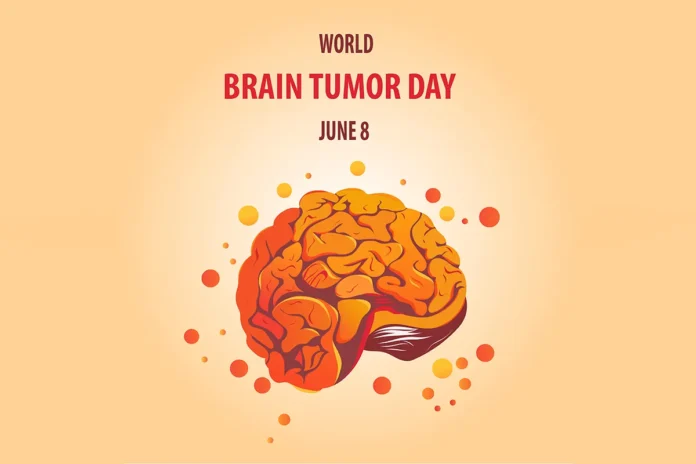
Every year on June 8, the world observes World Brain Tumour Day, an occasion dedicated to raising awareness about brain tumours, supporting patients and caregivers, and promoting greater understanding of one of the most complex neurological conditions. The day serves as an important reminder of the need for early diagnosis, improved treatment options, and continued research into diseases that affect the brain.
A brain tumour is an abnormal growth of cells within or around the brain. Tumours can be benign (non-cancerous) or malignant (cancerous). Even benign tumours can pose serious health risks because the brain is enclosed within the skull, leaving little room for expansion. As a tumour grows, it can put pressure on surrounding brain tissue and affect vital functions such as movement, speech, memory, vision, and balance.
Brain tumours can occur in people of all ages, including children and young adults. The exact causes of most brain tumours remain unclear, although genetic factors, certain inherited conditions, and exposure to high levels of radiation have been identified as risk factors in some cases. Researchers continue to study the disease to better understand its origins and develop more effective treatments.
The symptoms of a brain tumour often vary depending on its size, type, and location. Common warning signs may include persistent headaches, seizures, blurred or double vision, nausea, difficulty speaking, memory problems, personality changes, weakness in the limbs, and problems with coordination or balance. Since these symptoms can also be associated with other conditions, medical evaluation is essential for an accurate diagnosis.
Advances in medical science have significantly improved the diagnosis and treatment of brain tumours. Modern imaging technologies such as MRI and CT scans allow doctors to detect tumours with greater precision. Treatment options may include surgery, radiation therapy, chemotherapy, targeted therapies, or a combination of approaches depending on the patient’s condition.
Beyond the physical challenges, a brain tumour diagnosis can have profound emotional, psychological, and financial impacts on patients and their families. Long treatment periods, rehabilitation needs, and uncertainty about outcomes often create additional burdens. This is why support networks, counselling services, and patient advocacy groups play a vital role in helping families navigate the journey.
World Brain Tumour Day also highlights the importance of medical research. Scientists around the world are working to develop new therapies, improve survival rates, and enhance the quality of life for patients. Continued investment in research remains crucial to achieving better outcomes and, ultimately, finding more effective ways to prevent and treat brain tumours.
The observance is not only about understanding a disease but also about fostering compassion and support for those affected by it. By increasing awareness of symptoms, encouraging timely medical attention, and promoting scientific research, World Brain Tumour Day contributes to the global effort to reduce the impact of this challenging condition.
As the world marks World Brain Tumour Day, the message is clear: awareness saves lives, research brings hope, and support can make a meaningful difference in the lives of patients and their families.