

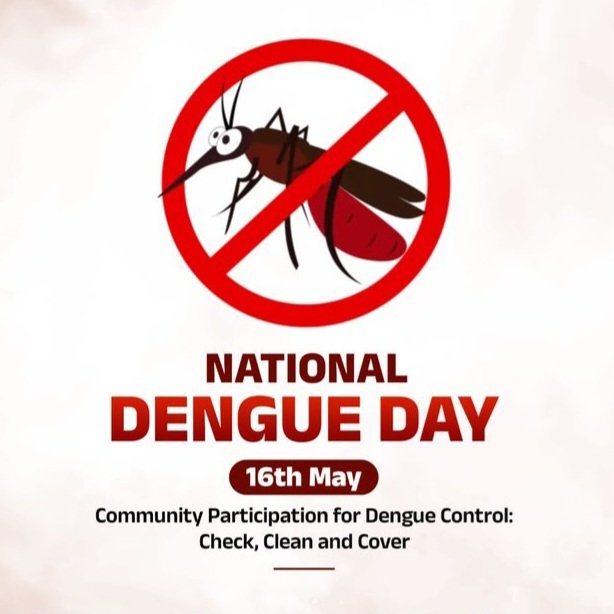
National Dengue Day is observed every year in India on May 16 to raise awareness about dengue fever, its prevention, and the importance of timely medical care. Organised by the Ministry of Health and Family Welfare, the day aims to educate people about the dangers of dengue and encourage collective efforts to control the spread of the disease, especially before the monsoon season when mosquito breeding increases significantly.
Dengue is a mosquito-borne viral infection caused by the dengue virus and spread primarily through the bite of the female Aedes aegypti mosquito. Unlike ordinary mosquitoes, Aedes mosquitoes usually bite during the daytime, particularly in the early morning and evening hours. The disease is common in tropical and subtropical regions, including many parts of India.
The symptoms of dengue typically include high fever, severe headache, body pain, joint and muscle pain, nausea, vomiting, skin rashes, and fatigue. In severe cases, dengue can lead to dengue hemorrhagic fever or dengue shock syndrome, which may become life-threatening if not treated on time. Health experts advise people to seek immediate medical attention if symptoms persist or worsen.
One of the key messages of National Dengue Day is that prevention is the most effective way to fight dengue. Since there is no specific cure for the disease, controlling mosquito breeding and protecting oneself from mosquito bites are extremely important. Clean surroundings, proper waste disposal, and avoiding stagnant water are essential preventive measures because mosquitoes breed in water collected in coolers, flower pots, tyres, containers, and open drains.
People are encouraged to wear full-sleeved clothes, use mosquito repellents, install window screens, and sleep under mosquito nets whenever necessary. Community participation also plays a major role in dengue prevention, as maintaining hygiene in neighbourhoods and public spaces helps reduce mosquito populations.
Every year, government departments, hospitals, schools, and local authorities conduct awareness campaigns, health camps, rallies, and educational programs on National Dengue Day. These initiatives focus on informing citizens about symptoms, prevention strategies, and the importance of early diagnosis.
With climate change, rapid urbanisation, and changing environmental conditions contributing to the spread of mosquito-borne diseases, dengue has become a major public health concern worldwide. National Dengue Day serves as a reminder that awareness, cleanliness, and timely action can save lives.
The fight against dengue is not just the responsibility of healthcare workers or governments alone; it requires active public participation. By staying informed and taking preventive measures seriously, communities can work together to reduce the spread of dengue and create a healthier environment for everyone.