

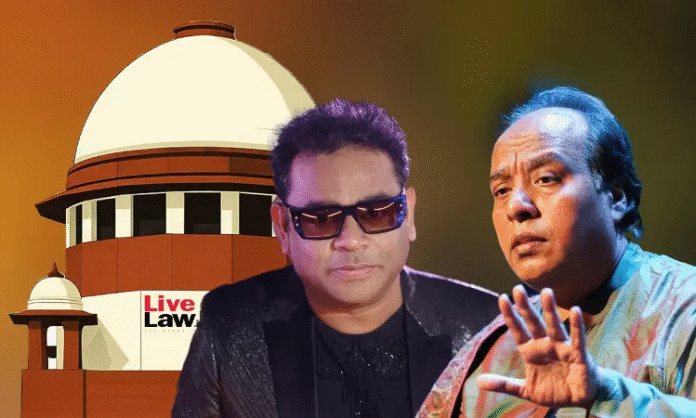
The controversy surrounding “Veera Raja Veera”, a song from the Tamil film Ponniyin Selvan II, has sparked a major debate over inspiration, originality, and cultural ownership in Indian classical music.
Legendary composer A. R. Rahman recently agreed before the Supreme Court of India to publicly credit the Junior Dagar Brothers for their influence on the composition, following a court directive. The apex court ordered that updated credits be added across all music platforms, OTT services, and social media within five weeks, even as the larger copyright dispute continues.
The case was filed by Ustad Faiyaz Wasifuddin Dagar, heir to the renowned Dagar lineage, who alleged that the song borrowed key elements from the traditional Dhrupad piece Shiv Stuti, including melodic patterns, rhythmic structure, and musical expression rooted in the Dagarvani tradition.
Rahman’s legal team has maintained that the song is an original composition inspired by classical traditions and that no individual or family can claim exclusive ownership over shared cultural heritage. The Supreme Court’s order to credit the Dagar Brothers does not determine copyright infringement, and the main lawsuit remains pending. The controversy has reignited discussions on intellectual property rights in classical music, the ethics of artistic inspiration, and the recognition of traditional artists in contemporary compositions, making it one of the most significant cultural and legal debates in India’s music industry in recent years.