

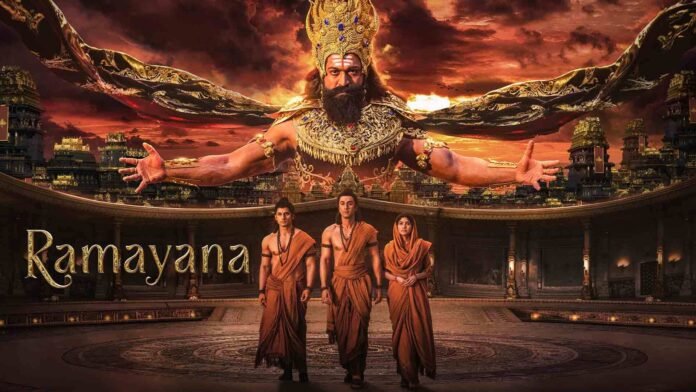
Directed by Nitesh Tiwari, the ambitious mythological drama brings together an ensemble cast, international music composers and large-scale visual effects to present the timeless story of the Ramayana.
One of India’s most anticipated cinematic projects, Ramayana: Rise of a Legend, also known as Ramayana: Part 1, has arrived in theatres on November 5, 2026, coinciding with the festive season of Diwali. Directed by Nitesh Tiwari, the film brings the timeless Indian epic to the big screen with Ranbir Kapoor as Lord Rama, Sai Pallavi as Goddess Sita and Yash portraying Ravana. Combining a celebrated cast, international filmmaking talent and large-scale visual effects, the film aims to present the ancient story to audiences in India and across the world.
Produced by Namit Malhotra and Yash, the film is the first instalment of a planned two-part cinematic adaptation of the Ramayana. It follows the journey of Prince Rama, his marriage to Sita and their exile from Ayodhya, setting the stage for the conflict between Rama and Ravana. The narrative explores themes of duty, sacrifice, righteousness, devotion and the eternal struggle between good and evil.
Ranbir Kapoor takes on the central role of Lord Rama, marking one of the most significant performances of his career. Sai Pallavi portrays Sita, while Kannada superstar Yash appears as Ravana. Sunny Deol plays Lord Hanuman, and Ravi Dubey portrays Lakshmana. The supporting cast includes several established actors, adding to the scale of the production.
The film has attracted considerable attention for bringing together Indian and international creative talent. Its music is composed by Oscar-winning composers A.R. Rahman and Hans Zimmer, marking a notable collaboration between two celebrated names in the global music industry. The visual effects are led by DNEG, the internationally recognised studio known for its work on major Hollywood productions, including Dune and Interstellar.
With a reported runtime of approximately three hours and 15 minutes, the film has been released in multiple languages, including Hindi, Telugu, Tamil, Kannada and English, with screenings in formats such as IMAX and 3D. Its international distribution also reflects the makers’ ambition to introduce one of India’s most significant mythological narratives to a wider global audience.
The film’s release has generated considerable excitement among audiences, with advance bookings attracting attention ahead of its theatrical opening. Special screenings and premieres in Los Angeles and Mumbai also brought together members of the film industry and invited guests. Early international reviews have offered a mixed but largely appreciative response to its cinematic scale. Several critics have praised the visual effects, production design and performances, particularly those of Ranbir Kapoor and Yash. However, some reviews have raised questions about the storytelling, pacing and musical execution.
Yash’s portrayal of Ravana has emerged as one of the talking points among early viewers, while Ranbir’s interpretation of Lord Rama has also attracted attention. The film’s grand visual presentation and action sequences have received appreciation, although opinions remain divided on whether its narrative fully matches its ambitious scale.
The project represents a major cinematic undertaking, with the production aiming to combine India’s cultural and mythological heritage with contemporary filmmaking technology. The Ramayana has been retold through literature, theatre, television and cinema for generations, and each adaptation has offered a different interpretation of its characters and themes. The new film seeks to bring the epic to a new generation while retaining its central philosophical and cultural significance.
As Ramayana: Rise of a Legend begins its theatrical run, expectations remain high for its box-office performance and audience response. With its second instalment expected to continue the larger narrative, the opening chapter sets the foundation for an ambitious cinematic retelling of one of India’s most enduring epics.