

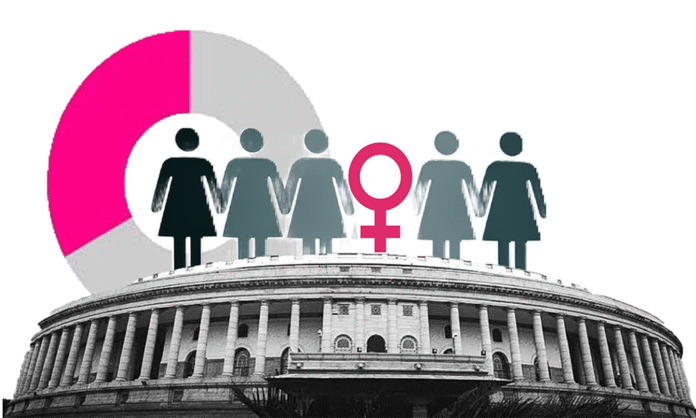
Women Reservation: The Centre is preparing to implement 33% reservation for women in the Lok Sabha starting from the 2029 general elections, alongside a major proposal to expand the strength of the House from 543 to 850 seats.
According to draft proposals circulated to MPs, 815 seats will be allocated to states and 35 to Union Territories. Out of the total 850 seats, 273 are proposed to be reserved for women under the new arrangement.
To enable this, the government plans to introduce the Constitution (131st Amendment) Bill, along with amendments to delimitation and Union Territories laws, during a special session of Parliament scheduled for April 16–18. Narendra Modi is expected to respond to the debate on April 17.
How the Reservation Will Work
The proposed 33% quota for women will remain in force for 15 years—covering the 2029, 2034, and 2039 Lok Sabha elections. Seats reserved for women will rotate across constituencies in each election cycle. The quota will also include sub-reservations for Scheduled Castes (SC) and Scheduled Tribes (ST) women.
Delimitation Key to Implementation
The implementation of reservation is tied to a fresh delimitation exercise. The government has proposed using the 2011 Census as the basis for redrawing constituencies, replacing the earlier system based on the 1971 Census.
A Delimitation Commission, headed by a sitting or retired Supreme Court judge, will be constituted. Its decisions will be final and legally binding.
Political Debate Intensifies
While most parties support women’s reservation in principle, the proposal has triggered political debate over linking it with seat expansion and delimitation.
Congress President Mallikarjun Kharge and leaders like Kapil Sibal have argued that reservation can be implemented within the existing 543 seats. Telangana Chief Minister Revanth Reddy has opposed increasing seats based on population, warning it could disadvantage southern states.
On the other hand, Union Minister Kiren Rijiju has defended the move, stating there should be no further delay in implementing women’s reservation after decades of demand.
As the debate unfolds, the proposed reforms are set to significantly reshape India’s electoral landscape ahead of 2029.