

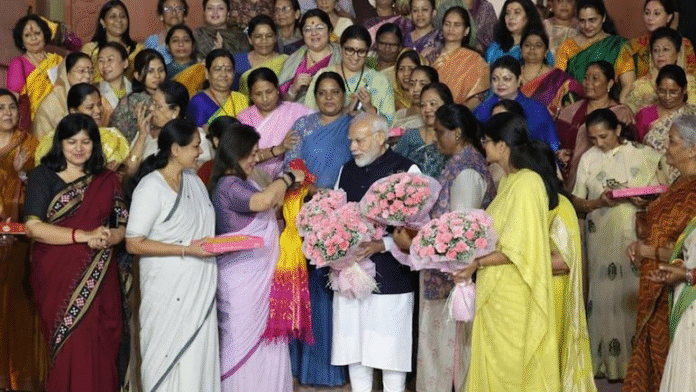
The Lok Sabha on Wednesday introduced the Constitution (One Hundred and Thirty-First Amendment) Bill, 2026 after a division vote in which 251 Members of Parliament supported the proposal and 185 voted against it. The Bill, moved by Union Law Minister Arjun Meghwal, is part of a broader legislative framework linked to women’s reservation and delimitation reforms.
The development took place during a special three-day session of Parliament convened to deliberate on major constitutional and electoral restructuring proposals. Along with the constitutional amendment, the government also introduced the Delimitation Bill, 2026 and the Union Territories Laws (Amendment) Bill, 2026. These three Bills have been presented as a single legislative package, with the latter two contingent upon the passage of the constitutional amendment.
According to the government, the proposed framework seeks to operationalise women’s reservation in Parliament alongside a fresh delimitation exercise based on updated population data. The proposal envisions an expanded Lok Sabha strength of 815 seats following delimitation, with one-third of the seats—approximately 272—reserved for women. The implementation of the reservation mechanism is proposed to be linked to the post-2026 Census and subsequent delimitation exercise. The government has also stated that the process will ensure that no state loses its existing representation.
The legislative move has triggered strong political reactions, particularly from opposition parties and leaders from southern states. Critics have expressed concerns that linking women’s reservation with delimitation could delay its implementation and potentially alter the balance of political representation across states. Opposition leaders, including Gaurav Gogoi and Mamata Banerjee, have raised objections, alleging that the exercise may have wider political implications related to redrawing of electoral boundaries. Protests were also witnessed within the House during the proceedings.
The government, however, has maintained that the reforms are aimed at strengthening democratic representation and ensuring equitable participation of women in legislatures. It has assured adequate time for debate, with the Lok Sabha scheduled to undertake a detailed discussion lasting 15–18 hours, and voting expected on April 17.
Officials noted that delimitation refers to the redrawing of constituency boundaries based on population changes, while women’s reservation seeks to allocate one-third of legislative seats to women. Constitutional amendments require a special majority in Parliament, making the ongoing deliberations critical for the passage of the proposed reforms.
The outcome of the voting will determine the next steps in what is being described as one of the most significant electoral reform initiatives in recent years.