

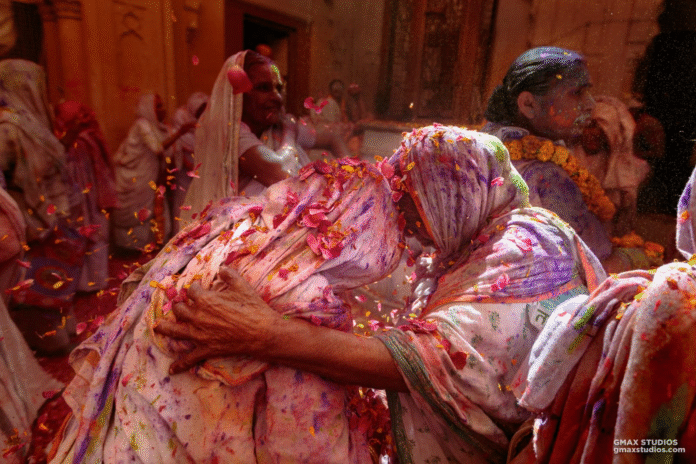
PC: (TCO Journey, GMAX STUDIOS)
Holi, the festival of colours, love, and springtime renewal, holds special significance in the sacred region of Braj – encompassing Mathura, Vrindavan, and surrounding areas. Known as the land of Lord Krishna’s childhood and his divine Raslila with Radha, Vrindavan’s Holi celebrations are steeped in mythology, devotion, and vibrant traditions. Yet for generations, one group was excluded from this joy: widows. Historically, Indian societal norms forced widows into lives of austerity and isolation. They were expected to wear only white sarees, shun festivities, avoid public celebrations like Holi, and often seen as inauspicious. In Vrindavan, thousands of widows have lived in ashrams for decades – distanced from family, financial security, and the simple pleasures of life. Joy, it seemed, was no longer theirs to claim.
Colour as Resistance
All that began to change with Widow Holi – a modern tradition that shatters these taboos. What started as a quiet assertion has grown into a powerful symbol: grief does not erase a woman’s right to celebration, community, and visibility in public spaces.
The Catalyst for Change
The turning point came in 2012, when the Supreme Court of India issued a directive urging better welfare and social inclusion for widows in Vrindavan. This legal push aligned with the efforts of social reformer Dr. Bindeshwar Pathak, founder of Sulabh International – an NGO dedicated to dignity, sanitation, and women’s empowerment. Sulabh encouraged widows to reclaim Holi, linking the festival to dignity, welfare, and broader social reform.
A Historic Shift in 2013
Until 2013, widows could only offer colours to “Thakurji” (Lord Krishna) but were barred from participating themselves. That year marked the first true Widow Holi among the women. a gentle, empowering celebration
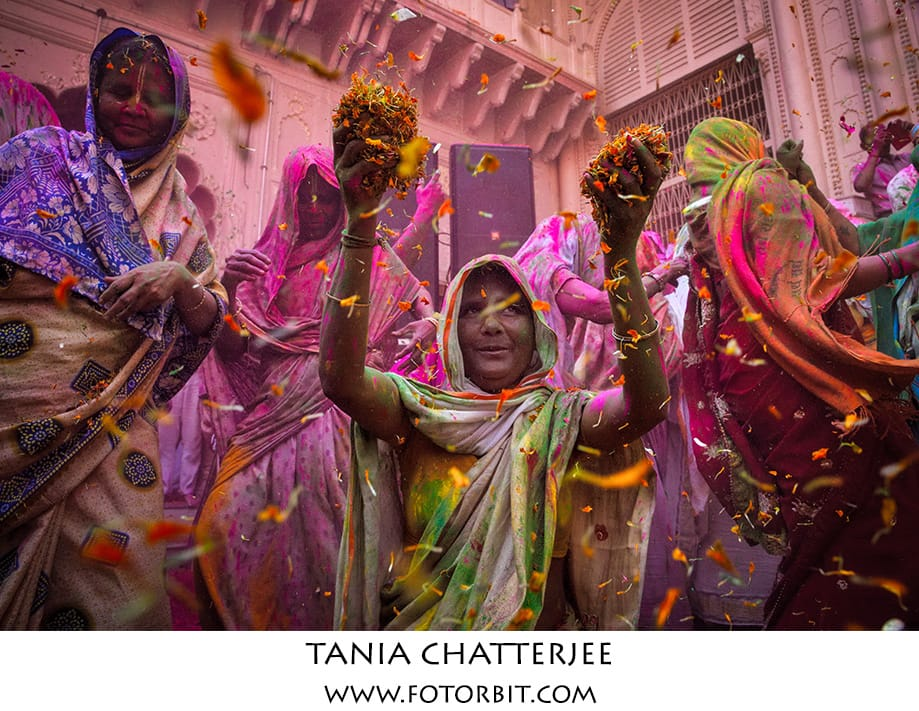
Holi in Full Bloom
Held annually at the historic Gopinath Temple (and sometimes other ashrams like Pagal Baba), Widow Holi – often called Phoolon ki Holi – fills the air with marigold and rose petals, dry gulal (coloured powders), devotional bhajans, and heartfelt hugs. Thousands of kilograms of flower petals rain down, creating a sattvic (pure and gentle) spectacle distinct from the street-side revelry. Widows, once confined to white, emerge drenched in vibrant hues a visual metaphor for reclaiming identity, joy, and belonging.
Widow Holi 2026: A Growing Movement
In 2026, the celebration reached new heights. Over 200 widows from multiple ashrams gathered on March 2 (a few days before main Holi on March 4), marking one of the most vibrant and widely attended events yet. The premises of Gopinath Temple bloomed with colours, flowers, and smiles as women danced, sang, and embraced – turning what was once seen as rebellion into an accepted, cherished tradition.
Shifting Mindsets and Faith Without Exclusion
What began as a challenge to deep-rooted stigma is now steadily becoming part of Vrindavan’s cultural fabric. Widow Holi proves that spiritual devotion and social reform can coexist – honouring faith in Lord Krishna while making space for equality, compassion, and shared celebration.
A Symbol of Dignity and Belonging
This is more than a festival; it’s a profound statement of inclusion. In a place where widows once lived in the shadows, they now stand at the center – colourful, visible, and joyful. Vrindavan’s widows are not just playing Holi; they are reshaping tradition itself, proving that dignity and belonging belong to everyone.
(With inputs from recent reports and ongoing social initiatives by Sulabh International.)