

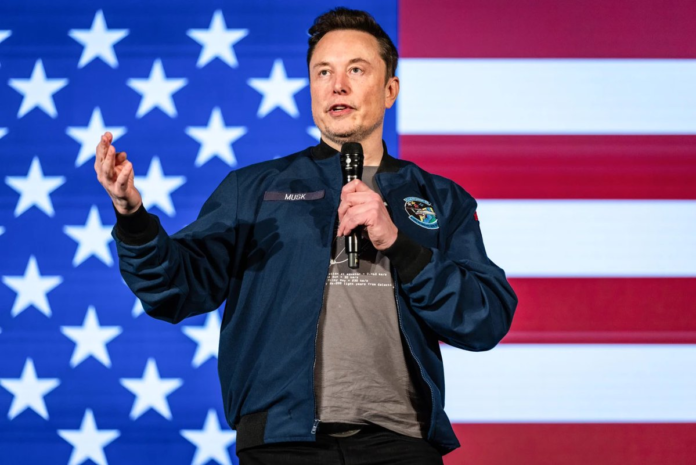
Wanna know the story behind the most successful man who is world’ first trillionaire…yes, you are right, he is none other than Elon Musk. In 2008, when the global economy teetered on the edge of collapse, Wall Street witnessed a free fall and billion-dollar corporations were seen crumbling under the weight of the financial crisis. Amid the chaos, one entrepreneur was risking everything he had on a dream that most experts had already written off.
Three rockets had exploded. His electric car company, Tesla, was bleeding cash. Investors were walking away. Yet Elon Musk put every remaining dollar into one final rocket launch. Had it failed, both SpaceX and Tesla would likely have disappeared—and Musk himself would have been bankrupt.
His then-wife, Talulah Riley, later recalled those tense days: “He would pace around, talking to himself, throwing his arms in the air. It looked as if he might have a heart attack.”
That desperate gamble changed the history of private spaceflight.
Today, the company that nearly destroyed Musk has instead made him the world’s first trillionaire. Following SpaceX’s public listing, Musk’s fortune crossed the trillion-dollar mark, cementing his place as one of the most influential entrepreneurs in history. As he celebrates his 55th birthday, here’s the extraordinary story of SpaceX—from near-bankruptcy to rewriting the rules of space exploration.
From Silicon Valley Success to Risking Everything
Musk’s entrepreneurial journey began in the 1990s when he dropped out of Stanford University after just two days to build an online city guide called Zip2. Compaq later acquired the company for $307 million, earning Musk his first fortune.
He didn’t stop there. Musk founded X.com, an online payments company that eventually evolved into PayPal. When eBay acquired PayPal for $1.5 billion in 2002, Musk walked away with nearly $180 million.
Rather than securing his wealth, he poured almost all of it into three ambitious ventures:
- $100 million into SpaceX
- $70 million into Tesla
- $10 million into SolarCity
Friends called it reckless. Musk believed it was necessary.
The Russian Mockery That Sparked SpaceX
The idea for SpaceX wasn’t born in a laboratory—it was born during a failed negotiation.
In 2001, Musk traveled to Russia hoping to purchase refurbished intercontinental ballistic missiles for a Mars mission concept. Instead of taking him seriously, Russian officials laughed at him.
According to accounts from the trip, one official joked that perhaps Musk wanted to “transfer money to aliens.”
When Musk discussed paying around $8 million for a rocket, another reportedly laughed and quipped, “For that price, I’ll give you a brochure—and a bottle of vodka.”
The asking price soon climbed to $18–21 million.
Rather than accepting defeat, Musk made a radical decision:
If rockets were so expensive to buy, why not build one himself?
His calculations showed that the raw materials used in a rocket—titanium, aluminum, copper and carbon fiber—accounted for only a tiny fraction of the selling price.
He concluded that innovation and manufacturing efficiency, rather than expensive procurement, could dramatically reduce launch costs.
Reinventing Rocket Economics
Musk challenged decades-old aerospace traditions.
NASA contractors often charged astronomical prices for even the simplest components because they were certified as “space-grade.”
One famous example involved a latch costing around $1,500.
Musk reportedly replaced it with a hardware-store latch costing roughly $30, insisting that engineering excellence mattered more than inflated procurement costs.
He also shifted much of SpaceX’s manufacturing in-house and later embraced stainless steel—far cheaper than carbon fiber—for Starship development.
The philosophy was simple:
If something could be built better and cheaper, SpaceX would build it itself.
Three Explosions and One Last Chance
The early years were brutal.
Flight 1 – March 24, 2006
Falcon 1 lifted off from Omelek Island but suffered a fuel-line fire shortly after launch and crashed into the Pacific.
Flight 2 – March 21, 2007
The second mission climbed successfully before losing control and failing to reach orbit.
Flight 3 – August 3, 2008
The first stage separated correctly, but a timing issue caused the two stages to collide, destroying the rocket.
By then, SpaceX was almost out of money.
Musk later admitted the company had enough funds for just one final launch.
Flight 4 – September 28, 2008
Everything depended on this mission.
Falcon 1 successfully reached low-Earth orbit, becoming the first privately developed liquid-fuel rocket to achieve orbit.
Just weeks later, NASA awarded SpaceX a $1.6-billion Commercial Resupply Services contract, rescuing the company from financial collapse.
The Rocket That Changed Space Travel Forever
Many aerospace veterans dismissed Musk’s next idea as impossible.
Reusable rockets, they argued, were as absurd as “drinking water, spitting it back into the bottle, and drinking it again.”
SpaceX proved them wrong.
On December 22, 2015, a Falcon 9 booster launched into space and returned safely to Earth, landing vertically on its own.
The achievement transformed the economics of spaceflight, dramatically reducing launch costs and making frequent missions commercially viable.
The Next Frontier: Mars
SpaceX is now developing Starship, the world’s most powerful fully reusable launch vehicle.
Musk envisions Starship carrying astronauts and cargo to the Moon, Mars, and eventually making humanity a multi-planetary species.
What began as a near-impossible dream after three devastating failures has evolved into one of the most valuable and influential aerospace companies in history.
For Elon Musk, the biggest gamble of his life didn’t just save his company—it reshaped the future of space exploration.