

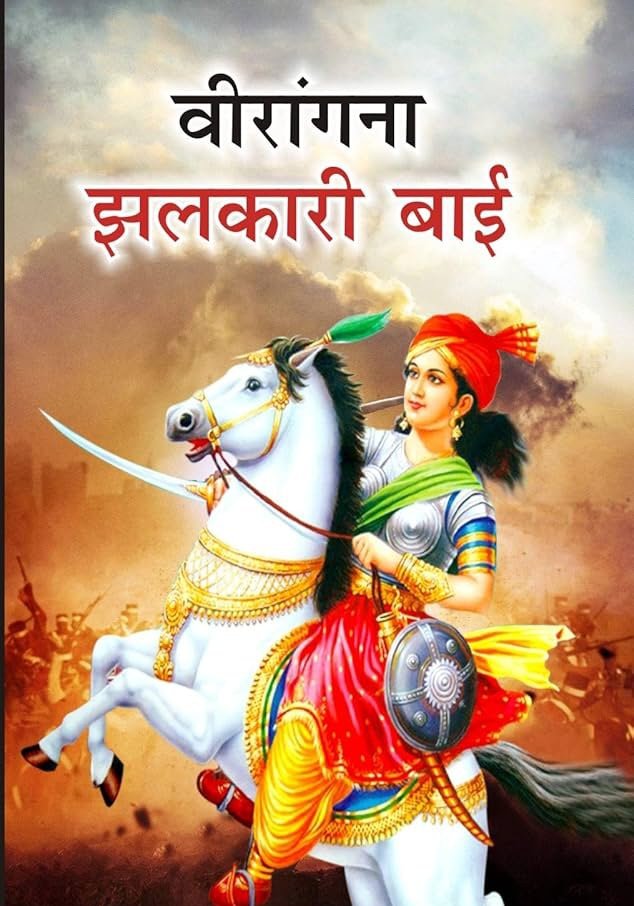
On this day, India remembers the courage and sacrifice of Jhalkari Bai—a fearless warrior of the 1857 Revolt whose story, though often overlooked, remains one of the most powerful tales of bravery in Indian history. Celebrated as her Punyatithi or martyrdom day, it is a moment to honour a woman who defied both colonial power and social barriers of her time.
Who Was Jhalkari Bai?
Born on November 22, 1830, in Bhojla village near Jhansi, Jhalkari Bai came from a humble Kori (Dalit) family. Despite limited resources, she grew up displaying extraordinary courage. From a young age, she was trained in horse riding, weaponry, and combat skills—traits rare for women of her social background during that era.
Legends of her childhood bravery are still narrated in Bundelkhand, including stories of her fearlessly confronting wild animals. These early signs of strength shaped her into a formidable warrior.
The Warrior of Jhansi
Jhalkari Bai became a key member of the army of Rani Lakshmibai during the Revolt of 1857. She rose through the ranks to become part of the Durga Dal, the women’s regiment, and eventually one of the queen’s most trusted aides.
What made her truly remarkable was not just her skill, but her striking resemblance to Rani Lakshmibai—something that would later change the course of history.
An Act of Unmatched Bravery
During the siege of Jhansi by British forces, Jhalkari Bai performed one of the most daring acts in India’s freedom struggle. She disguised herself as the queen and entered the battlefield, deliberately misleading the British army.
This bold move created confusion among the enemy and allowed the real Rani Lakshmibai to escape safely and continue the resistance. Jhalkari Bai fought fiercely, fully aware that she was risking her life.
Accounts of her death vary—some say she was martyred in battle, while others suggest she survived and lived later—but her courage remains undisputed.
A Legacy Beyond History Books
Jhalkari Bai’s story holds immense significance, especially as a symbol of Dalit resistance and women’s empowerment. For years, her contributions were largely absent from mainstream historical narratives, but they survived through folklore, songs, and oral traditions in regions like Bundelkhand.
Today, she is remembered as a veerangana—a brave heroine—whose life challenges traditional notions of heroism dominated by royalty and privilege. Her legacy has inspired literature, cultural movements, and a renewed effort to recognise forgotten heroes of India’s past.
Why Her Punyatithi Matters
Jhalkari Bai’s Punyatithi is not just about remembering a warrior—it is about reclaiming a story that history nearly erased. It reminds us that India’s freedom struggle was shaped not only by kings and queens but also by ordinary individuals with extraordinary courage.
Her life stands as a powerful message: bravery knows no caste, no gender, and no boundaries.
In remembering Jhalkari Bai, we honour not just a forgotten hero—but a legacy of resilience, sacrifice, and fearless patriotism that continues to inspire generations.