

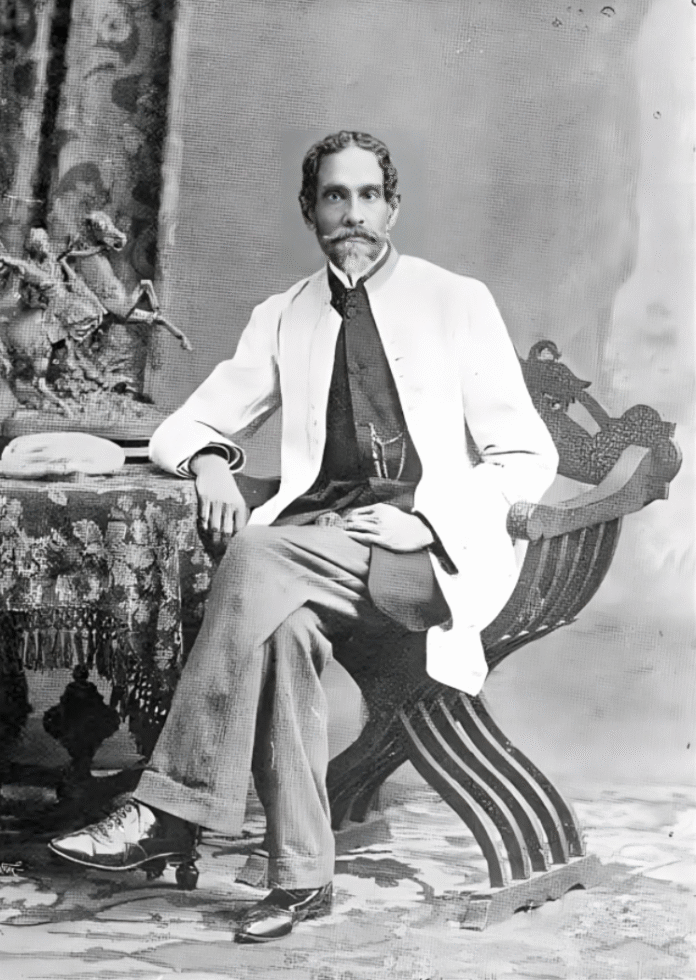
In the long and complex history of India’s administrative system, one name stands out as a symbol of courage and change—Satyendranath Tagore. He was the first Indian to enter the prestigious Indian Civil Service (ICS), breaking racial barriers in a system that was once exclusively dominated by the British.
Born on June 1, 1842, in Calcutta (now Kolkata), Satyendranath belonged to the illustrious Tagore family, known for its contributions to literature, art, and social reform. He was the elder brother of Rabindranath Tagore, the Nobel Prize-winning poet. Raised in an intellectually vibrant environment, Satyendranath developed a strong academic foundation that would later help him achieve a historic milestone.
The mid-19th century marked the formal structuring of civil services in India under British rule, a system significantly shaped by Lord Cornwallis, often called the “Father of Civil Service in India.” However, this elite service was initially closed to Indians. The ICS examination was conducted in England, making it difficult for most Indians to compete due to distance, financial constraints, and systemic discrimination.
Against these odds, Satyendranath Tagore traveled to England and successfully cleared the ICS examination in 1863. He formally joined service in 1864, becoming the first Indian to do so. His achievement was not just personal—it marked a turning point in colonial India, demonstrating that Indians were equally capable of competing at the highest administrative levels.
During his career, Satyendranath served primarily in the Bombay Presidency (present-day parts of Maharashtra, Gujarat, and Karnataka). He held several important administrative positions and eventually served as a District Judge in Karnataka. His tenure, which lasted nearly three decades, was marked by dedication, integrity, and a commitment to justice.
Beyond administration, Satyendranath was also a scholar, linguist, and social reformer. He advocated for women’s education and played a role in promoting progressive ideas within Indian society. His work reflected a blend of administrative excellence and intellectual depth.
Satyendranath Tagore’s entry into the ICS opened the doors for many Indians who followed, gradually transforming the civil services into a more inclusive institution. Today, his legacy lives on in India’s modern civil services, including the Indian Administrative Service (IAS), which continues to shape governance in the country.
His life is a reminder that true change often begins with one individual daring to challenge the status quo—and succeeding.